How Effective Are Georgia Lawyer Program Substance Abuse?

Georgia attorneys struggling with alcohol or drug problems have access to a real, structured support system through the State Bar’s confidential programs.

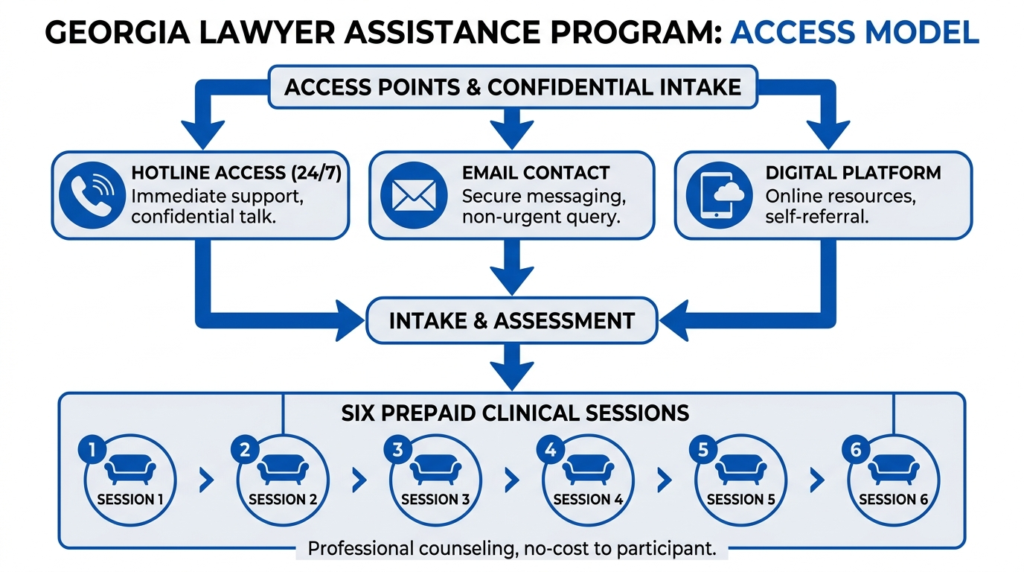
The Georgia Lawyer Assistance Program offers 24/7 counselor access, six prepaid clinical sessions per year, and peer support through Georgia Lawyers Helping Lawyers, all designed to lower the barriers that keep lawyers from asking for help.

This article breaks down how those programs work, what the evidence says about their effectiveness, and what attorneys should realistically expect.

Confidential Programs for Attorneys with Substance Use Disorders in Georgia

Lawyers face behavioral health challenges at rates that exceed many other professions. About 21% of licensed attorneys in a 2016 national study involving 19 states, including Georgia, qualified as problem drinkers. Younger lawyers in their first decade of practice showed even higher rates. Depression, anxiety, and chronic stress compound the picture.

Yet attorneys are often the last professionals to seek help. The reasons are specific to legal culture: fear of losing clients, fear of peer stigma, fear of discipline, and fear that disclosed impairment will be read as professional unreliability. Georgia’s confidential attorney support system is built around those fears.

Understanding what it actually offers, and where it falls short, matters for any lawyer weighing whether to reach out.

How the Georgia Lawyer Assistance Program Works?

The State Bar of Georgia’s Lawyer Assistance Program is a confidential service for Bar members, administered through SupportLinc and managed by CuraLinc Healthcare. It is not a lawyer referral service and is not open to the general public.

Members get six prepaid clinical sessions per calendar year at no cost, delivered by an independent, fully licensed counselor near their office or home.

Access is available through multiple channels:

  • A 24/7 hotline staffed by trained counselors at 800-327-9631
  • Email at gabar@curalinc.com
  • A digital portal with scheduling, assessments, and online support tools

The digital platform also includes text therapy, virtual group support, and digital cognitive behavioral therapy that can target substance use, stress, depression, anxiety, and sleep problems. That range of entry points is deliberate. Lawyers with emerging alcohol or drug problems often do not identify first as “impaired.”

They may recognize burnout, insomnia, or family strain before they name the underlying issue. Georgia’s broad framing, which places substance abuse alongside stress, depression, and workplace conflict, creates softer entry points into care.

Why Third-Party Administration Matters?

Georgia routes initial counseling contact through an outside clinical vendor rather than directly through Bar staff.

The Korean-American Bar Association of Georgia notes that LAP is provided through a third-party counseling agency specifically to protect confidentiality. Callers are asked for information but are not required to provide it, and anything they share is kept strictly confidential.

That structural separation is not just administrative. For a lawyer afraid that seeking help might somehow reach the Office of the General Counsel, knowing that the first clinical contact is with an outside healthcare company, not a Bar employee, can make the difference between calling and not calling.
What Confidentiality Actually Means in Georgia?

Georgia’s confidentiality protections for attorneys seeking treatment are layered and genuinely strong, but they are not absolute.

The Georgia Department of Behavioral Health and Developmental Disabilities publishes a formal HIPAA-based Notice of Privacy Practices governing how protected health information may be used or disclosed. Attorneys receiving care through DBHDD-governed providers are protected within that framework.

Georgia also has unusually strong mental health privilege protections. Analysis of O.C.G.A. § 24-5-501 and related case law describes psychiatrist-patient privilege in Georgia as “almost an absolute privilege,” subject only to narrow exceptions or waiver. Substantive communications with covered mental health providers are heavily protected, though the fact that treatment occurred and the dates of treatment may carry less protection in some contexts.

Substance use treatment records often carry additional federal protection under 42 C.F.R. Part 2 for federally assisted programs. In 2026, the Office for Civil Rights launched a civil enforcement program for Part 2 confidentiality, aligned with HIPAA enforcement mechanisms including complaints, investigations, corrective action plans, and civil penalties.

For Georgia attorneys whose treatment providers fall under Part 2, confidentiality is now backed by more explicit federal enforcement than it was even a few years ago.

That said, confidentiality is not the same as immunity. Georgia’s disciplinary system can confidentially refer a lawyer for a medical or mental health evaluation under Bar Rule 4-104 if signs of substance abuse appear during an investigation.

If a lawyer poses a substantial threat of harm to clients or the public, Bar Rule 4-108 allows the State Disciplinary Board to seek emergency suspension. Once probable cause leads to a formal hearing before a special master, proceedings become public in the Supreme Court of Georgia.

The practical line is this: LAP is confidential at the entry stage, but untreated impairment that produces client harm, dishonesty, or noncooperation can trigger a separate regulatory process that moves toward public accountability.

The Treatment Infrastructure Behind Attorney Referrals

Georgia’s attorney support programs are not a standalone clinic. When a lawyer’s needs exceed six short-term counseling sessions, the likely next step is referral into Georgia’s broader licensed treatment network.

Effective January 1, 2026, House Bill 584 transferred licensing and oversight of several key facility types, including Drug Abuse Treatment and Education Programs, Narcotic Treatment Programs, and Adult Residential Mental Health Programs, from the Department of Community Health to DBHDD. That consolidation means treatment provider oversight is now more unified under the specialized behavioral health agency.

Georgia’s Narcotic Treatment Program rules require compliance with SAMHSA, DEA, and Georgia Board of Pharmacy standards, licensed and qualified medical staff, and certified counselors. NTPs must also report serious patient incidents to the Department within 24 hours.

The general licensing and enforcement rules governing these facilities define investigations broadly and include review of premises, staff, and documents relevant to licensing.

For attorneys, this matters because the quality of rehabilitation depends not only on Bar intake but on the regulatory accountability of the providers to whom lawyers are referred.

Georgia Lawyers Helping Lawyers: The Peer Support Layer

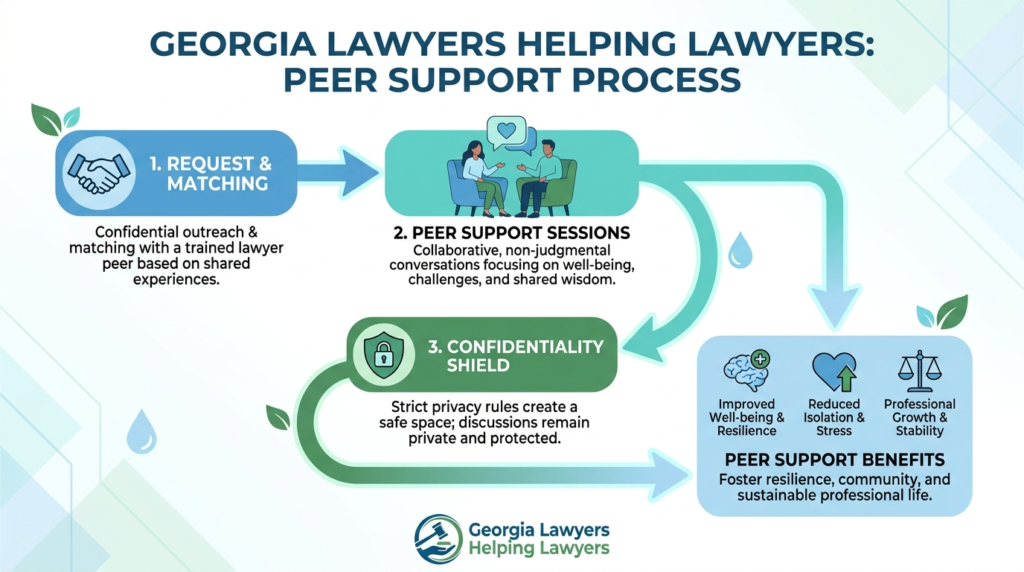
Alongside the clinical program, Georgia runs a separate confidential peer-to-peer program called Georgia Lawyers Helping Lawyers. The Supreme Court of Georgia approved amendments to the State Bar’s rules in November 2025 that formalized this program’s standing within the Bar’s structure.

Peer support serves a different function from counseling. It reduces stigma, creates profession-specific trust, and can engage lawyers who are not yet ready for formal treatment. Some attorneys will tell another lawyer the truth before they tell a therapist, a managing partner, or a spouse. Georgia’s two-lane model recognizes that reality.

ComponentPrimary functionWhy it matters for substance use
LAP clinical sessionsTriage, short-term counseling, referralRemoves cost barrier and provides immediate professional help
24/7 hotlineCrisis and after-hours accessSupports help-seeking at the moments it actually happens
Digital platformScheduling, CBT, virtual groupsAllows discreet, low-visibility engagement
Lawyers Helping LawyersConfidential peer-to-peer supportOvercomes profession-specific shame and stigma

How Effective Are These Programs? What the Evidence Shows

This is the central question, and the honest answer is that Georgia’s programs are credible and well-designed at the access stage, but their effectiveness for severe substance use disorders is not publicly documented.

Georgia does not publish annual LAP outcome data. There are no public figures for the number of attorney participants, referrals to residential or intensive outpatient treatment, completion rates, relapse rates, or return-to-practice outcomes. That absence is itself a meaningful finding.

California offers a useful comparison. The California LAP 2018 annual report showed 148 new participants, 276 total participants, and 144 closed cases, with 41% of cases closed after participants met stated program goals and only one case terminated for noncompliance.

The 2022 California report showed similar results, with 42% of 165 closed cases meeting stated goals. California also reported that 49% of participants presented with substance use disorder, 23% with mental health concerns only, and 24% with both.

Florida takes a different approach, emphasizing structured monitoring. The Florida Lawyers Assistance program monitors law students, conditionally admitted attorneys, and lawyers on diversion or probation, using random drug testing, weekly attorney support meetings, monthly mentor reports, and facilitated groups. Florida also explicitly links chemical dependency treatment to disciplinary mitigation after Supreme Court decisions recognized recovery as a mitigating factor.

National evidence supports the broader value of these programs. A 2001 Oregon study cited by the National Conference of Bar Examiners found that malpractice and discipline complaint rates for impaired lawyers were nearly four times as high before treatment as after treatment.

That is indirect evidence for Georgia, but it supports the proposition that rehabilitation and monitoring can meaningfully reduce professional harm.

Georgia compares well on confidential access and front-end usability. It compares less favorably on publicly documented long-term recovery management and outcome transparency. California is strongest in public accountability.

Florida is strongest in integration of monitoring with discipline and admissions systems. Georgia appears strongest in privacy-focused, low-barrier entry.

Why the Lack of Outcome Data is Not a Neutral Issue?

A confidential program can be well-designed and clinically useful while still being impossible to evaluate externally. Georgia’s official materials explain access clearly but do not show what happens when a lawyer needs more than six sessions, more than peer support, and more than a digital behavioral health platform.

That gap matters most for the attorneys at highest risk. A lawyer with emerging stress-related drinking may do well with six sessions and peer contact.

A lawyer with alcohol dependence, opioid misuse, or a pattern of relapse needs a clear pathway to higher levels of care, documented treatment linkages, and some form of ongoing accountability. Georgia’s public materials do not describe that pathway in detail.

The California Lawyer Assistance Program explicitly serves State Bar applicants and offers monitored services as needed. Florida explicitly monitors conditionally admitted attorneys and those on diversion. Georgia’s publicly visible materials do not show this level of admissions-linked or discipline-linked rehabilitation architecture.

This is not a condemnation of Georgia’s program. It is a call for transparency proportionate to the seriousness of lawyer impairment and public protection.

What Georgia Attorneys Should Know in Practice?

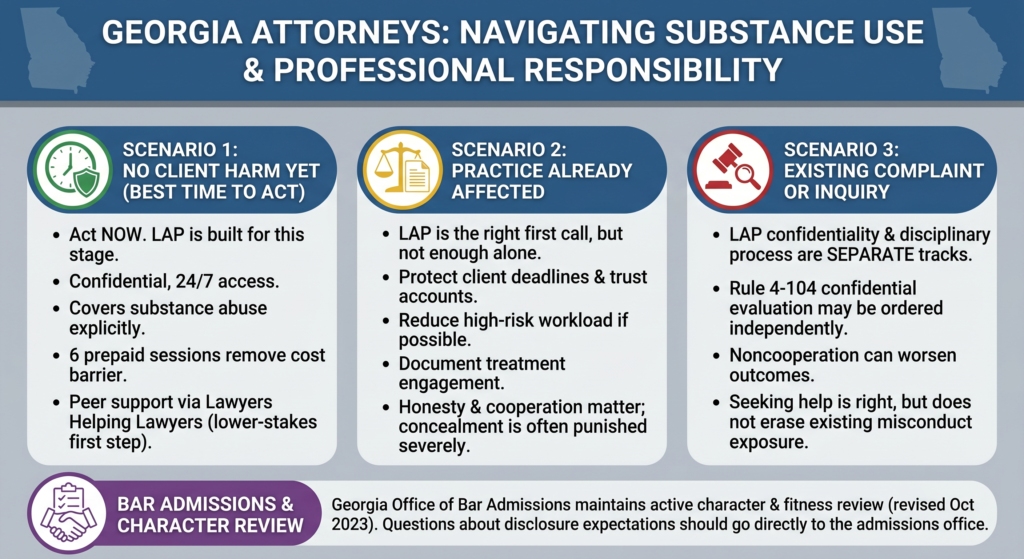
If you are a Georgia lawyer worried about your drinking or drug use and no client harm has occurred yet, the best time to act is now. Georgia’s LAP is built for exactly this stage.

The program is confidential, available around the clock, and covers substance abuse explicitly. Six prepaid sessions remove the initial cost barrier, and peer support through Lawyers Helping Lawyers offers a lower-stakes first conversation if shame is the main obstacle.

If your substance use is already affecting your practice, LAP is still the right first call, but it is not enough on its own. Protect client deadlines and trust-account functions. Reduce high-risk workload if you can. Document your treatment engagement. The profession often punishes concealment more severely than the original performance decline, so honesty and cooperation matter.

If there is already a client complaint or disciplinary inquiry, understand that LAP’s confidentiality and the disciplinary process are separate tracks. A confidential evaluation under Rule 4-104 may be ordered independently. Noncooperation can worsen outcomes. Seeking help is still the right move, but it does not erase existing misconduct exposure.

For applicants with mental health or substance use histories, the Georgia Office of Bar Admissions maintains an active character and fitness review process, revised in October 2023. Questions about disclosure expectations should go directly to the admissions office.
Georgia’s System is Real, But Needs More Transparency

Georgia’s confidential attorney rehab framework is credible, accessible, and privacy-conscious at the intake stage.

The State Bar has made thoughtful design choices: outsourced administration, 24/7 access, peer support, digital tools, and broad wellbeing framing that normalizes help-seeking before crisis. The treatment providers attorneys are referred to operate within a regulated, inspected system now consolidated under DBHDD.

What Georgia has not yet done is show the public whether those design choices translate into recovery. Annual outcome reporting, clearer referral pathways for severe addiction, and a plain-language explanation of how voluntary treatment interacts with discipline and admissions would all strengthen the system’s credibility with the attorneys most afraid to use it.

The most accurate bottom line is this: Georgia’s programs are well-designed for early intervention and first contact, but only modestly proven as a long-term rehabilitation system because the Bar does not publish enough outcome data to demonstrate effectiveness at scale.

For attorneys, that means using the system early, treating it as a first step rather than a complete solution, and being prepared to seek more intensive care if the problem is serious.

If you are a Georgia attorney and ready to take that first step toward confidential, professional support, Thoroughbred’s attorney addiction programs offer a full continuum of care, from medical detox through outpatient treatment, designed for working professionals who need real help without sacrificing their careers.


Ketamine and MDMA: Risks of Mixing Ketamine & Molly

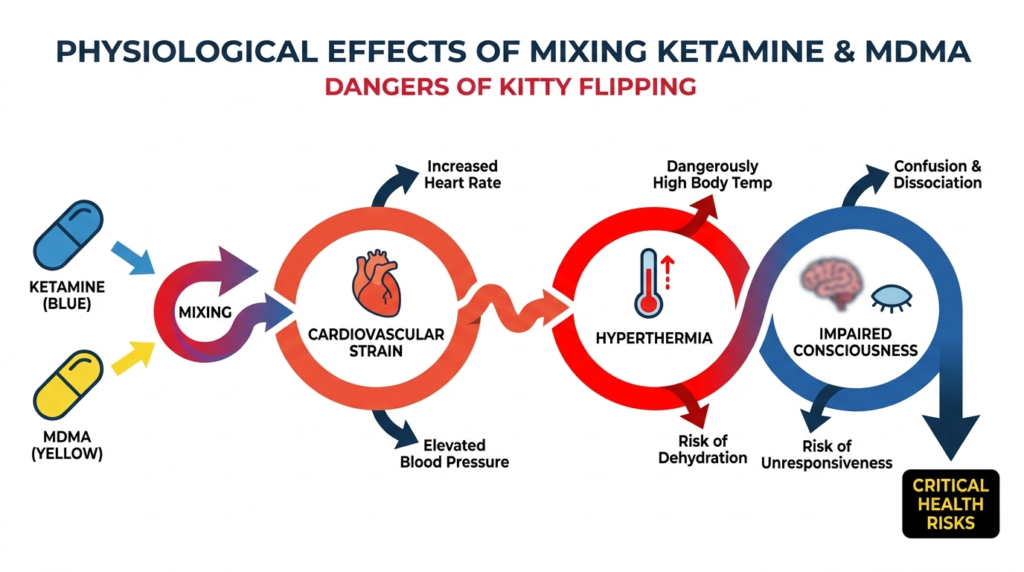
Mixing ketamine with MDMA—often called “kitty flipping” can trigger life-threatening overheating, cardiovascular strain, and impaired awareness that makes medical emergencies harder to recognize.

Recent surveillance from Miami-Dade County found ketamine present in 33 deaths in the first half of 2025, often alongside other drugs including MDMA.

This article explains what happens when you combine these substances, why the risks are greater than either drug alone, and what warning signs demand immediate help.

What is MDMA and Ketamine?

MDMA, sold as Molly or ecstasy, is a synthetic stimulant and empathogen that increases serotonin, dopamine, and norepinephrine in the brain.

People seek it for euphoria, emotional openness, and heightened sociability. Ketamine is a dissociative anesthetic used medically under supervision but recreationally for altered perception, detachment, and sedation.

The two drugs work through entirely different mechanisms. MDMA drives sympathetic activation, raising heart rate, blood pressure, and body temperature. Ketamine blocks NMDA receptors, producing dissociation, impaired coordination, and sedation. When combined, they create an unstable mixed state rather than a balanced experience.

StatPearls identifies MDMA toxicity as capable of causing seizures, hyperthermia, rhabdomyolysis, acute kidney injury, coagulopathy, multi-organ failure, and death. Ketamine toxicity can produce sedation, impaired consciousness, vomiting, respiratory depression, cardiovascular instability, and coma, especially when mixed with other substances.

Why People Mix Ketamine and MDMA?

Users often combine ketamine with MDMA to intensify the overall experience, smooth the psychological comedown from MDMA, or create alternating waves of stimulation and dissociation. Some believe ketamine will “balance out” MDMA’s stimulant effects or reduce anxiety during the crash.

The National Drug Early Warning System noted increased online mentions of kitty flipping between mid-2022 and early 2023, with discussion often framing the combination as a way to reduce MDMA comedown effects.

The alert also found that some seizures now involve pre-mixed ketamine and MDMA products, meaning users may encounter the combination unintentionally.

This folk logic fails under real-world conditions. Drugs with different subjective profiles do not neutralize each other physiologically. Instead, they burden different organ systems simultaneously, obscure early warning signs, and create overlapping or delayed symptom patterns.

Can You Mix Ketamine and MDMA Safely?

No. The evidence does not support safe mixing of ketamine and MDMA. The combination exposes users to compounded cardiovascular strain, thermoregulatory stress, impaired self-monitoring, and unpredictable timing of toxic effects.

A 2024 review on MDMA toxicity highlights that severe adverse outcomes are well documented in festival and rave environments, where MDMA can lead to life-threatening emergencies including cerebrovascular ischemia, coagulopathy, multi-organ failure, and death.

A case series from a single rave event involving 12 patients found that MDMA toxicity caused seizures, hyperthermia, hypotension, hyperkalemia, acute kidney injury, and rhabdomyolysis; two patients died and four sustained permanent neurologic, musculoskeletal, or renal damage.

When ketamine is added, dissociation and sedation can reduce a person’s ability to recognize overheating, communicate distress, or seek help. The result is not a smoother high but a more dangerous and less interpretable emergency.

Major Risks of Mixing Ketamine and Molly

Hyperthermia and Heat Stroke

The most important acute danger is MDMA-driven hyperthermia occurring in a user whose awareness and behavior are distorted by ketamine. 

Reviews identify acute hyperthermia as a central mechanism of severe MDMA toxicity, and experimental work shows that even small increases in ambient temperature can markedly increase MDMA-related core body temperature and neurotoxicity.

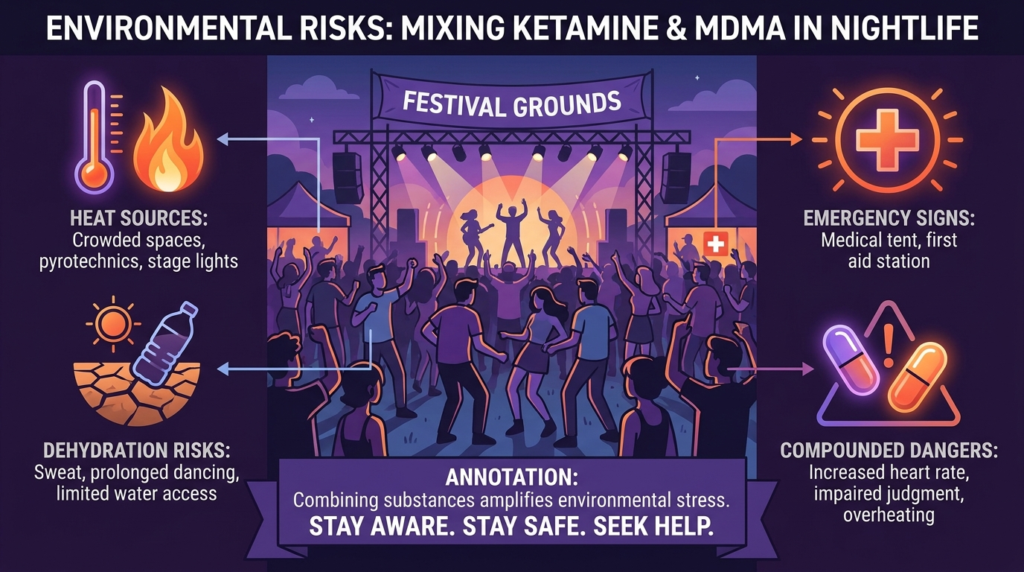
Hot, crowded club or festival settings amplify this risk through prolonged dancing, inadequate sleep, alcohol use, limited shade, sun exposure, and inconsistent access to water. Ketamine may impair the ability to notice overheating, stop exerting, leave the crowd, or accurately report symptoms.

Cardiovascular Strain

MDMA increases heart rate, blood pressure, and sympathetic tone. Ketamine can also produce tachycardia, hypertension, arrhythmias, and chest pain. 

Recovery Team warns that mixing ketamine with stimulants including MDMA can cause erratic heartbeats, high blood pressure, severe agitation, and increased risk of heart attack and stroke.

A young person with chest pain, palpitations, and panic may be dismissed by peers as “just freaking out,” delaying critical care. Cardiovascular strain is one of the most underestimated reasons to treat kitty flipping as high risk.

Serotonin Toxicity

MDMA is a known serotonergic agent. StatPearls describes serotonin syndrome as a clinical diagnosis characterized by altered mental status, autonomic dysfunction, and neuromuscular excitation. Symptoms often begin within six to 24 hours of a serotonergic dose change, overdose, or introduction of a new serotonergic substance.

While ketamine is not primarily serotonergic, the combination may complicate recognition and management of serotonin toxicity, especially when other serotonergic drugs are also present such as SSRIs, MAOIs, tramadol, or dextromethorphan.

Impaired Consciousness and Respiratory Risk

Ketamine’s dissociative and sedative effects can impair consciousness, coordination, and airway protection. In mixed-drug contexts, especially with alcohol, opioids, or benzodiazepines, airway and respiratory risks rise sharply.

Florida medical examiners reported that ketamine overdoses depress the central nervous system and can cause circulatory and respiratory distress, and that such overdoses cannot be reversed by naloxone.

This creates a dangerous misconception risk: a person may receive naloxone, fail to improve, and bystanders may delay further action because they misunderstand what naloxone can and cannot do.

Delayed and Overlapping Peaks

Sequential use can cause users to misread the trajectory of intoxication. If MDMA onset is slower or later than expected, a person may add ketamine thinking the earlier drug is fading or underdosed. This raises risk of abrupt overlap and disproportionate toxicity.

MDMA can slow gastric emptying, making the high hit later or harder than expected. Ketamine effects can emerge rapidly but may be clouded if taken after MDMA to ease the comedown.

The practical result is that deterioration may appear unexpected even when it is pharmacologically predictable.

Adulteration and Contaminated Supply

Illicit MDMA may contain ketamine, amphetamines, fentanyl, or other substances. Illicit ketamine may not be pharmaceutical grade and may be adulterated.

The National Drug Early Warning System noted that recent seizure information suggests pre-mixed ketamine and MDMA products may now be sold for kitty flipping, increasing unpredictability.

Reports on “pink cocaine” or “tusi”—an inconsistent polydrug powder often containing ketamine and MDMA, and sometimes methamphetamine, cocaine, opioids, or fentanyl, illustrate how drug names become poor predictors of physiological risk when no two batches are the same.

Polysubstance Use: The Default, Not the Exception

One of the most important findings in recent research is that polysubstance use is common and should often be the default assumption in both harm reduction and toxicology assessment.

A 2018 study on online drug forums found that user discussion can reveal named combinations and broader patterns of combined use, while chemical analyses of user-submitted substances suggest these are often consumed with other drugs rather than in isolation.

Miami-Dade toxicology officials reported that ketamine increasingly appears in death investigations alongside other drugs, including MDMA, and explicitly noted that noticing ketamine in multi-drug cases is what led them to track it more closely.

If clinicians or bystanders assume a single-drug problem, they may miss crucial elements of management. An “MDMA” emergency may also involve ketamine, other stimulants, alcohol, opioids, or adulterants.

A “ketamine” collapse may not be pure ketamine, especially if the person also shows hyperthermia, severe agitation, or serotonin toxicity features.

Warning Signs of a Ketamine and MDMA Emergency

Because no single symptom pattern defines every case, it is useful to think in clusters rather than one rigid presentation.

Hyperthermic-Stimulant Syndrome

  • Hot or flushed skin
  • Sweating or paradoxical dry overheating
  • Racing heartbeat
  • Chest pain
  • Agitation
  • Panic
  • Seizures
  • Confusion or delirium

Serotonin Toxicity Picture

  • Altered mental status
  • Autonomic instability
  • Tremor
  • Clonus or hyperreflexia
  • Hyperthermia
  • Agitation
  • Possible seizure

Dissociative-Sedative Collapse

  • Profound drowsiness
  • Impaired consciousness
  • Vomiting
  • Shallow or slowed breathing
  • Choking or gurgling
  • Poor coordination
  • Stupor or coma

Mixed Unpredictable Presentation

  • Alternating agitation and sedation
  • Delayed worsening after seeming initial stabilization
  • Vomiting with confusion
  • Abnormal blood pressure
  • Tachycardia followed by hypotension
  • Trauma from falls or impaired pain perception

What to Do in an Emergency?

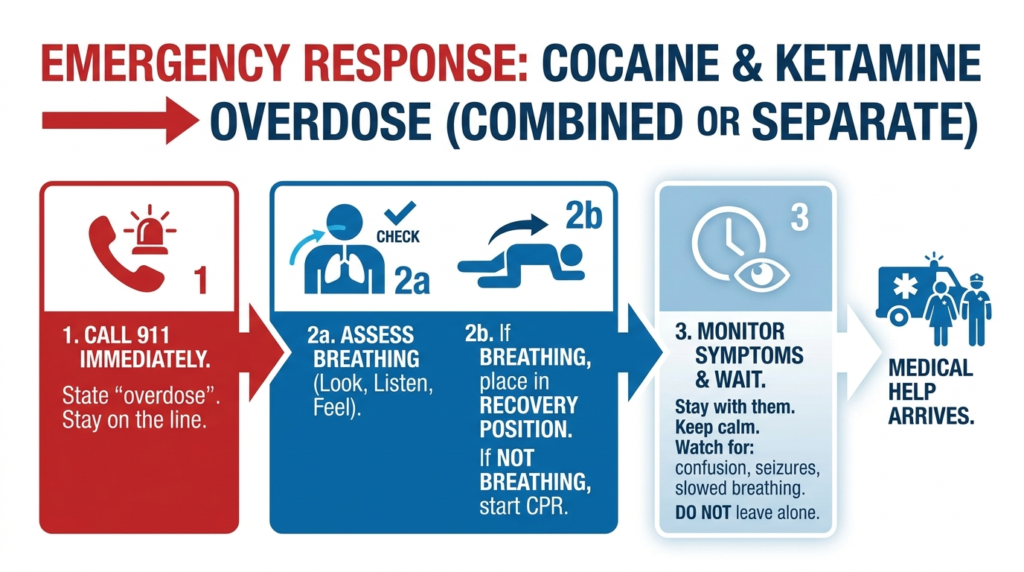
If someone is unresponsive, having difficulty breathing, seizing, showing chest pain, extreme confusion, or severe overheating, take immediate action.

Call emergency services immediately. If unconscious but breathing, place the person in the recovery position on their side. If not breathing or not responding, use naloxone if opioids may be involved and begin rescue breathing or CPR if trained.

Move to a cooler, quieter place if feasible and safe in stimulant, panic, or dehydration scenarios. Stay with the person. Tell responders what was taken, when, and whether anything was mixed.

Do not assume it will pass. Do not force fluids into an unconscious or semi-conscious person. Do not leave them alone. Do not try to “walk it off” if there is collapse, chest pain, seizure, or breathing trouble. Do not assume naloxone failing means there is no emergency.

In suspected kitty flipping emergencies, the threshold for calling for help should be lower, not higher, than in single-drug scenarios, because mixed intoxications can shift rapidly and may not follow the expected script of either drug alone.

Festival and Nightlife Settings as Risk Multipliers

The strongest environmental evidence concerns MDMA, but those findings are highly relevant to kitty flipping because the combination is concentrated in exactly the same settings: festivals, clubs, parties, and crowded nightlife scenes.

MDMA hyperthermia risk is strongly influenced by environmental temperature, and even small increases in ambient heat can markedly increase core temperature and neurotoxicity.

Festival environments add multiple layers of heat burden through prolonged dancing, inadequate sleep, alcohol use, limited shade, sun exposure, inconsistent access to water or electrolytes, and social pressure to keep moving rather than seek help.

Harm-reduction guidance aimed at festivals consistently flags the following as emergency warning signs: unconsciousness, difficulty breathing, chest pain or irregular heartbeat, seizures, extreme confusion or paranoia or panic, high body temperature with no sweating, blue or pale lips or fingertips, and vomiting while unconscious.

Festival organizers and nightlife venues should improve visibility of medical tents, train staff on mixed stimulant-dissociative presentations, support amnesty policies, ensure rapid cooling and medical response capacity, and disseminate clear symptom-based emergency guidance.

Why Traditional Harm Reduction Often Falls Short?

Many standard drug-safety messages are built around single-substance logic: test your drugs, start low, stay hydrated, take breaks, don’t use alone. Those remain valuable, but the evidence suggests they become less protective in the context of MDMA-ketamine mixing.

“Start low” does not solve synergy if the interaction is unpredictable. Drug checking can identify some substances but not always concentrations, all contaminants, or synergistic effects. Hydration advice can be oversimplified; with MDMA, dehydration and overheating are risks, but excessive water intake can also be dangerous.

Sequential use can create false reassurance. Using ketamine after MDMA to soften the comedown may be experienced subjectively as relief while physiological danger is still evolving. Premixed ketamine and MDMA products and broader nightlife polydrugs erode the value of user intention as a predictor of actual exposure.

Single-drug harm reduction is no longer an adequate conceptual model for major segments of nightlife drug use. It should be replaced by a polysubstance-aware model that assumes uncertainty in content, timing, and symptom progression.

Rising Ketamine Involvement in Deaths

Recent surveillance adds urgency to these concerns. Florida medical examiners reported rising ketamine involvement in deaths, with ketamine present in 33 deaths in Miami-Dade County in the first half of 2025 alone. Toxicology officials also reported that ketamine increasingly appeared in cases involving other drugs, including MDMA.

This is important because it is specific, recent, comes from named toxicology officials, links ketamine mortality to polysubstance patterns rather than isolated ketamine-only overdose, and geographically matches nightlife settings where MDMA use is also common.

NADDI’s 2025 intelligence summary highlighted kitty flipping as an emerging drug trend and linked it to reports of increasing ketamine-related deaths, often involving MDMA, in Miami and other major cities.

These reports do not prove that every ketamine-related death involved MDMA or that ketamine-MDMA combinations are now the dominant form of nightlife mortality.

But they do show that in at least one major nightlife region, official toxicology observers are seeing enough repeated co-occurrence of ketamine with other drugs, including MDMA, to treat it as a trackable pattern rather than anecdote.

Clinical and Public Health Implications

The strongest high-tier sources support several practical implications for clinicians and public health systems.

Assume co-ingestion until proven otherwise. History should specifically probe ketamine, MDMA, alcohol, opioids, cocaine or methamphetamine, antidepressants and other serotonergic agents, timing and sequence, route, and source of product.

Prioritize temperature, airway, and cardiovascular monitoring. Given MDMA’s hyperthermic potential and ketamine’s dissociative and sedative effects, early monitoring should emphasize core temperature, cardiac rhythm, oxygenation and ventilation, mental status, electrolyte abnormalities, and rhabdomyolysis and renal injury markers where indicated.

Maintain suspicion for serotonin syndrome when altered mental status, autonomic instability, and neuromuscular findings coexist after MDMA or mixed exposure. Recognize that naloxone failure does not rule out life-threatening overdose. Be alert for delayed decompensation, especially in mixed or staged ingestion.

Public messaging should move beyond “don’t mix drugs” as a generic slogan and explain why MDMA plus ketamine is risky, why symptoms may be mixed or delayed, why naloxone may not reverse ketamine, when to call for help, how heat and crowding worsen risk, and why product labels do not guarantee contents.

The Bottom Line on Mixing Ketamine and Ecstasy

Based on the evidence, mixing ketamine with MDMA should be classified and communicated as a high-risk polysubstance practice that is materially more dangerous than either substance alone in typical nightlife settings.

That conclusion follows from the convergence of five strong facts: MDMA alone can cause life-threatening toxicity, especially hyperthermia, seizures, rhabdomyolysis, organ failure, and death in festival and rave settings. Ketamine alone can cause impaired consciousness, vomiting, respiratory compromise, cardiovascular instability, seizure, stupor, and coma, especially in overdose or mixed use.

Polysubstance use is common and should be the default assumption. Recent official and semi-official surveillance in Miami shows ketamine increasingly appearing in deaths alongside other drugs, including MDMA. Web monitoring and seizure data suggest that kitty flipping is not just intentional sequential use but may also involve premixed products, increasing unpredictability.

The most important nuance is this: the greatest danger may not be a single uniquely identifiable toxidrome, but the combination of severe MDMA risk, ketamine-induced impairment, environmental heat and exertion, contaminated supply, and delayed recognition. The problem is not just chemistry. It is chemistry interacting with setting, behavior, and response delay.

Kitty flipping is an especially dangerous modern nightlife pattern because it undermines early warning, complicates diagnosis, and increases the chance that severe toxicity will be recognized too late.

If you or someone you know is struggling with substance use involving MDMA, ketamine, or other drugs, our professional help is available. Thoroughbred Wellness & Recovery offers dual diagnosis treatment that addresses both substance use and co-occurring mental health concerns in a compassionate, evidence-based environment. Call 770-564-4856 anytime, day or night!

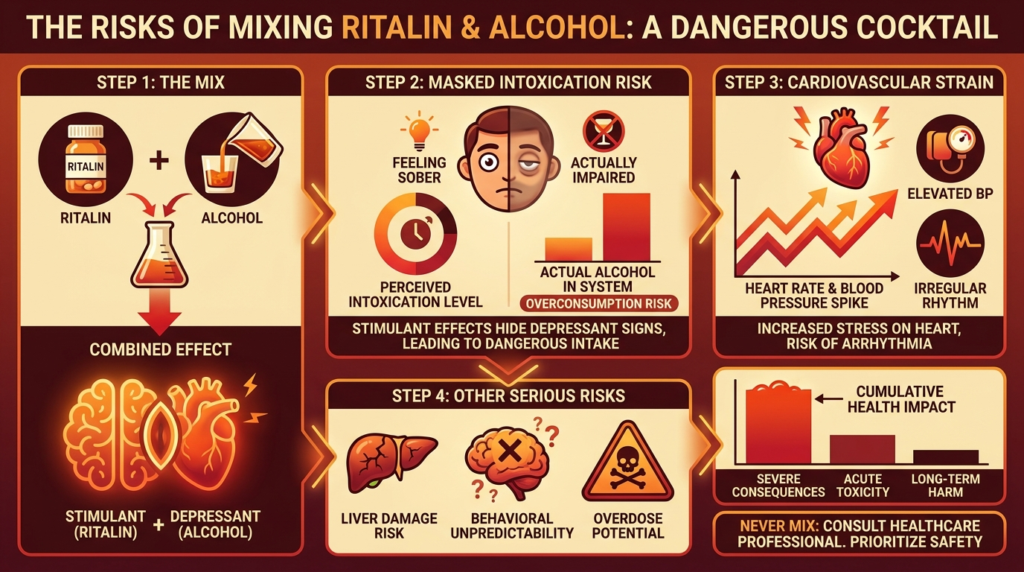
Ritalin and Alcohol: Can You Mix Alcohol & Ritalin?

Mixing Ritalin and alcohol is a common question among people prescribed methylphenidate for ADHD who also drink socially. The short answer is that you should not combine them.

Alcohol can worsen methylphenidate side effects, mask intoxication, and trigger unpredictable drug release in some extended-release formulations, increasing cardiovascular and psychiatric risks.

This article explains what happens when you mix Ritalin and alcohol, why the combination is dangerous, and what to do if you or someone you know has combined them.

What is Ritalin and How Does It Work?

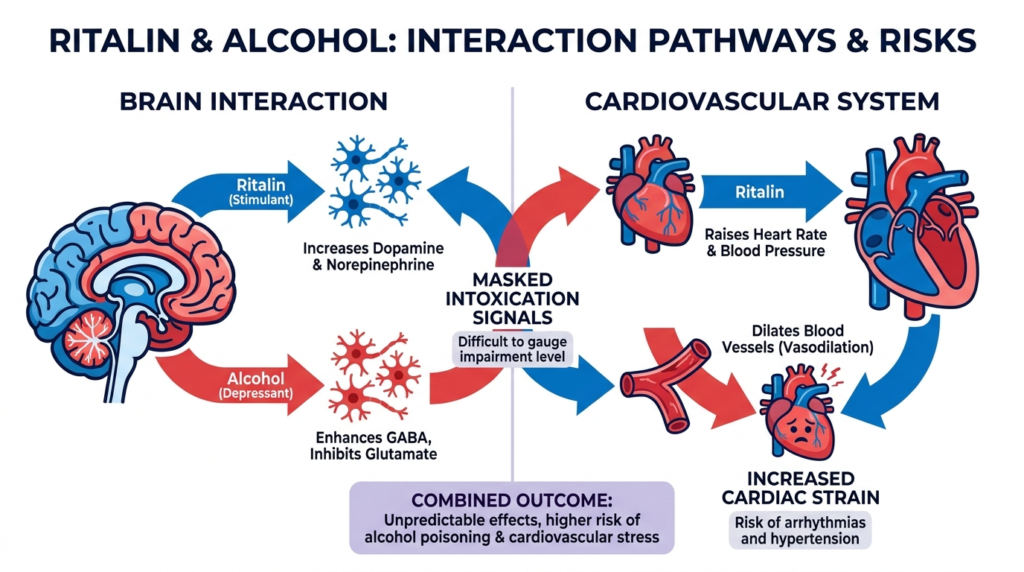
Ritalin is a brand name for methylphenidate, a Schedule II central nervous system stimulant prescribed primarily for attention-deficit/hyperactivity disorder and narcolepsy. It works by increasing dopamine and norepinephrine activity in the brain, improving focus, impulse control, and wakefulness.

The medication comes in multiple forms, including immediate-release tablets, sustained-release tablets, and various extended-release capsules and suspensions. MedlinePlus notes that some methylphenidate products are not interchangeable, which matters when considering alcohol interactions.

Because methylphenidate is a controlled substance with high abuse potential, prescribers must assess substance use history before starting treatment. The drug carries important warnings about cardiovascular risk, psychiatric adverse effects, and dependence potential.

Why People Ask About Mixing Ritalin and Alcohol?

Many adults prescribed Ritalin are of legal drinking age and may wonder whether they can safely have a drink while taking their medication. College students and young professionals, in particular, often encounter social drinking situations.

The question also arises in misuse contexts, where people combine stimulants with alcohol intentionally to stay alert while drinking or to intensify euphoric effects.

The belief that a stimulant will simply “cancel out” alcohol is dangerously misleading. The two drugs act through different mechanisms and produce a complex interaction rather than a straightforward neutralization.

What Happens When You Mix Ritalin and Alcohol?

Masked Intoxication and False Sobriety

One of the most dangerous effects of combining Ritalin and alcohol is that the stimulant can mask how drunk you actually are. 

A systematic review of ADHD medications with alcohol found that users reported diminished sense of drunkenness, increased energy, and euphoria when combining methylphenidate with alcohol. This false sobriety can lead to:

  • Drinking more alcohol than intended
  • Delayed recognition of alcohol poisoning
  • Risky behaviors like driving while impaired
  • Poor judgment about safety and consent
  • Continued redosing of stimulant medication

StatPearls warns that the stimulant effect can mask alcohol intoxication and potentially increase risk, even contributing to severe respiratory depression in some cases.

Increased Alcohol Consumption

Human studies found that people consumed significantly more alcohol when using methylphenidate than when drinking alcohol alone.

The combination may enable “late night partying” and prolonged drinking sessions, increasing the risk of both acute alcohol poisoning and chronic alcohol-related harm.

This pattern is especially concerning among college students and young adults in social drinking environments.

Altered Drug Release in Extended-Release Products

Some extended-release methylphenidate formulations may release the drug more rapidly when alcohol is present. 

Prescribing information for certain methylphenidate extended-release capsules shows that at 40% alcohol concentration, 84% of methylphenidate was released in the first hour, suggesting dose dumping. This accelerated release can cause:

  • Higher peak drug exposure than intended
  • More intense side effects early on
  • Unpredictable symptom control later
  • Increased overdose risk in misuse settings

Not all methylphenidate products show identical alcohol warnings, meaning the risk is formulation-specific. Patients taking extended-release capsules face particularly high concern.

Cardiovascular Risks of Mixing Ritalin and Alcohol

Methylphenidate already carries serious cardiovascular warnings, including sudden death in patients with heart problems, stroke and heart attack in adults, and increased blood pressure and heart rate. 

FDA labeling instructs patients to tell their clinician about heart problems, heart defects, hypertension, or family history of cardiac conditions.

Alcohol can compound these risks by contributing to dehydration, arrhythmia susceptibility, and hemodynamic instability.

Even if alcohol does not directly cause severe cardiac events in every case, it amplifies the context in which stimulant cardiac risks become more dangerous. The combination is especially concerning for people with:

  • Structural heart disease
  • Prior arrhythmia
  • Hypertension
  • Family history of sudden cardiac death
  • High stimulant doses

Patients should seek urgent medical help for chest pain, shortness of breath, fainting, or irregular heartbeat after mixing Ritalin and alcohol.

Psychiatric and Behavioral Dangers

Worsening Psychiatric Symptoms

FDA warnings state that Ritalin can worsen or trigger new behavior and thought problems, aggression, hostility, psychotic symptoms, and manic symptoms.

Alcohol can disinhibit behavior, worsen mood lability, increase impulsivity, and impair judgment. When combined with a stimulant, the result may be increased risk of:

  • Severe agitation
  • Panic-like states
  • Aggressive or violent behavior
  • Impulsive and dangerous decisions
  • Psychotic or manic decompensation in vulnerable individuals

This is particularly concerning for patients with bipolar disorder, prior psychosis, severe anxiety, or significant emotional dysregulation.

Impaired Self-Monitoring as a Risk Multiplier

The diminished sense of drunkenness is not just a sensory oddity. It weakens self-correction and can act as a behavioral amplifier.

A person who feels unusually alert despite accumulating alcohol intoxication may keep drinking, underestimate impairment, become more argumentative, engage in driving or dangerous activity, and misjudge consent or safety.

This is why the combination can be behaviorally dangerous even when vital signs are not immediately alarming.

Misuse, Dependence, and Substance Use Disorder Concerns

MedlinePlus states that methylphenidate can be habit-forming and specifically instructs patients to tell their doctor if they drink or have ever drunk large amounts of alcohol, used street drugs, or overused prescription medications. 

FDA safety labeling emphasizes that misuse and abuse of CNS stimulants, including Ritalin, can result in overdose and death, with greater risk at higher doses or non-approved routes such as snorting or injection.

The requirement to ask about heavy alcohol use reflects several clinical realities:

  • Alcohol use disorder and ADHD frequently overlap
  • People with active alcohol misuse may be more vulnerable to stimulant misuse
  • Combined use may worsen self-control around both substances
  • Ongoing alcohol misuse complicates interpretation of psychiatric and cardiovascular adverse effects
  • Stimulant prescribing in substance-using patients requires closer monitoring

The human evidence showing greater alcohol consumption during methylphenidate co-use suggests the combination itself may encourage escalation, creating concern for binge drinking patterns, recurring combined use in party settings, self-medication cycles, and dependence on one or both substances.

Who is at Highest Risk?

Not all patients face the same level of danger from combining alcohol and Ritalin. The following groups are at particularly high risk:

Patients on Extended-Release Methylphenidate

Possible alcohol-related accelerated release in some formulations makes dosing unpredictable and increases the chance of higher peak exposure and intensified side effects.

People with Heavy Alcohol Use or Alcohol Use Disorder

Specifically flagged by official drug information, these patients face higher risk of binge drinking, dependence, and recurrent co-use patterns.

Individuals with Substance Use Disorder History

Methylphenidate misuse and dependence risk is elevated, along with higher chance of nonmedical use, dose escalation, or diversion.

Patients with Cardiac Disease or Cardiovascular Risk

Methylphenidate already carries serious cardiovascular warnings. Co-use may increase physiologic stress and delay recognition of trouble.

People with Bipolar Disorder, Psychosis History, or Severe Anxiety

Stimulant psychiatric warnings combined with alcohol-related disinhibition and rebound dysphoria can worsen instability.

Adolescents and College-Age Young Adults

Real-world user-report evidence is especially relevant here, with heightened risk-taking, peer influence, and simultaneous polysubstance use.

People Using Methylphenidate Nonmedically

Often involving higher doses or unsafe routes, risk is magnified by alcohol, poor monitoring, and multiple coingestants.

Warning Signs and When to Seek Medical Help?

Immediate Red Flags

A person who has taken Ritalin and alcohol should seek urgent medical assessment if they develop:

  • Chest pain
  • Shortness of breath
  • Fainting
  • Severe agitation
  • Hallucinations or psychotic symptoms
  • Seizures
  • Severe confusion
  • Irregular heartbeat or palpitations
  • Loss of consciousness
  • Suspected overdose

These red flags align with FDA cardiovascular and psychiatric warnings for methylphenidate and with general overdose concerns from stimulant use.

Lower-Threshold Concerns

Even absent an emergency, patients should contact their clinician if they notice repeated drinking while on methylphenidate, feeling less drunk than expected, drinking more than intended, new anxiety or mood swings, worsening insomnia, recurrent tachycardia, or medication seeming to hit harder or less predictably when alcohol is involved.

The Role of Screening and Brief Intervention

If a patient taking Ritalin repeatedly drinks alcohol, especially heavily, the clinically appropriate response is not just to repeat “don’t do that.” It is to assess the severity and pattern of use and intervene proportionally. SAMHSA defines SBIRT as a comprehensive, integrated public health approach that combines screening, brief intervention, and referral to treatment.

Brief intervention aims to increase insight and awareness regarding substance use and motivate behavioral change, while referral to treatment connects patients needing more intensive care to specialty services. SBIRT can be used in primary care clinics, emergency rooms, trauma centers, schools, and community settings, making it highly applicable to methylphenidate-alcohol risk.

A brief intervention for a patient drinking on Ritalin should minimally include a concern statement, feedback linking alcohol to health, and clear advice to abstain from alcohol while taking the medication or at least to stop co-use until prescriber review.

Referral to specialty treatment is appropriate when screening or clinical history suggests recurrent binge drinking, alcohol use disorder symptoms, stimulant misuse or diversion, repeated unsafe co-use, co-occurring psychiatric instability, or inability to control intake despite harm.

Long-Term Risks of Repeated Co-Use

The methylphenidate-alcohol problem is not only about a single night out. If co-use repeatedly promotes heavier alcohol consumption, then even without dramatic acute toxicity it could contribute to worsening alcohol use disorder, chronic cardiovascular strain, deterioration in mood or anxiety control, medication nonadherence, treatment failure in ADHD, and higher misuse or diversion risk.

A 2025 narrative review concludes that methylphenidate remains effective for ADHD, but its use requires comprehensive assessment and ongoing monitoring, with the main safety concerns being cardiovascular adverse effects, psychiatric adverse effects, and misuse or dependence potential.

The same review emphasizes that chronic methylphenidate exposure may have cumulative adverse effects not fully visible in short-term trials, particularly regarding cardiovascular function, neurodevelopment, and psychiatric comorbidities.

What Official Sources Say About Drinking on Ritalin?

MedlinePlus offers clear patient counseling: ask your doctor about the safe use of alcoholic beverages while taking methylphenidate, alcohol can make methylphenidate side effects worse, and tell your doctor if you drink or have ever drunk large amounts of alcohol. This is one of the clearest government-backed patient-facing statements available.

While some FDA label excerpts do not explicitly show alcohol interaction statements, broader Ritalin labeling and medication guides strongly warn about cardiovascular risks, psychiatric adverse effects, abuse and dependence, and the importance of substance use history.

The absence of an explicit alcohol sentence in one label excerpt should not be misread as evidence of safety.

Practical Recommendations

For Patients

  • Do not assume alcohol is safe because you feel more alert
  • Do not use your subjective sense of drunkenness to judge safety
  • If you are taking an extended-release methylphenidate product, be especially cautious
  • Tell your prescriber if you drink heavily, binge drink, or have past alcohol or drug misuse
  • Seek urgent help for chest pain, shortness of breath, fainting, severe agitation, hallucinations, seizures, or irregular heartbeat
  • If you repeatedly drink while on methylphenidate, ask for a medication and alcohol-use review rather than self-experimenting

For Clinicians

  • Ask specifically about alcohol use before and during methylphenidate treatment
  • Counsel on false sobriety, increased drinking risk, and product-specific formulation issues
  • Do not assume absence of explicit alcohol language in one label excerpt equals absence of risk
  • Distinguish immediate-release from extended-release products in counseling
  • Use SBIRT for patients with risky alcohol use
  • Monitor more closely when there is cardiac disease, psychiatric comorbidity, or substance use history

The Bottom Line: Should You Mix Ritalin and Alcohol?

The evidence does not support a simplistic answer, but it does support a clear clinical judgment. Oral therapeutic methylphenidate taken with alcohol does not appear to produce severe acute toxicity in every case, and limited human research does not justify sensational claims that any amount of co-use is uniformly catastrophic. However, that narrow reassurance is outweighed by a more important and better-integrated risk picture.

The combination can reduce the perceived sensation of drunkenness, increase alcohol consumption, produce euphoria and stimulation that reinforce repeated co-use, and potentially disrupt extended-release drug delivery in some formulations. Because methylphenidate already carries established cardiovascular, psychiatric, and misuse-related warnings, alcohol is entering an already risk-sensitive treatment context.

For that reason, the most defensible evidence-based advice is that patients taking Ritalin or other methylphenidate products should avoid alcohol unless their clinician has reviewed the specific product, dose, timing, and individual risk profile.

In practical terms, the greatest dangers are likely to occur not in carefully controlled laboratory conditions, but in real-world contexts: college parties, binge drinking, repeated redosing, nonmedical stimulant use, preexisting heart disease, bipolar-spectrum vulnerability, and histories of heavy alcohol or other substance misuse.

If you or someone you know is struggling with alcohol use while taking Ritalin, or if you are concerned about patterns of co-use, reach out for our professional support. Thoroughbred Wellness & Recovery offers dual diagnosis treatment that addresses both substance use and mental health concerns in a compassionate, evidence-based environment.

Ketamine and Cocaine: Risks of Mixing Cocaine & Ketamine

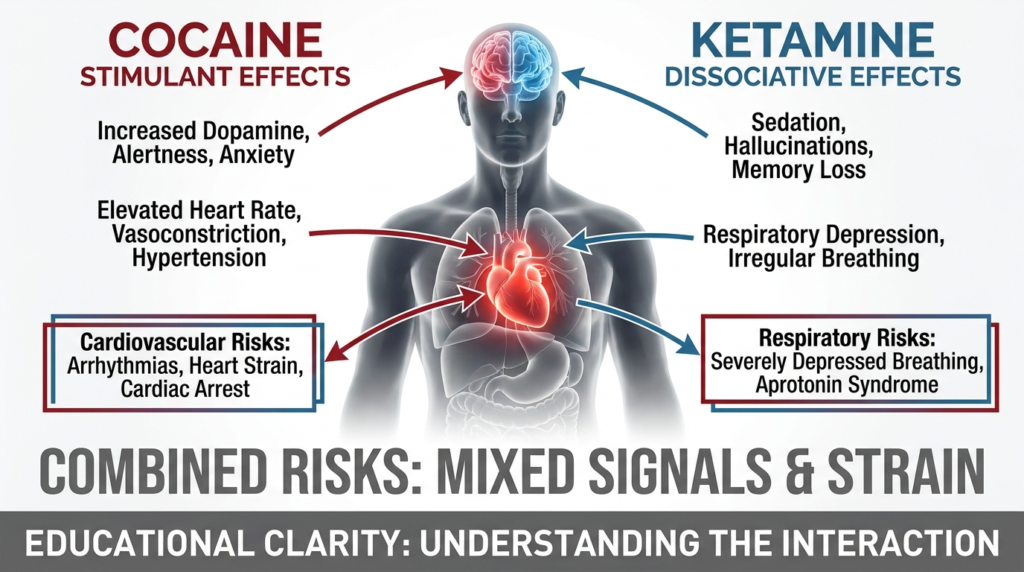
Mixing cocaine and ketamine, sometimes called “Calvin Klein” or “CK” in nightlife settings, is dangerous because it combines a potent stimulant with a dissociative anesthetic in a way that impairs self-monitoring, obscures overdose warning signs, and amplifies cardiovascular, psychiatric, and respiratory risks.

Cocaine drives heart rate, blood pressure, and agitation while ketamine distorts perception and consciousness, creating an unstable state where users may feel less impaired than they actually are. Emergency data show that cocaine-positive patients given ketamine for severe agitation had nearly six times the intubation rate of those without cocaine, signaling a serious interaction risk.

This article explains why the combination is especially hazardous, what happens in the body when these drugs are mixed, and what to do if someone shows signs of overdose.

Why People Mix Cocaine and Ketamine?

The combination of cocaine and ketamine has gained visibility in club, festival, and electronic dance music scenes, where it is often sought for a perceived “balance” between stimulation and detachment. Users report mixing the two to intensify euphoria, stay alert while softening cocaine’s harsh edge, or create a feeling of being energized yet emotionally grounded.

The slang term “Calvin Klein” derives from the initials C and K rather than any pharmacological concept, and the nickname itself can make the practice seem stylized or controlled when it is actually medically unstable.

Nightlife environments reward certain states, sociability, endurance, altered sensory experience, and wakefulness over many hours, and cocaine and ketamine may seem functionally complementary in those settings.

Cocaine supports energy and confidence; ketamine adds surreal detachment and altered perception. Yet those same settings also increase risk through overheating, dehydration, repeated dosing, alcohol co-use, and delayed emergency response in loud, chaotic environments.

Recent reporting drawing on European drug trends suggests that ketamine availability has risen in parts of Europe while cocaine purity has increased significantly over the last decade.

These market shifts make the combination both more accessible and more dangerous, as higher purity reduces the margin for dosing error, especially when users are already mixing substances intentionally.

What Happens When You Mix Cocaine and Ketamine?

When cocaine and ketamine are taken together, the body does not simply average the two effects into a safer middle state.

Instead, the combination produces simultaneous cardiovascular stimulation and perceptual disruption, impaired awareness of toxic warning signs, and reduced ability to self-monitor.

Users may feel less impaired than they are or less physically threatened than they are, which can promote redosing and delay help-seeking.

Cocaine’s Effects on the Body

Cocaine is a potent stimulant that increases catecholaminergic activity and produces a classic sympathomimetic toxidrome. Acute intoxication can include tachycardia, hypertension, diaphoresis, hyperthermia, agitation, seizures, tachyarrhythmias, myocardial ischemia, stroke, and psychotic symptoms.

Cocaine also has sodium-channel-blocking effects, which can produce local anesthetic properties, QRS widening, and seizure risk, distinguishing it from a simple stimulant and adding arrhythmic danger in overdose.

Fever in cocaine intoxication may result from both peripheral vasoconstriction and central dysregulation of temperature. Hyperthermia is especially dangerous because it can trigger organ injury, rhabdomyolysis, coagulopathy, seizures, and collapse.

In festivals or clubs where dancing, crowding, dehydration, and prolonged wakefulness are common, this risk may increase further.

Ketamine’s Effects on the Body

Ketamine is a dissociative anesthetic used medically but also misused recreationally. Acute toxicity can involve dissociation, confusion, hallucinations, psychosis, impaired consciousness, shallow or distressed breathing in overdose, and airway risk requiring supportive management.

There is no recognized antidote for ketamine overdose. Emergency treatment is primarily supportive, centered on airway, breathing, and circulation, with possible use of activated charcoal in selected circumstances, symptom-directed medications such as benzodiazepines, alpha-2 agonists, or anticholinergics, IV fluids, and monitoring even after symptoms appear to improve.

Ketamine can also be difficult to recognize in mixed intoxication because symptoms overlap with other substances and routine toxicology may omit ketamine unless specifically screened for.

The Dangerous Interaction

The central problem is not that cocaine and ketamine produce opposite effects in a neat, canceling way. The evidence instead suggests they can produce stacked instability. Cocaine increases autonomic stress while ketamine alters perception, coordination, and insight.

Each can independently contribute to agitation, hallucinations, and psychosis under some circumstances. This means the user may move quickly between stimulation, dissociation, panic, agitation, confusion, and collapse. Such a presentation is harder for bystanders to interpret and more difficult for clinicians to categorize than a straightforward single-drug overdose.

One of the most clinically striking pieces of evidence comes from a prehospital study of patients who received intramuscular ketamine for excited delirium. In that cohort, suspected cocaine intoxication was associated with a significantly higher risk of subsequent emergency department intubation, with an odds ratio of 5.75.

Among 27 patients with suspected cocaine intoxication, nine were intubated, compared with four of 50 without cocaine intoxication. This study does not prove that all recreational cocaine plus ketamine use always causes intubation, but it provides a meaningful safety signal that when cocaine and ketamine co-occur in already unstable patients, airway deterioration requiring intubation becomes materially more likely.

Acute Risks and Side Effects of Mixing Cocaine and Ketamine

The combination is especially dangerous because several hazards converge. A common misconception is that a stimulant can cancel out a sedative or dissociative. In practice, one drug may mask warning signs of the other without preventing toxicity.

Cocaine may make someone feel more awake, but it does not protect against ketamine-induced disorientation, psychosis, poor coordination, or overdose. Ketamine may blunt some of cocaine’s harsh subjective edge, but it does not reduce cocaine’s cardiovascular or thermoregulatory toxicity.

Cardiovascular and Thermoregulatory Dangers

Cocaine raises heart rate, blood pressure, and arrhythmia risk. Acute cocaine intoxication can cause hypertension, tachycardia and tachyarrhythmias, coronary vasospasm, myocardial ischemia or infarction, and stroke and intracranial hemorrhage. These effects can occur even in younger individuals without traditional cardiovascular risk factors.

The user may therefore experience severe autonomic strain while being too dissociated or confused to recognize chest pain, palpitations, overheating, or impending collapse. This pairing of physiologic stress with impaired insight is one reason the combination is more dangerous than either drug in a fully self-aware user.

Psychiatric and Behavioral Toxicity

Recent overdose research found that agitation, aggression, anxiety, hallucinations, and psychosis were frequent in overdose presentations and were significantly associated with cocaine and other stimulants. Psychosis was specifically associated with cocaine detection. This is highly relevant because users may mix cocaine with ketamine seeking calm or grounding, yet cocaine is one of the substances most strongly tied to behavioral toxicity in overdose populations.

Ketamine can produce dreamlike detachment, hallucinations, and altered perception. In low-to-moderate recreational use, this may be subjectively sought after. In higher or mixed doses, it can become disorienting, frightening, and unsafe.

The person may misinterpret surroundings, lose balance, panic, or become unable to communicate accurately. The combination can produce a dangerous psychiatric profile because cocaine can intensify paranoia, urgency, and overactivation while ketamine can distort reality-testing and bodily awareness. Together they can increase the chance of panic, aggression, confusion, or bizarre behavior.

Excited delirium is not merely acting erratically. It is a medical emergency associated with hyperthermia, rhabdomyolysis, collapse, respiratory arrest, and cardiorespiratory arrest. Cocaine-related hyperthermic syndromes can include hallucinations, agitation, and excited delirium with progression to collapse and arrest. The relevance to cocaine-ketamine mixing is direct: ketamine may intensify altered sensorium while cocaine drives the adrenergic crisis.

Respiratory and Airway Compromise

Public-facing overdose guidance on ketamine highlights shallow breathing, respiratory distress, and unconsciousness as warning signs requiring emergency care. Although cocaine is stimulating, severe intoxication can progress to collapse, irregular breathing, seizures, and cardiorespiratory arrest. In hyperthermic excited delirium, respiratory arrest can be part of terminal deterioration.

The strongest direct concern comes from the prehospital study whose findings suggest cocaine-positive status may increase intubation risk after ketamine in severe agitation. Combined with the known airway focus of ketamine overdose management, this supports a cautious conclusion: airway and breathing problems should be anticipated early in severe cocaine-ketamine intoxication, even if the patient initially appears amped up rather than sedated.

Impaired Overdose Recognition

Bystanders often expect overdose to look like opioid overdose: stopped breathing, blue lips, pinpoint pupils, unresponsiveness. Cocaine-ketamine overdose may look very different, severe confusion, hallucinations, erratic or aggressive behavior, chest pain, rapid pulse, extreme overheating, shallow breathing later in the course, intermittent responsiveness, or collapse after prolonged agitation. This variability can cause dangerous delays.

People in overdose frequently underreport co-ingested substances. If the user says they only took ketamine, cocaine may be missed; if they say they only did cocaine, ketamine may be missed. Witnesses may also assume one substance based on reputation or paraphernalia rather than actual exposure.

Users seeking a balanced high may interpret warning signs as expected effects: derealization interpreted as good ketamine, racing heart interpreted as just cocaine, confusion interpreted as temporary, agitation seen as part of the party environment. This misattribution is a major danger.

Polysubstance Use and Hidden Contamination Risks

The strongest contextual evidence comes from an Irish survey of 1,193 adult festival attendees. In that cohort, 96 percent reported drug use, 86.8 percent reported polysubstance use, and participants reported using an average of three substances at one time. Common combinations involved alcohol, cocaine, ketamine, and MDMA.

This is crucial because cocaine-ketamine use does not usually occur in isolation. In nightlife settings, people often combine multiple substances to engineer a certain experience, cope with comedowns, prolong wakefulness, or modulate unwanted effects.

Multiple sources indicate that ketamine misuse often occurs with other substances, including alcohol, cocaine, and MDMA. One review specifically notes that in acute ketamine toxicity, simultaneous use of alcohol, cocaine, and MDMA has been reported. Another recent review argues that recreational ketamine use is frequently combined with other substances and that routine toxicology may miss ketamine in mixed intoxications if it is not specifically screened for.

In acute recreational drug overdose, self-report is often inaccurate, with major underreporting documented for benzodiazepines, pregabalin, and THC.

This finding implies a broader lesson: clinicians and bystanders should assume that some co-ingestants may be undisclosed, forgotten, unknown, or denied. In suspected cocaine-ketamine intoxication, this means the true exposure may include additional depressants or stimulants, substantially altering risk.

Polysubstance use increases danger through several pathways: additive or synergistic toxicity, masking of warning signs, impaired ability to judge dose or deterioration, more difficult emergency management, contaminated or mis-sold substances, and delayed recognition by bystanders and clinicians.

For cocaine-ketamine specifically, the problem is intensified by the fact that one drug can make the user feel more stimulated while the other impairs perception and judgment.

Warning Signs of Cocaine and Ketamine Overdose

Seek immediate emergency care for difficulty breathing or shallow breathing, chest pain, severe confusion, psychosis or extreme agitation, seizures, hyperthermia or overheating, unresponsiveness, blue or gray discoloration, or irregular pulse. A cocaine overdose may look like severe agitation, chest pain, overheating, tachycardia, or seizure.

A ketamine overdose may look like confusion, hallucinations, shallow breathing, unresponsiveness, or dissociation. A mixed overdose may show features of both or shift between them. This can confuse bystanders into assuming the person is just really high, especially if they are intermittently responsive or moving around.

The combination is especially dangerous because it can look less immediately recognizable than classic opioid overdose while still becoming life-threatening.

What to Do in an Emergency?

If ketamine overdose is suspected, bystanders are advised to call 911 immediately, assess responsiveness, breathing rate, and pulse, monitor the person while awaiting emergency medical services, and provide medical personnel with details about suspected substances, symptoms, and relevant history. This advice is applicable to suspected cocaine-ketamine overdose as well.

Standard initial treatment for acute cocaine toxicity includes benzodiazepines, active cooling, and attention to end-organ damage, trauma, and seizures. Many cocaine toxicity manifestations, especially agitation, tachycardia, and hypertension, improve with sedatives. IV benzodiazepines are first-line; antipsychotics may be added if agitation remains uncontrolled.

Because there is no antidote for ketamine, overdose management centers on airway, breathing, circulation, supportive care, IV crystalloids for dehydration or hyperthermia, observation and monitoring after symptom improvement, and symptom control with medications as needed.

The combination may require simultaneous management of violent agitation or psychosis, hyperthermia, hypertension and tachycardia, respiratory compromise, possible seizures, and trauma from falls, restraint, or combative behavior. This is one reason the combination is especially dangerous: it can force clinicians to treat both a stimulant emergency and a dissociative overdose picture at once.

Naloxone does not reverse cocaine or ketamine directly. However, because stimulant drugs can be contaminated with opioids such as fentanyl, public health sources recommend considering naloxone when opioid involvement is suspected. This is relevant in uncertain mixed overdoses where breathing is impaired.

Harm Reduction and Risk Reduction

The surest risk reduction is not mixing cocaine and ketamine at all. Based on the evidence, this is the clearest recommendation. Because co-ingestion is common and self-report is unreliable, do not assume only one drug was taken, monitor for both stimulant and dissociative effects, and expect hidden substances or contamination.

Given the strong role of setting, avoid using alone, avoid repeated redosing, avoid combining with alcohol, benzodiazepines, or unknown powders, cool down, hydrate, and rest, and use drug-checking where available. Festival research indicates that drug-checking services can prompt safer behavior such as warning others, being more careful with polysubstance use, and taking lower doses.

Routine toxicology may miss ketamine, and users often do not know what is actually in a substance. Drug checking is not a guarantee of safety, but it can reduce some uncertainty and may support harm-reduction decisions in nightlife settings.

Long-Term Health Concerns

Although this report focuses on acute risk, some chronic implications are relevant. Ketamine misuse with multiple substances is associated with higher overdose and fatality risk. Cocaine use carries cumulative cardiovascular and psychiatric harms. Repeatedly combining the two may therefore increase both acute-event risk and longer-term substance use disorder burden.

Frequent ketamine use has been associated with urinary tract and bladder complications, cognitive problems, sleep issues, and depression-related concerns. Chronic stimulant use can contribute to recurrent emergency visits, mental health deterioration, cardiovascular complications, and ongoing relapse cycles that strain both individuals and health systems.

Why This Combination Deserves Serious Attention?

Mixing cocaine and ketamine is especially dangerous because it combines the cardiovascular, thermoregulatory, neurologic, and psychiatric hazards of cocaine with the dissociative, perceptual, and airway-related hazards of ketamine in a way that impairs self-monitoring, obscures overdose recognition, and complicates emergency management. This is not merely a generic warning about any drugs mixed together. It is a specific high-risk pairing.

Cocaine alone is medically dangerous enough to cause myocardial infarction, stroke, seizures, hyperthermia, excited delirium, and psychosis. Ketamine alone can impair consciousness, perception, and breathing, and has no antidote; treatment is supportive and airway-focused. The combination is often used intentionally to balance effects, but that subjective balance is misleading because one drug can mask the warning signs of the other rather than neutralize toxicity.

In real-world settings, cocaine and ketamine are rarely isolated exposures. Polysubstance use is the norm in festival and nightlife environments, and overdose self-report is often inaccurate. There is direct human clinical evidence of higher intubation risk in cocaine-positive patients exposed to ketamine in severe agitation settings. While not definitive for all recreational scenarios, this is a serious warning signal.

For these reasons, the combination deserves to be viewed not as a trendy club drug practice but as a medically unstable form of polysubstance exposure with a plausible path to psychosis, hyperthermia, collapse, airway compromise, and death.

If you or someone you care about is struggling with cocaine, ketamine, or polysubstance use, our professional help can make all the difference. Thoroughbred Wellness & Recovery offers compassionate, evidence-based care for substance use and co-occurring mental health conditions in a supportive environment.

Our team is available 24/7 to answer your questions and guide you toward lasting recovery. Contact our team today to learn how we can help.

Molly and Coke: Risks of Mixing MDMA and Cocaine

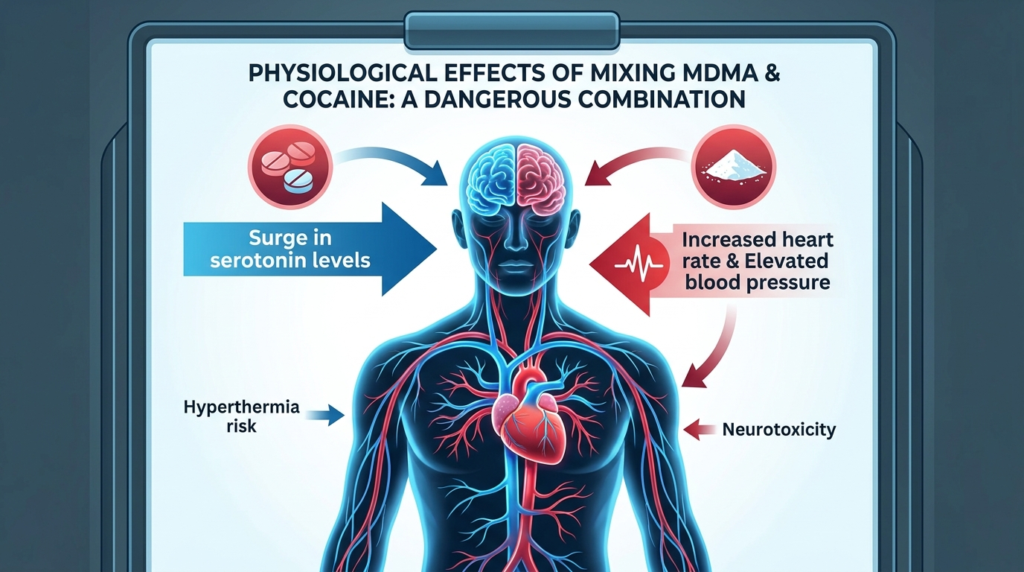
Mixing MDMA and cocaine creates a dangerous stimulant combination that can overwhelm your cardiovascular and nervous systems. Both drugs independently cause rapid heart rate, high blood pressure, and overheating, but together they amplify these risks in unpredictable ways.

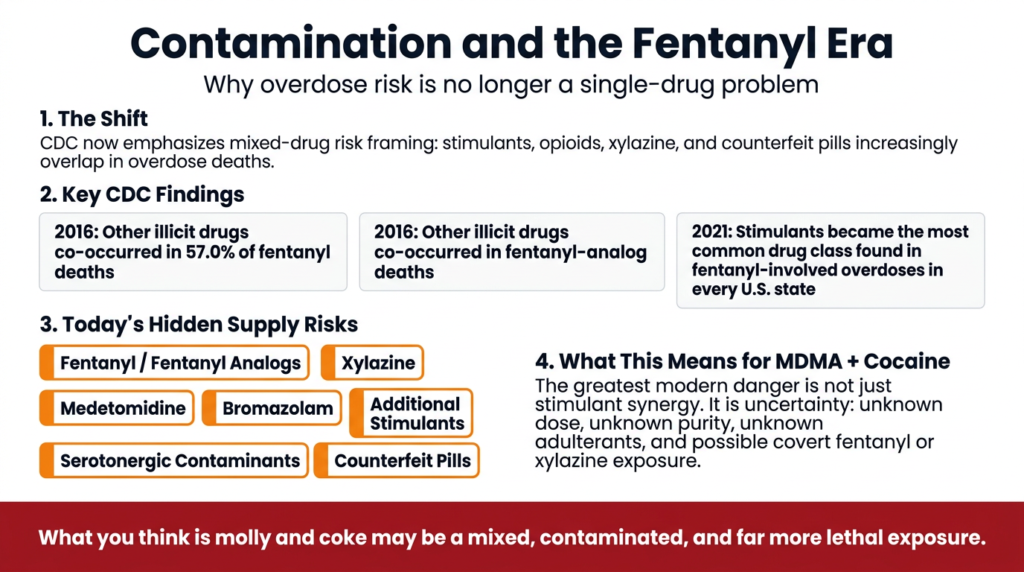
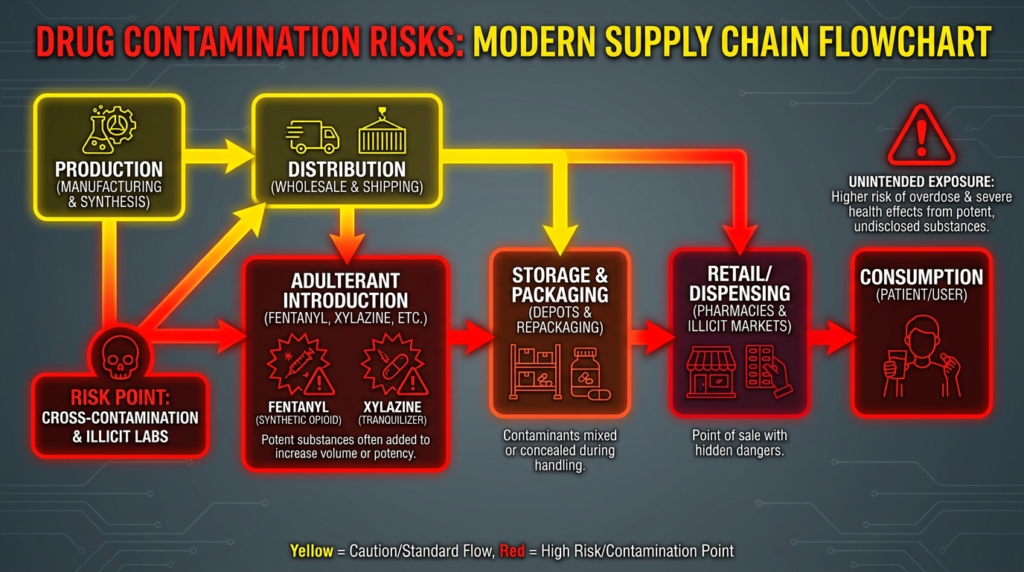
The greatest modern danger is not only the pharmacological interaction but also the contaminated drug supply: what you think is molly or coke may contain fentanyl, xylazine, or other adulterants that turn a risky decision into a life-threatening emergency.

This article explains what happens when you combine these substances, why the risks are higher than ever, and what warning signs require immediate medical attention.

What Are Molly and Cocaine?

MDMA, commonly called molly or ecstasy, is a synthetic psychoactive drug with stimulant and empathogenic properties. It increases serotonin, dopamine, and norepinephrine in the brain, producing feelings of emotional warmth, energy, and sensory enhancement.

Cocaine is a powerful central nervous system stimulant that blocks the reuptake of dopamine, creating intense euphoria, alertness, and confidence. Both drugs are popular in nightlife, festival, and social settings, and both carry serious acute toxicity risks even when used alone.

The critical pharmacological difference is that MDMA acts primarily as a monoamine releaser with especially strong serotonergic effects, while cocaine functions mainly as a reuptake blocker with particularly strong dopaminergic reinforcement.

This means they push the same neurotransmitter systems through different mechanisms, creating an unstable and unpredictable combined effect rather than a simple doubling of stimulation.

Why People Mix MDMA and Cocaine?

Users often combine molly and coke seeking to merge cocaine’s sharp, intense euphoria with MDMA’s prosocial warmth and prolonged energy.

The goal is typically to enhance stamina for dancing, intensify sociability, and extend wakefulness during parties or festivals. Some users believe cocaine will sharpen MDMA’s empathogenic effects, while others think MDMA will soften cocaine’s edginess.

This logic rests on a flawed assumption. The nervous system does not respond to polysubstance stimulant exposure in a predictable, controllable way.

When two drugs act on dopamine, serotonin, and norepinephrine systems through different pathways, the result can be synergistic, state-dependent, and highly variable across dose, timing, and individual physiology. What feels subjectively manageable during the high may mask dangerous physiological strain.

The Modern Drug Supply: Hidden Dangers Beyond Pharmacology

The most important shift in understanding molly and coke risks is recognizing that today’s drug market is fundamentally different from a decade ago.

The Centers for Disease Control and Prevention now emphasizes that polysubstance use can occur intentionally or unintentionally, with or without the person’s knowledge. This reflects the contemporary reality of contamination, substitution, and counterfeit drug products.

By 2021, stimulants were the most common drug class found in fentanyl-involved overdoses in every U.S. state.

The Substance Abuse and Mental Health Services Administration warns that fake pills marketed as prescription stimulants, opioids, or benzodiazepines may contain fentanyl, and DEA data indicates that 7 in 10 fake pills contain a potentially lethal dose.

This means a person who intends to mix two stimulants may unknowingly consume opioids, xylazine, benzodiazepine analogs, or other adulterants.

The practical implication is stark: the phrase “mixing molly and coke” is chemically too simple for today’s drug market. In many real-world cases, you are not combining two known pharmaceutical-grade substances but ingesting an unstable set of unknowns.

Acute Physical Effects and Toxicity

Overlapping Stimulant Burden

Both MDMA and cocaine increase sympathetic nervous system activation, producing overlapping effects that can reinforce one another:

  • Rapid heart rate and elevated blood pressure
  • Increased body temperature and sweating
  • Agitation, anxiety, and restlessness
  • Jaw clenching and muscle tension
  • Dilated pupils and tremor
  • Reduced appetite and insomnia
  • Impaired judgment and increased impulsivity

When taken together, these effects place compounding stress on the cardiovascular, thermoregulatory, and neurologic systems.

The body’s usual feedback mechanisms may become uncoupled from neurotransmitter output, meaning you can feel subjectively stable while physiological strain continues to escalate.

MDMA-Specific Dangers

MDMA toxicity alone can produce a broad and dangerous syndrome. Trusted medical sources describe life-threatening complications including hyperthermia resembling heat stroke, serotonin syndrome, cardiac dysrhythmias, rhabdomyolysis, acute renal failure, hyponatremia, cerebral edema, disseminated intravascular coagulation, aortic dissection, intracranial hemorrhage, seizures, coma, and death.

Serotonin syndrome is especially concerning. This condition can rapidly progress from confusion, tremor, and sweating to cardiovascular instability, seizures, and coma. MDMA can precipitate serotonin syndrome on its own, but the risk increases when combined with other serotonergic agents or in polysubstance contexts where the full exposure set is unknown.

Cocaine-Specific Dangers

Cocaine toxicity is primarily a cardiovascular emergency. It can rapidly produce tachycardia, severe hypertension, coronary vasospasm, acute coronary syndrome, arrhythmias, stroke, and death.

Cocaine also lowers the seizure threshold and can cause agitation, paranoia, and delirium. When cocaine is added to MDMA, several overlapping risks become especially dangerous:

  • Hyperthermia: Both drugs increase activity, vasoconstriction, and metabolic stress, especially in hot, crowded environments.
  • Cardiovascular instability: Cocaine adds potent cardiac and vascular strain on top of MDMA’s cardiovascular effects.
  • Seizure risk: Both substances may lower seizure threshold, particularly in high-dose or prolonged-use scenarios.
  • Stroke and hemorrhage: Severe hypertension, vasospasm, hyperthermia, and coagulopathy create dangerous conditions for vascular events.
  • Rhabdomyolysis and renal injury: Overheating, agitation, prolonged exertion, and dehydration increase the risk of muscle breakdown and kidney damage.

Water Balance and Hyponatremia

MDMA intoxication can cause hyponatremia and cerebral edema, especially in contexts involving prolonged dancing, overheating, and misguided overhydration. The clinical problem is not simply dehydration but maintaining hydration without excessive free-water intake.

When cocaine is used concurrently, users may stay awake longer, dance longer, and perceive less fatigue, potentially worsening exertional stress and fluid imbalance.

Emergency Warning Signs

A person mixing MDMA and cocaine may experience intense energy, euphoria, and sociability initially, but these are not benign recreational effects.

Several represent early warning signs of toxicity progression. The following symptoms should be treated as medical emergencies:

  • Very high body temperature or uncontrollable sweating
  • Chest pain or severe palpitations
  • Severe headache or visual disturbances
  • Seizure or rigid muscles with jerking movements
  • Loss of consciousness or collapse
  • Severe agitation, delirium, or confusion that is worsening
  • Trouble breathing or blue lips
  • Repeated vomiting or signs of stroke
  • Unusual drowsiness or slowed breathing, which may suggest hidden opioid contamination

Stimulant overdose is a real overdose emergency, not simply being “too high.” The CDC emphasizes that stimulant emergencies commonly involve cardiovascular strain, severe agitation, and dangerous mental-status changes requiring urgent response.

A person may remain conscious, moving, or agitated while entering a life-threatening state, making recognition and early intervention critical.

Contamination and the Fentanyl Era

One of the most consequential developments in overdose science is the move away from single-drug explanations. The CDC now explicitly emphasizes that polysubstance overdose deaths have increased and that deaths involving stimulants, opioids, xylazine, and counterfeit pills require mixed-drug risk framing.

In a CDC report covering 10 states in 2016, other illicit drugs co-occurred in 57.0% of fentanyl deaths and 51.3% of fentanyl-analog deaths, with cocaine and heroin commonly present.

Nearly half of fentanyl-analog deaths involved two or more analogs or fentanyl, demonstrating that supply complexity and multiple-opioid exposure were major hazards even then. By 2021, the pattern had intensified: stimulants became the most common drug class found in fentanyl-involved overdoses in every state.

The supply is also diversifying. Recent research notes that adulterants such as xylazine, medetomidine, and bromazolam may alter risk and behavior beyond fentanyl alone. For someone using both MDMA and cocaine, this means the exposure may include fentanyl or fentanyl analogs, xylazine, benzodiazepine-like adulterants, additional stimulants, or serotonergic contaminants.

This is not rhetorical overstatement. It follows directly from CDC and SAMHSA’s updated public health messaging and fentanyl-era surveillance. The greatest modern danger of mixing molly and coke is not only synergistic stimulant toxicity but also uncertainty: unknown dose, unknown purity, unknown adulterants, and possible covert fentanyl or xylazine exposure.

Long-Term Brain and Cognitive Effects

Beyond acute toxicity, repeated MDMA and stimulant polysubstance exposure is associated with measurable brain-related abnormalities.

A PET study of 49 polysubstance users in prolonged abstinence found that greater lifetime severity of heroin, alcohol, MDMA, and cannabis use was associated with lower resting brain metabolism in the dorsolateral prefrontal cortex and temporal cortex. Stimulant exposure, including cocaine and MDMA, was uniquely associated with reduced metabolism in the inferior parietal and postcentral cortex.

These regions are not arbitrary. The dorsolateral prefrontal cortex governs executive function, planning, inhibition, and working memory. The temporal cortex is involved in memory-related processing. The inferior parietal cortex supports attention, visuospatial processing, and cognitive control.

These abnormalities were observed after prolonged abstinence, suggesting persistent dysfunction beyond immediate intoxication or withdrawal.

Long-term MDMA use has been associated with mood alterations, elevated cortisol, declines in executive functioning, impaired set-shifting, difficulty accessing semantic memory, and cognitive deficits in verbal learning, attention, and working memory.

Anxiety, depressed mood, and decreased serotonin transporter expression have also been documented. In adolescence-focused review work, depressive symptoms, anxiety, and more severe manifestations including suicidal ideation were reported.

The key point is that recurrent molly-and-coke use may contribute to deficits in executive control, attention, decision-making, visuospatial function, memory, and motor regulation.

These are precisely the capacities that protect against repeated risky use, creating a plausible vicious cycle: individuals use combined stimulants for social or hedonic reasons, but chronic exposure may erode the control systems needed to moderate future use.

Adolescent and Young Adult Vulnerability

MDMA use is common in youth and young adult social settings. SAMHSA’s youth prevention materials emphasize that among adolescents ages 10 to 19, from 2019 to 2021, monthly drug overdose deaths increased 109%, deaths involving illicitly manufactured fentanyls increased 182%, about 90% involved opioids, 84% involved illicitly manufactured fentanyls, and counterfeit pills were present in nearly 25% of these deaths.

A 2025 structured review focused on adolescent MDMA use found consistent associations with psychological disturbances including depressive and anxious symptoms, suicidal ideation and attempts, and neuropsychological impairments in memory, attention, and executive functioning. It also emphasized serotonergic disruption and the special vulnerability of the adolescent brain, while acknowledging methodological limitations such as small samples and polydrug confounding.

This is especially relevant because concurrent cocaine and MDMA use is often described as common in club and party settings among young adults and within broader polysubstance patterns. Even if direct dyad evidence is limited, the developmental risk context is not.

Nightlife Settings as Risk Amplifiers

The literature on nightlife drug use consistently shows that EDM, festival, and club settings are not neutral backdrops.

They alter hydration, ambient temperature, exertion, sleep deprivation, social pressure, and emergency response timing. MDMA is particularly associated with these environments, and cocaine is also common within them.

Environmental and behavioral amplifiers include:

  • Hot indoor venues with poor ventilation
  • Crowding and prolonged dancing
  • Sleep deprivation and limited food intake
  • Alcohol or other co-ingestion
  • Redosing and sharing unverified pills or powders
  • Underestimating symptoms and delaying medical help out of fear

A systematic review of nightlife substance-use studies notes that stimulant use such as MDMA or cocaine carries risks of dehydration, overheating, and cardiovascular episodes.

Another nightlife study found physical manifestations such as palpitations and collapsing among attendees, reinforcing that acute harms are not rare abstractions.

The European Union Drugs Agency reported that in a 2024 web survey, only 10% of MDMA users said they used it with no other substance on the last occasion; 70% used alcohol, 55% tobacco, and 27% herbal cannabis.

Although this does not directly quantify cocaine co-use, it underscores a larger reality: recreational MDMA use is frequently part of a multi-substance pattern. That pattern magnifies unpredictability.

Harm Reduction and Emergency Response

The safest recommendation is not to combine MDMA and cocaine. That is not a moral judgment; it is a toxicological one. The combined use has no reliable safety profile, especially outside controlled medical environments, which do not exist for illicit party-drug co-use.

However, the evidence supports several pragmatic measures relevant to real-world harm reduction:

Before use:

  • Avoid assuming “molly” is pure MDMA or cocaine is uncontaminated.
  • Use drug-checking services where available.
  • Use fentanyl test strips where appropriate, recognizing limitations.
  • Avoid combining with alcohol or additional stimulants or depressants when possible.
  • Do not use alone.

During use:

  • Monitor temperature, confusion, chest symptoms, and agitation.
  • Take cooling and rest seriously in hot environments.
  • Avoid continuous dancing without breaks.
  • Hydrate carefully; do not overconsume water rapidly.
  • Do not redose because one drug appears to “wear off.”

Emergency response:

  • Call emergency services early for overheating, chest pain, seizure, collapse, or severe confusion.
  • Treat stimulant overdose as a medical emergency.
  • If fentanyl contamination is possible, naloxone availability is sensible, especially in cocaine-using populations.
  • Move to a cooler, safer environment if hyperthermic.
  • Monitor breathing and consciousness.
  • Give naloxone if opioid contamination is possible or if breathing is slowed or unresponsiveness occurs.
  • Do not force large amounts of water.
  • Do not leave the person alone.
  • Report all known or suspected substances to responders, including uncertainty.

Because stimulant users are increasingly exposed to fentanyl, naloxone should be available even when the intended drugs are cocaine or MDMA. This follows directly from CDC and SAMHSA framing and from the observed overlap of stimulants with fentanyl in overdose patterns.

Why is This Combination More Dangerous Than Many Users Assume?

There is a cultural misconception that stimulant overdoses are less “real” than opioid overdoses because they may not begin with obvious respiratory depression. This is incorrect.

Stimulant emergencies commonly involve cardiovascular strain, severe agitation, and dangerous mental-status changes. A person may remain conscious, moving, or agitated while entering a life-threatening state.

The CDC’s 2025 MMWR on suspected fentanyl-involved nonfatal overdose emergency department visits found that rates increased in a majority of demographic groups from late 2020 through mid-2023, then declined from Q3 2023 to Q1 2024, but remained high overall.

This report does not isolate MDMA-cocaine co-use, but it shows that nonfatal fentanyl-involved overdose remains a major ED burden, fentanyl involvement may be missed or misclassified depending on testing practices, and people with a nonfatal overdose are at increased risk of future fatal overdose.

Thus, anyone presenting after “molly and coke” use should be evaluated with contemporary supply realities in mind. Even an apparently “recovered” party or festival episode involving molly and coke should be taken seriously clinically.

Treatment and Recovery

For recurrent use or emerging disorder, stimulant use disorder treatment often relies on psychosocial interventions.

Contingency management has some of the strongest evidence for stimulant disorders. Cognitive behavioral therapy and related psychosocial interventions are also supported. If opioid exposure or opioid use disorder is also present, medications for opioid use disorder remain evidence-based and mortality-reducing.

This is another important insight: because real-world molly-and-coke use may involve hidden opioid exposure, treatment planning should not assume a pure stimulant-only pathway. Comprehensive assessment, dual diagnosis treatment, and integrated care for co-occurring substance use and mental health disorders are essential.

Conclusion

Mixing molly and coke means combining two stimulants that can amplify cardiovascular strain, overheating, agitation, neurologic instability, and impaired judgment.

MDMA alone can produce severe toxicity including serotonin syndrome, seizures, rhabdomyolysis, acute renal failure, cerebral edema, cardiac dysrhythmias, intracranial hemorrhage, disseminated intravascular coagulation, and death. Cocaine adds substantial sympathetic and cardiovascular burden. Even where recent dyad-specific emergency incidence data are limited, the acute danger is strongly supported by toxicology and clinical plausibility.

The more advanced and more important conclusion is that this combination now exists within a transformed drug environment.

CDC and SAMHSA explicitly warn that polysubstance exposure may occur with or without the user’s knowledge, and counterfeit pills, fentanyl contamination, xylazine, and other adulterants have reshaped overdose risk. Stimulants are now commonly involved in fentanyl-related overdoses across the United States, making any stimulant combination more dangerous than older models assumed.

Longer-term findings further suggest that repeated MDMA and stimulant polysubstance exposure may be associated with persistent deficits in executive function, attention, memory, mood, and brain metabolism, particularly in prefrontal, temporal, and parietal regions. These effects appear especially relevant in prolonged-abstinence polysubstance users and may outlast immediate withdrawal.

In objective terms, when you mix molly and coke, you do not merely get a stronger high; you create a physiologically unstable and increasingly unpredictable toxic exposure that can escalate to life-threatening emergency conditions and may contribute to enduring neuropsychiatric harm.

In 2026, that judgment is not alarmist. It is the most evidence-consistent interpretation of the available data.

If you or someone you care about is struggling with stimulant use or polysubstance patterns, reaching out for Thoroughbred’s professional support is a critical step toward safety and recovery. Our Dual diagnosis treatment addresses both substance use and co-occurring mental health concerns in an integrated, compassionate way.

Lamictal and Zoloft: Can You Take Zoloft & Lamictal Together?

Many people wonder whether they can safely combine Lamictal and Zoloft, especially when managing both mood disorders and anxiety or depression. The short answer is yes! These medications can often be taken together under medical supervision.

2012 retrospective study found no statistically significant interaction between the two drugs in psychiatric patients, though the study was small and could not rule out individual variation. This article will explain what the research shows, what risks to watch for, and how to use these medications safely together.

Understanding Lamictal and Zoloft

Lamictal, the brand name for lamotrigine, is an anticonvulsant and mood stabilizer approved for epilepsy and maintenance treatment of bipolar I disorder.

According to current prescribing information, it works primarily to delay mood episodes in patients already treated for acute symptoms.

Recent clinical practice guidelines emphasize that lamotrigine is most effective for preventing depressive episodes rather than manic ones, and it must be started slowly to reduce the risk of serious rash.

Zoloft, or sertraline, is a selective serotonin reuptake inhibitor commonly prescribed for major depression, anxiety disorders, panic disorder, obsessive-compulsive disorder, and post-traumatic stress disorder. It works by increasing serotonin levels in the brain, which helps regulate mood and anxiety.

The two medications address different but overlapping problems. Lamictal provides long-term mood stabilization and helps prevent depressive relapses in bipolar disorder. Zoloft targets acute depressive symptoms, anxiety, panic, and obsessive thoughts.

This complementary action explains why doctors often prescribe them together, particularly for patients with bipolar disorder who also experience significant anxiety or persistent depression.

What the Research Shows About Taking Them Together?

The Evidence is Mixed but Generally Reassuring

The interaction between Zoloft and Lamictal has been studied directly, though the evidence base remains limited. The most important research includes a concerning early case report and a later, more reassuring observational study.

In 1998, researchers published a case report describing two epilepsy patients who experienced marked changes in lamotrigine blood levels after starting or stopping sertraline.

In one case, adding just 25 mg daily of sertraline appeared to double the lamotrigine level and cause toxicity symptoms. The authors suggested that sertraline might inhibit lamotrigine metabolism and recommended careful monitoring.

However, a 2012 retrospective study painted a different picture. Researchers compared lamotrigine blood levels in psychiatric patients taking sertraline versus those not taking it. They found dose-corrected lamotrigine concentrations of 60.4 versus 51.1 μmol/L × 1,000/mg/day, a difference that was not statistically significant with a p-value of 0.42.

The authors concluded that any effect of sertraline on lamotrigine metabolism was not clinically significant, though they acknowledged their small sample size of only seven patients taking both drugs meant they could have missed a real effect.

2024 review of pharmacokinetic interactions between antiseizure and psychiatric medications summarized the tension in the evidence: early cases suggested a possible interaction, but later analysis found only a slight, non-significant increase in lamotrigine levels.

What This Means for You?

The best interpretation of the available evidence is that most people can take Zoloft and Lamictal together without major problems, but the combination is not entirely interaction-free.

A large, consistent pharmacokinetic interaction has not been proven, but individual patients may experience meaningful changes in lamotrigine levels when sertraline is started, stopped, or adjusted.

Current lamotrigine prescribing information does not list sertraline among the major drug interactions that require automatic dose adjustments, unlike valproate, carbamazepine, or estrogen-containing contraceptives.

This regulatory silence suggests the interaction is not considered a major clinical concern at the population level.

Potential Benefits of the Combination

Complementary Symptom Relief

The primary benefit of combining Lamictal and Zoloft is that they target different aspects of mood and anxiety disorders.

Lamictal excels at long-term mood stabilization and preventing depressive relapses in bipolar disorder, while Zoloft addresses acute symptoms like persistent sadness, worry, panic attacks, and obsessive thoughts.

For someone with bipolar disorder who remains anxious or mildly depressed despite mood stabilization, adding Zoloft may provide additional relief.

Similarly, a patient initially treated for depression and anxiety with Zoloft who later shows signs of bipolar spectrum illness may benefit from adding Lamictal for mood stability.

Supported by Bipolar Treatment Guidelines

Recent bipolar disorder guidelines note that adjunctive antidepressant treatment may be considered as a second-line option for acute bipolar depression.

The guidelines specifically state that SSRIs like Zoloft or bupropion are preferred because they have lower rates of triggering manic episodes compared with other antidepressants.

However, the guidelines emphasize that antidepressants should never be used alone in bipolar disorder and must be combined with an adequate mood stabilizer like Lamictal.

This evidence-based framework supports the Lamictal-Zoloft combination when there is a clear clinical need, proper monitoring, and patient education about warning signs of mood destabilization.

Better Tolerability Than Some Alternatives

Compared with some other mood stabilizers and antipsychotics, Lamictal tends to have a more favorable side effect profile.

It typically does not cause significant weight gain or metabolic problems, and many patients find it less sedating than alternatives. Zoloft is similarly well-tolerated by many people and offers flexible dosing options.

When both medications work well together, patients may achieve better symptom control with fewer troublesome side effects than they might experience with higher doses of a single medication or with different drug combinations.

Important Risks and Side Effects

Serious Rash Risk from Lamictal

The most important safety concern when taking Lamictal is the risk of serious skin reactions, including Stevens-Johnson syndrome and toxic epidermal necrolysis. These potentially life-threatening rashes are more likely when Lamictal is started too quickly, at too high a dose, or when combined with valproate.

According to official safety information, nearly all serious rashes occur within the first two to eight weeks of treatment. The risk increases dramatically when the recommended titration schedule is not followed. Patients should stop Lamictal immediately at the first sign of any rash unless it is clearly not drug-related.

This rash risk exists whether or not you take Zoloft. However, when starting both medications or adjusting doses, patients and doctors must remain vigilant because new symptoms could be mistakenly attributed to the “new” medication while missing an important Lamictal warning sign.

Possible Lamictal Toxicity in Some Individuals

Although the average interaction between Zoloft and Lamictal appears small, some individuals may experience increased lamotrigine levels when sertraline is added. Symptoms of lamotrigine toxicity can include dizziness, loss of balance, blurred or double vision, confusion, excessive drowsiness, and nausea.

If you develop these symptoms after starting Zoloft or increasing the dose, contact your doctor promptly. They may check your lamotrigine blood level and adjust your dose if needed.

Additive Central Nervous System Effects

Even without a major pharmacokinetic interaction, taking two psychiatric medications together can increase side effects like drowsiness, dizziness, cognitive slowing, and coordination problems. These effects may be most noticeable during the first few weeks of treatment or after dose changes.

Alcohol can worsen these effects significantly, so it is important to discuss alcohol use with your doctor and follow their recommendations about limiting or avoiding it while taking these medications.

Risk of Mood Switching in Bipolar Disorder

One of the most important risks specific to bipolar disorder is that antidepressants like Zoloft can sometimes trigger a switch into hypomania or mania. 

Current guidelines emphasize that antidepressants should be used cautiously in bipolar disorder, always with a mood stabilizer, and discontinued promptly if a treatment-emergent mood switch occurs.

Warning signs of a possible switch include decreased need for sleep, racing thoughts, increased energy that feels “revved up” rather than healthy, impulsive spending or risk-taking, irritability, pressured speech, and grandiose thinking.

Special Considerations for Older Adults

Prescribing information notes that older adults should start Lamictal at lower doses and increase more slowly because of greater risk of liver, kidney, or heart problems and increased sensitivity to side effects.

Older adults taking Zoloft are also at higher risk for hyponatremia, a dangerous drop in sodium levels that can cause confusion, lethargy, and falls.

What to Monitor When Taking Both Medications?

Watch for These Symptoms

When taking Lamictal and Zoloft together, pay close attention to:

  • Any new rash, especially in the first eight weeks of Lamictal treatment
  • Dizziness, loss of balance, or coordination problems
  • Blurred vision or double vision
  • Unusual drowsiness or confusion
  • Nausea or vomiting
  • Decreased need for sleep or racing thoughts (possible mood switch)
  • Worsening anxiety in the first one to two weeks (common early Zoloft effect that usually improves)
  • Changes in seizure frequency if you take Lamictal for epilepsy

When to Contact Your Doctor Immediately

Seek medical attention right away if you develop:

  • Any rash, blistering, or peeling skin
  • Painful sores in your mouth or around your eyes
  • Fever with rash
  • Severe dizziness or inability to walk steadily
  • Marked confusion or disorientation
  • Signs of a manic episode such as greatly decreased sleep, reckless behavior, or racing thoughts

Laboratory Monitoring

Routine blood level monitoring of lamotrigine is not standard practice for most patients. However, your doctor may order a lamotrigine level if you develop symptoms suggesting toxicity, if your seizures or mood symptoms worsen unexpectedly, or if there are concerns about medication adherence.

If you are older or develop unexplained lethargy or confusion while taking Zoloft, your doctor may check your sodium level to rule out hyponatremia.

Proper Dosing and Titration

Lamictal Must Be Started Slowly

The single most important safety measure when taking Lamictal is following the recommended titration schedule. Clinical guidelines emphasize that rapid titration is a frequent cause of serious rash and that the standard protocol must be followed carefully.

For bipolar disorder, Lamictal is typically started at a low dose and increased gradually over several weeks to a target maintenance dose around 200 mg daily, though some patients need higher or lower doses. The exact schedule depends on what other medications you take, particularly whether you are on valproate or enzyme-inducing drugs.

Zoloft Dosing Flexibility

Zoloft is often started at a low dose, such as 25 or 50 mg daily, and increased after one to two weeks if tolerated. For anxiety disorders, starting low is especially important because anxiety can temporarily worsen in the first week or two. Full benefits for anxiety or OCD may take up to three months to appear.

No Automatic Dose Adjustments Needed

Based on current evidence, you should not automatically change the dose of either medication simply because you are taking them together. Dose adjustments should be based on your clinical response, side effects, and any symptoms suggesting toxicity, not on the theoretical possibility of an interaction.

Comparing the Zoloft Interaction to Other Lamictal Interactions

It helps to put the Zoloft-Lamictal interaction in perspective by comparing it with other, better-established lamotrigine interactions.

Interacting medicationEffect on lamotrigine levelsClinical importance
ValproateIncreases levels more than 2-foldVery high (dose adjustment required)
Estrogen contraceptivesDecreases levels by about 50%Very high (dose adjustment often needed)
Carbamazepine, phenytoinDecreases levels by about 40%High (dose adjustment often needed)
Sertraline (Zoloft)Small or inconsistent effectModerate (monitor but usually no automatic adjustment)

This table shows that the Zoloft interaction, while worth monitoring, is not in the same category as the major, well-established lamotrigine interactions that require routine dose changes.

What to Expect When Starting Both Medications?

Weeks One to Two

During the first two weeks, Lamictal will still be at a low dose as it is titrated upward. If you are starting Zoloft at the same time, you may notice mild gastrointestinal upset, jitteriness, or temporary worsening of anxiety. These early Zoloft effects often improve within a week or two.

Headache, mild dizziness, or sleep changes may occur from either medication. Any new rash during this period requires immediate medical attention.

Weeks Three to Six

As Lamictal continues to increase and Zoloft begins to show clearer benefits, you may start to notice improvement in mood and anxiety symptoms. If the combination is going to cause notable dizziness, cognitive fog, or coordination problems, these effects often emerge during this period or after dose increases.

If you have bipolar disorder, your doctor should check carefully for any signs of activation or reduced sleep that might signal a mood switch.

Weeks Six to Twelve

By this point, Lamictal may be approaching its therapeutic maintenance dose, and Zoloft’s benefits should be more apparent. The key question becomes whether you are actually more stable and less symptomatic, not just tolerating the medications.

Long-Term Expectations

Lamictal’s greatest value often becomes visible over months as it helps prevent depressive relapses. The need for continued Zoloft should be reviewed periodically with your doctor, particularly in bipolar disorder where the optimal duration of antidepressant treatment remains uncertain.

When the Combination May Not Be Right?

While Lamictal and Zoloft can often be used together safely, the combination may not be appropriate in certain situations:

  • Bipolar disorder with predominantly manic symptoms or recent mania, where an antidepressant could worsen instability
  • Rapid-cycling bipolar disorder, where antidepressants may increase cycle frequency
  • History of severe antidepressant-induced mania
  • Inability to follow the slow Lamictal titration schedule due to adherence concerns
  • Active substance use that could interfere with medication adherence or increase risk of adverse effects
  • Severe liver or kidney disease requiring more cautious dosing and monitoring

Your doctor will consider your complete medical and psychiatric history, current symptoms, other medications, and individual risk factors when deciding whether this combination is right for you.

The Bottom Line

Lamictal and Zoloft can often be taken together safely and effectively, particularly for people with bipolar disorder who need both mood stabilization and treatment for depression or anxiety.

The evidence suggests that a major, consistent drug interaction is unlikely, though individual patients may experience changes in lamotrigine levels when sertraline is started or adjusted.

The most important safety measures are following the slow Lamictal titration schedule to minimize rash risk, monitoring closely for side effects during the first weeks and after dose changes, watching for signs of mood switching in bipolar disorder, and maintaining open communication with your doctor about any new or concerning symptoms.

This combination represents a reasonable, evidence-based approach when there is a clear clinical need, but it should never be started casually or without proper medical supervision and follow-up.

If you are struggling with co-occurring mood and anxiety symptoms and wondering whether medication adjustments might help, reach out to our qualified treatment team.

At Thoroughbred Wellness & Recovery, our dual diagnosis treatment approach addresses both substance use and mental health concerns with personalized, compassionate care that includes medication management, individual therapy, and holistic support.

Dual Diagnosis Treatment Cost: What to Expect in 2026?

Dual diagnosis treatment costs vary widely, but most people face a financial reality shaped more by insurance design than by program sticker prices.

In 2026, the expiration of enhanced ACA premium tax credits pushed many Marketplace enrollees into premium increases exceeding 75%, while residential dual diagnosis care commonly ranges from $10,000 to $30,000 per month before insurance.

This article explains what drives those costs, how insurance changes the math, and how to find clinically appropriate care you can actually afford.

What Dual Diagnosis Treatment Includes and Why It Costs More?

Dual diagnosis treatment addresses both a substance use disorder and a mental health condition at the same time. SAMHSA emphasizes that integrating screening and treatment for mental and substance use disorders improves quality of care and health outcomes by treating the whole person.

This integrated approach costs more than addiction-only care because it requires psychiatric assessment, medication management, higher therapy intensity, integrated staffing, and more individualized treatment planning.

Nationally, residential dual diagnosis care is estimated at about $10,000 to $30,000 per month, compared with $6,000 to $20,000 per month for general residential rehab. That premium reflects the added psychiatric services, medication oversight, and coordination that co-occurring disorders demand.

The Hidden Cost of Non-Integrated Care

Not every program advertising dual diagnosis can actually deliver integrated treatment. A peer-reviewed assessment found that only about 18% of addiction treatment programs and 9% of mental health programs met objective criteria for dual diagnosis capability when measured with standardized fidelity tools. Paying less for a program that lacks real co-occurring capability can become more expensive in total if it leads to incomplete treatment, relapse, or repeat episodes.

How the 2026 Insurance Landscape Changed Affordability?

The most consequential change from 2025 to 2026 was not a uniform spike in treatment prices but a collapse in insurance affordability.

Enhanced ACA premium tax credits expired at the end of 2025, and KFF reported that Marketplace premium payments would more than double on average for subsidized enrollees.

Peterson-KFF found that most subsidized enrollees could expect average net premium increases of over 75% in 2026 after expiration.

Commonwealth Fund analysis projected that nearly 5 million people would become uninsured in 2026 if the credits were not restored, with spillover effects including roughly 340,000 job losses and lower state tax revenues.

This insurance crisis directly affects dual diagnosis affordability because even when behavioral health benefits remain covered, higher premiums and weaker cost-sharing protections make treatment harder to finance.

What This Means for Out-of-Pocket Exposure?

When people lose Marketplace coverage or downgrade into plans with tighter networks or higher cost sharing, the affordability of dual diagnosis treatment worsens even if formal benefit categories remain covered.

The same $12,000 intensive outpatient program that was manageable with stable subsidized coverage becomes much less feasible when monthly premiums more than double and the household has less cash flow available for deductibles or coinsurance.

2026 Treatment Cost Ranges by Level of Care

Understanding the cost ladder helps you choose the clinically appropriate lowest effective level of care, which is often the best affordability strategy.

Level of CareTypical 2026 CostClinical Use Case
Standard Outpatient$1,000–$10,000 total; $30–$300 per sessionLower-acuity maintenance, therapy, medication management
Intensive Outpatient Program (IOP)$3,000–$10,000 per program; $5,000–$7,500 per month in CaliforniaModerate acuity, relapse prevention, co-occurring support without 24/7 supervision
Dual Diagnosis IOP$6,000–$12,000 per monthIOP with added psychiatric complexity and medication management
Partial Hospitalization Program (PHP)$350–$450 per day; $10,500–$13,500 for 30 daysHigh acuity but safe to sleep at home
Residential Dual Diagnosis$10,000–$30,000 per month; $15,000–$60,000+ in CaliforniaSevere instability, unsafe home setting, failed lower levels
Medical Detox$250–$800 per day; $1,000–$2,500 per day in CaliforniaMedical stabilization and withdrawal management

These ranges come from national estimates, California-specific reporting, and dual diagnosis specialty sources. The wide variation reflects differences in location, staffing, psychiatric intensity, and program duration.

Why Does IOP Often Offer the Best Value?

IOP sits at the economic middle ground. It delivers structured treatment without the cost of 24/7 residential care. For many dual diagnosis patients with stable housing and no severe withdrawal risk, IOP can be a clinically appropriate and financially sustainable option.

Cost is strongly driven by frequency and duration: three days per week may run $3,000 to $6,000 per month, while five days per week can reach $5,000 to $10,000 per month. Longer stays are especially common in co-occurring and relapse-prone cases.

How Insurance Changes the Patient’s Bill?

Gross treatment charges and patient out-of-pocket spending are not the same. In 2026, whether dual diagnosis treatment is financially survivable often depends on network status, deductible, coinsurance, out-of-pocket maximum, allowed amount rules, and balance billing exposure.

In-Network Versus Out-of-Network: The Decisive Cost Variable

In-network care typically brings lower deductibles, lower coinsurance, stronger out-of-pocket maximum protection, and no balance billing.

Out-of-network care can expose patients to higher deductibles, higher coinsurance, separate out-of-network accumulators, and thousands in balance billing that usually do not count toward the out-of-pocket maximum.

Trust SoCal reports that in PPO plans, in-network deductibles are usually lower, around $500 to $3,000, while out-of-network deductibles can range from $1,500 to $6,000 or more. Payments toward one typically do not count toward the other.

Balance billing can add thousands of dollars and usually does not count toward the out-of-pocket maximum.

The Out-of-Pocket Maximum Remains the Key Protection

The out-of-pocket maximum is the most important number in benefits for addiction treatment. Once deductible, copays, and coinsurance for covered services reach the annual limit, covered services are paid at 100% for the rest of the plan year.

This is particularly relevant for residential treatment and PHP. In 2026, given higher premiums and more cost-sensitive plan choices, many consumers may be in higher-deductible products, making it even more important to estimate remaining deductible, coinsurance rate, OOP maximum, and whether the facility is in-network.

How to Verify Whether a Program is Truly Worth Its Price?

Because integrated care capability varies so widely, affordability must be evaluated against clinical authenticity. The most effective consumer financial protection is asking a provider for its DDCAT or DDCMHT status.

These are nationally recognized fidelity instruments using a 1-to-5 scale, where 1 reflects single-disorder services, 3 reflects co-occurring capability, and 5 reflects co-occurring-enhanced care.

Seven Dimensions to Ask About

DDCAT assesses seven dimensions: program structure, program milieu, assessment, treatment, continuity of care, staffing, and training. A provider that cannot answer questions in each of these areas may not be providing structured integrated treatment.

Quality checklists from multiple sources converge on several markers: formal dual diagnosis assessment at intake, one unified clinical team, on-site or tightly integrated psychiatric care, medication management, evidence-based therapies for both conditions, individualized treatment plans, and continuum or referral pathways for aftercare.

In 2026, asking a provider for its DDCAT or DDCMHT status is not an academic exercise. It is one of the most effective consumer financial protections available.

If a facility cannot describe its integrated care processes across the seven DDCAT domains, there is a meaningful risk that the consumer is paying a dual-diagnosis premium for non-integrated care.

Practical Steps to Find Affordable Care in 2026

The best affordable-care pathway in 2026 is usually not the cheapest program, but the lowest-total-cost clinically appropriate program that is verifiably co-occurring-capable and in-network.

Start with the Clinically Appropriate Lowest Effective Level of Care

Do not assume residential is always best. For many patients with stable housing and no acute medical danger, integrated IOP or PHP may be adequate and far less expensive than residential care. Use a formal assessment and ask the provider how the level of care was determined.

Questions to ask: Why is this level of care medically necessary? What specific risk factors rule out a lower level? What step-down path is planned?

Restrict the Search to In-Network Options First

Given the documented deductible differences and balance-billing risk, the default search should be in-network whenever possible.

Ask: Are you in-network with my exact plan, not just the insurer generally? Are all clinicians and ancillary services also in-network? Is there any balance-billing risk? Can you provide a written benefits estimate?

Calculate the Real Maximum Exposure

Before admission, get remaining deductible, coinsurance, copays, out-of-pocket maximum, current year amounts already met, separate in-network and out-of-network accumulators, and preauthorization requirements.

If the patient may need multiple phases of care in one plan year, reaching the OOP maximum early can actually improve total affordability of subsequent covered treatment.

Use Public and Nonprofit Pathways When Necessary

For uninsured or underinsured individuals, state-funded treatment programs, Medicaid if eligible, SAMHSA locator tools, grants, nonprofit clinics, community mental health centers, and VA pathways if eligible can be critical.

Medicaid is the largest payer for mental health services, including SUD services, in the U.S., and typically covers screening, therapy, hospitalization, and medications depending on state rules.

Why This Matters: The Real Cost of Delayed or Fragmented Care

The 2026 affordability decline is likely to worsen unmet need. Marketplace enrollment more than doubled from 11.4 million in 2020 to 24.3 million in 2025 during the enhanced subsidy period. Reversing those gains is likely to reduce behavioral health access because coverage expansions under the ACA and parity protections had materially expanded access to mental health and SUD benefits.

Behavioral health commentary also warns that Medicaid disruption and uncompensated care growth would financially destabilize providers, especially residential treatment centers and safety-net programs. Affordability pressure may push demand toward lower-cost outpatient models, assuming these settings can demonstrate true co-occurring capability and adequate psychiatric support.

The deeper reality is that integrated care became harder to finance in 2026. The most important change was not simply that programs charged more. The deeper and more consequential shift was that insurance became less affordable and less stabilizing at the same time that integrated behavioral health care remained expensive.

What You Should Expect in 2026?

In 2026, affordability in dual diagnosis treatment is determined less by finding the cheapest advertised program and more by securing the cheapest verifiably integrated in-network program that matches the patient’s real clinical needs.

The best evidence does not support a simplistic claim that dual diagnosis programs uniformly became far more expensive in nominal price from 2025 to 2026. Rather, the deeper change was that 2026 made treatment materially less affordable to purchase, chiefly through insurance deterioration and the increased likelihood of underinsurance or uninsurance.

The practical implication is that consumers now need a more rigorous financial strategy: verify network status, estimate out-of-pocket maximum exposure, confirm true dual diagnosis capability using fidelity tools such as DDCAT or DDCMHT, and compare in-network integrated outpatient options before resorting to higher-acuity or out-of-network care.

If you or someone you care about is navigating dual diagnosis treatment in 2026, start by asking the right questions about clinical capability, insurance alignment, and total episode cost. The cheapest program is often not the least expensive care pathway.

Programs that cannot demonstrate integrated capability create a false economy because they increase the risk of relapse, transfer, and duplicated spending.

Ready to explore integrated care that fits your clinical needs and your budget? Contact Thoroughbred Wellness to verify your insurance and discuss your options with our team that understands both the clinical and financial realities of dual diagnosis treatment.

Carfentanil vs Fentanyl: Key Differences in Potency and Effects

Carfentanil and fentanyl are both synthetic opioids, but carfentanil is approximately 30 to 100 times more potent than fentanyl, with recent receptor studies showing about 85-fold greater functional potency.

This extreme difference means tiny amounts of carfentanil can trigger rapid respiratory collapse and death, often faster and more severely than fentanyl alone.

This article explains the pharmacological distinctions, overdose risks, and why carfentanil’s reemergence in the illicit drug supply demands urgent attention.

What is the Difference Between Fentanyl and Carfentanil?

Fentanyl is a powerful synthetic opioid approved for human medical use in severe pain management and anesthesia. Carfentanil, by contrast, was developed exclusively for veterinary sedation of large animals and has no approved human medical use.

The Virginia Department of Health describes carfentanil as an extremely potent fentanyl analog designed for large-animal veterinary use and not approved for use in humans.

While both drugs act on the same µ-opioid receptors in the brain and can cause respiratory depression, sedation, and death, the scale of danger differs profoundly. Fentanyl is commonly cited as 50 to 100 times more potent than morphine.

Carfentanil is generally described as approximately 30 to 100 times more potent than fentanyl itself, placing it roughly 10,000 times more potent than morphine in broad public health estimates.

The most important practical distinction is not simply that carfentanil is stronger. It is that carfentanil has reemerged inside an already fentanyl-saturated illicit drug market.

CDC surveillance shows that deaths with carfentanil detected increased approximately sevenfold, from 29 during January to June 2023 to 238 during January to June 2024, with carfentanil detected in 37 states and IMF codetected in 86.9% of carfentanil-positive deaths. This pattern differs sharply from earlier localized outbreaks, suggesting carfentanil now functions as a hidden adulterant within fentanyl supplies rather than a separate market threat.

How Much More Potent is Carfentanil Compared to Fentanyl?

The exact potency ratio depends on how potency is measured. Public health agencies commonly describe carfentanil as about 100 times more potent than fentanyl, a useful shorthand for emergency awareness.

However, a 2024 peer-reviewed pharmacology review places the range more precisely at approximately 30 to 100 times more potent than fentanyl, acknowledging variability across different endpoints and methodologies.

The most specific recent evidence comes from a 2025 µ-opioid receptor study. Researchers found that carfentanil had about 10-fold higher receptor binding affinity than fentanyl but was approximately 85-fold more potent than fentanyl at inhibiting cAMP through the µ-opioid receptor.

Importantly, when potency was adjusted for receptor occupancy at EC50, carfentanil was still roughly 8-fold more efficient than morphine, fentanyl, or remifentanil. This suggests carfentanil stabilizes unusually efficient receptor conformations, producing outsized physiological effects even relative to how tightly it binds.

Why Potency Differences Matter Clinically?

Potency is not merely a chemical trivia point. It changes real-world overdose risk in several critical ways:

  • Dose margin becomes microscopic. Tiny errors in mixing, cutting, or pressing pills can become lethal.
  • Adulteration becomes harder to detect. A drug supply already contaminated with fentanyl becomes even more hazardous if carfentanil is added in trace but active amounts.
  • Counterfeit pill risk intensifies. Pills sold as oxycodone, Xanax, or Norco may contain fentanyl or fentanyl-related compounds including carfentanil.
  • Test-strip limitations become more consequential. CDC warns that fentanyl test strips may not detect more potent fentanyl-like drugs such as carfentanil.
  • Clinical reversal may be more complicated. Naloxone remains effective, but repeated doses and prolonged monitoring may be needed.

A 2024 simulation-based clinical trial found that both fentanyl and carfentanil can rapidly depress ventilation, oxygenation, brain oxygen tension, and cardiac output, with simulated cardiac arrest occurring without naloxone.

The study also found that for fentanyl overdose, immediate additional intranasal naloxone doses at 0 minutes reduced modeled cardiac arrest risk more than waiting 2.5 minutes between doses, emphasizing that speed of naloxone delivery matters critically.

Carfentanil Potency Compared to Fentanyl: Receptor-Level Insights

Understanding why carfentanil is so dangerous requires looking beyond simple dose comparisons to how the drug interacts with opioid receptors in the brain.

The 2025 receptor study provides the clearest mechanistic insight available. Carfentanil was not merely a tighter binder. It was much more potent functionally than its affinity alone would predict.

When researchers measured how effectively each opioid inhibited cAMP, a key intracellular signaling molecule, carfentanil demonstrated approximately 85-fold higher potency than fentanyl. Even more striking, when potency was normalized for receptor occupancy at EC50, carfentanil was still about 8-fold more efficient than morphine, fentanyl, or remifentanil at producing downstream effects.

This distinction is crucial. If one only looked at receptor affinity, one might conclude carfentanil is just around 10 times stronger than fentanyl. But functional signaling potency tells a different story, one that aligns closely with the long-cited public health estimate of 100-fold potency.

The danger comes not only from requiring tiny doses to produce effect, but from the fact that carfentanil converts receptor occupancy into physiological depression more efficiently than fentanyl.

Additional pharmacokinetic evidence suggests carfentanil may accumulate nonlinearly at higher doses and may exhibit impaired clearance. If true in relevant exposure scenarios, this could contribute to prolonged or unexpectedly severe toxicity.

Some literature also indicates that carfentanil may have slower receptor dissociation kinetics than fentanyl, which modeling suggests makes it harder to reverse with naloxone.

What’s the Difference Between Fentanyl and Carfentanil in Overdose Presentation?

Carfentanil overdose does not create a wholly novel syndrome. It presents as severe opioid overdose: respiratory depression, decreased ventilation, hypoxia, depressed consciousness, miosis, cyanosis, bradycardia or hypotension in severe cases, and progression to arrest if untreated. What differs is often degree, speed, and reversibility, not the basic toxidrome.

The 2024 simulation trial modeled fentanyl and carfentanil overdose in a typical patient and found that both drugs caused profound reductions in ventilation, arterial oxygen saturation, brain oxygen partial pressure, and cardiac output.

Without naloxone, the simulated patient experienced cardiac arrest in both scenarios. This is one of the clearest pieces of evidence linking receptor pharmacology to whole-body physiological collapse.

Signs of Carfentanil or Fentanyl Overdose

Sign or symptomRelevance in fentanyl or carfentanil overdoseImmediate implication
Slow or absent breathingMost critical signGive naloxone; support breathing; call emergency services
Unresponsiveness or unconsciousnessStrong sign of severe opioid toxicityEmergency response needed
Pinpoint pupilsCommon but not sufficient aloneSupport diagnosis; do not rely on this sign alone
Cyanosis or blue lipsSign of hypoxiaSevere emergency
Recurrent sedation after improvementMay indicate renarcotization or persistent exposureContinued observation and repeat naloxone may be needed
Delayed deterioration after counterfeit pill ingestionReported risk with ingested fentanyl-laced pillsMonitor closely even after initial improvement

One of the strongest conceptual insights from modeling literature is that timing can matter as much as absolute potency.

Naloxone must achieve sufficient concentrations quickly enough to displace the opioid from the µ receptor before hypoxia progresses to cardiovascular collapse. In practical terms, a modest delay in reversal may turn a survivable overdose into an arrest.

Does Naloxone Work on Carfentanil?

The most accurate answer is yes, naloxone works on carfentanil, but carfentanil overdoses may require more doses and faster administration than many fentanyl overdoses. The evidence does not support claiming carfentanil is categorically naloxone resistant.

A 2024 review on naloxone formulations concluded that most fentanyl overdoses can be reversed with two standard doses of intranasal or intramuscular naloxone, but overdoses involving carfentanil may require three or more doses. The authors did not conclude that high-dose naloxone products are universally necessary; instead, they emphasized that carfentanil is a notable exception where more doses may be required.

Another review notes that modeling based on autopsy-derived lethal dose estimates concluded carfentanil had slower receptor dissociation kinetics than fentanyl, making it harder to reverse. Concentrated intramuscular naloxone with faster uptake performed better than slower uptake strategies, again emphasizing that early effective antagonist levels are decisive.

The simulation trial found that for fentanyl overdose, immediate additional intranasal naloxone doses at 0 minutes reduced modeled cardiac arrest risk more than waiting 2.5 minutes between doses. This finding matters even more when thinking about carfentanil, because the same modeling framework suggests the therapeutic race is against rapidly progressing hypoxia.

Practical Naloxone Strategy for Suspected Carfentanil Exposure

The strongest defensible clinical and public health interpretation is:

1. Carfentanil should be presumed naloxone-responsive, not naloxone-resistant.

2. However, repeat dosing should be anticipated, especially if improvement is partial or transient.

3. Rapid EMS activation and respiratory support remain critical, because even successful initial reversal may not be enough.

4. Speed matters. Delayed repeat dosing may be less useful if the critical window has already narrowed.

This is more scientifically sound than either extreme claim that standard naloxone always works easily or that naloxone does not work on carfentanil.

Carfentanil and Fentanyl: Historical and Current Epidemiology

A 2021 peer-reviewed analysis examined over one million U.S. overdose death records from 1979 through 2019 and compared state overdose trends with DEA carfentanil exhibit data.

The study found that overdose deaths rose by 11,228 in 2016 and 6,605 in 2017, then declined by 2,870 in 2018, the first annual decline since 1990. These changes coincided with carfentanil seizure exhibits rising from 0 in 2015 to 1,292 in 2016 to 5,857 in 2017, then falling to 804 in 2018.

The carfentanil surge was heavily concentrated in five states: Ohio, Florida, Pennsylvania, Kentucky, and Michigan. The combined decline in overdose deaths in these states from 2017 to 2018 was 2,848, accounting for nearly all of the national decline of 2,870.

Ohio provides particularly strong state-level evidence. From 2016 to 2017, Ohio had the largest increase in overdose deaths and carfentanil exhibits. From 2017 to 2018, it had the largest decline in both.

This study does not prove carfentanil alone caused the national rise and fall in overdose deaths. The epidemic is too multifactorial for that. But the association is too strong and geographically specific to dismiss.

The authors concluded that the acceleration in 2016 to 2017 and decline in 2018 was associated with the sudden rise and fall of carfentanil availability, and that reduced carfentanil availability may have contributed to the 2018 decline.

Carfentanil’s Reemergence in 2023 to 2024

The most important recent surveillance source is the CDC’s 2024 MMWR on IMF and carfentanil detection in overdose deaths. It reports that approximately 72,000 U.S. overdose deaths in 2023 involved IMFs, roughly seven in ten overdose deaths.

Deaths with carfentanil detected increased from 29 in January to June 2023 to 238 in January to June 2024, representing a 720.7% increase, with carfentanil detected in 37 states during January 2023 to June 2024.

CDC explicitly notes that the newer pattern differs from the earlier emergence. In 2023 to 2024, there was broader geographic spread across 37 states and 86.9% IMF co-detection. In 2016 to 2017, there were more localized outbreaks and less than 25% fentanyl co-detection.

This is one of the most important insights in the entire evidence base. It means the current carfentanil threat is less a distinct outbreak chemical and more a hidden enhancer or adulterant inside the existing fentanyl market.

Paradoxically, a more integrated carfentanil and fentanyl supply may be more dangerous than a clearly separate one. If people think they are using fentanyl, heroin, counterfeit pills, cocaine, or methamphetamine but the supply contains carfentanil, the exposure is less visible, dose expectations are less reliable, and bystander preparedness may be worse.

CDC notes the concern that carfentanil might be mixed into fentanyl products as an adulterant, analogous to the way fentanyl first infiltrated the heroin supply.

Hidden Exposure: Why Carfentanil Matters Beyond Opioid Users?

One of the most practically important connections across research is the recurring role of counterfeit pills. The Virginia Department of Health warned that counterfeit pills sold as oxycodone, Xanax, and Norco may contain fentanyl or fentanyl-related compounds including carfentanil. CDC similarly warns that drugs may contain deadly amounts of fentanyl that cannot be seen, tasted, or smelled.

The significance is straightforward. Users often cannot distinguish pharmaceutical from counterfeit pills, fentanyl from carfentanil contamination, or opioid-containing from apparently non-opioid drug products. The risk extends beyond traditional opioid markets.

The literature includes outbreaks involving stimulant supplies, such as smoking crack cocaine contaminated with furanyl-fentanyl in British Columbia. This broadens emergency and public health risk because individuals without opioid tolerance or opioid-use intent can still suffer opioid overdose.

The literature on fentanyl analogues highlights recurring patterns of contamination in counterfeit pills, adulterated benzodiazepines, and non-opioid drug supplies. These patterns are especially concerning for carfentanil because the margin between intended and lethal exposure is so small.

The implication is straightforward. A history that does not mention opioid use cannot safely exclude opioid overdose in the fentanyl era, and even less so in the carfentanil era. Clinicians must consider opioid toxidrome in patients using cocaine, methamphetamine, counterfeit pills, or unknown street products.

Why the Carfentanil vs Fentanyl Difference Matters for Public Health?

The greatest real-world danger today is hidden adulteration, not just raw pharmacological strength. CDC’s finding that 86.9% of recent carfentanil-detected deaths also had IMF co-detected means modern carfentanil risk is chiefly a contamination and adulteration problem inside the fentanyl market. That makes exposure less visible and prevention more difficult.

Carfentanil remains a strategically important drug threat even if it is still rarer than fentanyl. A substance does not need to be common to be epidemiologically decisive. The 2016 to 2018 history shows that concentrated carfentanil availability can strongly shape overdose mortality patterns. The 2023 to 2024 resurgence suggests it can do so again.

Practical Public Health Implications

Recent declines in overall overdose deaths do not eliminate the threat of more potent analogues. CDC explicitly warns that carfentanil and other opioids more potent than fentanyl could threaten progress.

Because the current carfentanil wave is so tightly linked to IMF, prevention efforts focused on IMF broadly will also reduce carfentanil mortality. But response systems should also assume that some IMF exposures may be unusually potent and require faster or repeated naloxone.

If testing does not include carfentanil, local systems may miss a critical shift until deaths accumulate. Standardization gaps likely mean undercounting already. Counterfeit pills and stimulant contamination mean prevention messaging should not be directed only at people who identify as opioid users.

Public messaging should become more scientifically precise. Instead of repeating 100 times stronger than fentanyl as an unquestioned constant, better messaging would say carfentanil is generally about 30 to 100 times more potent than fentanyl, very small amounts can cause severe overdose, it often appears mixed into fentanyl or other drugs, and naloxone works, but multiple doses and rapid response may be needed. That would improve accuracy without weakening urgency.

Carfentanil Compared to Fentanyl: Summary Table

DimensionFentanylCarfentanilWhy it matters
Drug classSynthetic opioidSynthetic opioid; fentanyl analogSame broad mechanism, different risk scale
Human medical approvalYes, for severe pain and some surgery or anesthesia settingsNoRegulatory difference signals intended-use gap
Typical approved useSevere pain management; perioperative settingsVeterinary tranquilization or sedation of large animalsCarfentanil has no accepted human therapeutic role
Relative potency vs. morphineCommonly cited as 50 to 100 timesCommonly cited as approximately 10,000 timesCarfentanil has much narrower safety margin
Relative potency vs. fentanylBaseline comparatorCommonly cited as approximately 100 times, though reviews suggest 30 to 100 times and receptor studies suggest approximately 85-fold functional potencyExact multiplier uncertain, but far greater potency is clear
Overdose crisis roleDominant driver via illegally manufactured fentanylReemerging high-potency adulterant or analog threatFentanyl drives baseline mortality; carfentanil can intensify it
Detection with fentanyl test stripsOften detectableMay not be detectedA negative strip does not exclude carfentanil

Conclusion

The difference between carfentanil and fentanyl is both straightforward and profound. Fentanyl is a powerful synthetic opioid with legitimate human medical uses, but in the contemporary United States overdose crisis, its dominant public health form is illegally manufactured fentanyl, which was implicated in roughly 72,000 overdose deaths in 2023 and remains the leading driver of fatal overdose nationally.

Carfentanil, by contrast, is a veterinary fentanyl analog not approved for human use and is substantially more potent than fentanyl by every credible account. The best evidence supports describing carfentanil as approximately 30 to 100 times more potent than fentanyl, with recent receptor-functional data clustering around approximately 85 times in a biologically meaningful assay.

The shorthand that carfentanil is about 100 times more potent than fentanyl remains acceptable for public communication, but it is better understood as the upper end of a range than as a fixed exact ratio.

The most important insight from deeper research is that carfentanil is not significant simply because it is stronger. It is significant because it has reemerged inside an already fentanyl-dominated illicit market.

CDC’s 2024 data show a sharp increase in carfentanil detection in overdose deaths, broad spread across 37 states, and very high codetection with IMFs, evidence that carfentanil is increasingly appearing alongside fentanyl rather than only in isolated outbreaks.

The overdose consequences are substantial. Simulation studies show that both fentanyl and carfentanil can rapidly suppress ventilation, oxygenation, brain oxygen tension, and cardiac output, with cardiac arrest occurring without naloxone.

Additional modeling and review evidence suggest that carfentanil overdose is harder to reverse than fentanyl overdose and that the speed of naloxone delivery is critical. The evidence supports rapid, repeated naloxone use, not nihilism about reversal.

If the goal is scientific accuracy, carfentanil should be described as roughly 30 to 100 times more potent than fentanyl, with approximately 85-fold functional potency the best current single estimate. If the goal is public warning, about 100 times more potent remains acceptable, but it should no longer be treated as the whole story.

The deeper story is that carfentanil’s lethality emerges from a combination of extreme potency, efficient receptor signaling, difficult reversal dynamics, and hidden distribution within modern illicit drug supplies. That combination makes it one of the most consequential overdose threats in the current synthetic-opioid era.

If you or someone you care about is navigating substance use or facing the risks of fentanyl or carfentanil exposure, you don’t have to face it alone. Reach out to Thoroughbred Wellness and Recovery today to explore our dual diagnosis treatment that addresses both addiction and mental health with compassion and evidence-based care.

Carfentanil: Effects, Risks, Overdose Symptoms & Abuse Signs

Carfentanil is an ultra‑potent synthetic opioid that can cause fatal overdose at microgram doses, often hidden in fentanyl products without the user’s knowledge.

Recent CDC surveillance shows a sevenfold increase in carfentanil‑involved overdose deaths between early 2023 and early 2024, with detections now reported across 37 states.

This article explains how to recognize carfentanil overdose symptoms, understand its effects and risks, identify signs of abuse or dependence, and respond effectively to save lives.

What is Carfentanil?

Carfentanil is a fentanyl analog with no approved medical use in humans. Originally developed for veterinary use in large animals, it is approximately 100 times more potent than fentanyl and 10,000 times more potent than morphine.

Unlike prescription opioids or even illicit fentanyl, carfentanil was never intended for human consumption and carries extreme overdose risk at extraordinarily small quantities.

The drug acts as a powerful agonist at the μ‑opioid receptor, producing intense respiratory depression, sedation, and loss of consciousness. Because only tiny amounts are needed to alter potency, carfentanil is often mixed into other products without users recognizing it.

This hidden contamination is what makes carfentanil one of the most dangerous substances in the current U.S. overdose crisis.

The Current Carfentanil Threat in the United States

The most important recent evidence comes from the CDC’s December 2024 analysis of overdose death data.

Researchers found that overdose deaths with carfentanil detected increased about sevenfold, from 29 in January through June 2023 to 238 in January through June 2024. During that period, carfentanil was detected in overdose deaths in 37 states, with the highest burden east of the Mississippi River.

Critically, approximately 87% of deaths with carfentanil detected also had illegally manufactured fentanyl present. This means carfentanil is now primarily a hidden adulterant in fentanyl products rather than a distinct drug people intentionally seek.

The contemporary concern is less about people choosing carfentanil and more about unknowing exposure through contaminated fentanyl, heroin, counterfeit pills, or even cocaine and methamphetamine.

How Carfentanil Enters the Drug Supply?

Carfentanil most often appears as a hidden contaminant or adulterant. The strongest evidence points to three main pathways:

  • Mixed into fentanyl products: The high rate of co‑detection with illegally manufactured fentanyl strongly suggests carfentanil is being mixed into fentanyl powders, pills, and other formulations.
  • Contamination of other street drugs: Earlier synthetic opioid literature notes that fentanyl analogs may be found with heroin, cocaine, and methamphetamine, increasing risk for people not intentionally using opioids.
  • Counterfeit tablets and powders: Recent laboratory alerts describe carfentanil appearing in counterfeit tablets and powders, underscoring its role in unpredictable illicit formulations.

A crucial practical issue is that standard fentanyl test strips may not reliably detect carfentanil. Even if a fentanyl test strip result is negative, users should remain cautious because test strips might not detect more potent fentanyl‑like drugs such as carfentanil.

This means people often cannot identify carfentanil exposure before toxicity occurs.

Carfentanil Effects: What Happens in the Body?

Like fentanyl and related opioids, carfentanil exerts its effects primarily through μ‑opioid receptor activation. This produces several effects:

  • Analgesia: Extreme pain relief, though this is irrelevant in illicit exposure contexts
  • Euphoria: Intense but brief high that may drive repeated use
  • Sedation: Profound drowsiness and loss of consciousness
  • Respiratory depression: Slowed or stopped breathing, the primary cause of death
  • Miosis: Pinpoint pupils
  • Bradycardia: Slowed heart rate
  • Hypotension: Dangerously low blood pressure

The specific reason overdose is so dangerous is that opioid toxicity suppresses the brainstem drive to breathe.

Carfentanil’s extreme potency means this respiratory depression can occur rapidly and profoundly, even at blood concentrations that appear very low analytically.

Carfentanil Overdose Symptoms: Recognizing a Life‑Threatening Emergency

The most reliable practical rule is this: assume any severe opioid overdose could involve carfentanil if the person is unresponsive, breathing slowly or not at all, turning blue, and naloxone response is incomplete or requires repeated doses.

Core Overdose Signs

A review of reported carfentanil toxicity identified the following presentations:

  • Rapid loss of consciousness
  • Respiratory depression or stopped breathing
  • Cyanosis (blue or purple lips, fingernails, or skin)
  • Pinpoint pupils
  • Disorientation or confusion before collapse
  • Vomiting
  • Bradycardia (slow heart rate)
  • Hypotension (low blood pressure)
  • Gurgling, snoring, choking, or agonal breathing
  • Limp body
  • Pale or clammy skin
  • Lack of response to verbal or physical stimuli

A confirmed recreational carfentanil exposure case described a patient who was hypotensive, tachycardic, hypopneic, cyanotic, with oxygen saturation of 70%, and unconscious until revived by intravenous naloxone.

Immediate Recognition Checklist

Red‑flag signs that require instant overdose response include:

  • Person cannot be awakened
  • Slow, shallow, irregular, or absent breathing
  • Blue or purple lips or fingernails
  • Pinpoint pupils
  • Gurgling, snoring, choking, or agonal breathing
  • Limp body
  • Pale or clammy skin
  • Slow heartbeat or no detectable pulse
  • Severe confusion followed by collapse
  • Vomiting with depressed consciousness

These signs are consistent with CDC and SAMHSA overdose recognition guidance for opioid poisoning generally, which remains appropriate for carfentanil because it is still an opioid overdose syndrome.

What Makes Carfentanil Overdose Different?

While carfentanil overdose shares the core opioid toxidrome with fentanyl and heroin, several features make it especially dangerous in practice:

Severe Toxicity at Low Concentrations

One of the most concerning insights from toxicological case reviews is that carfentanil can produce profound impairment at very low blood concentrations. This means that neither users nor responders should assume that a “small amount” exposure would produce only mild toxicity.

Faster Collapse is Plausible

The literature suggests that carfentanil overdoses may progress rapidly, though exact timing is difficult to generalize because many cases involve mixed substances, uncertain dose, uncertain route, and delayed discovery. In practice, witnesses may simply encounter a person already unresponsive.

More Naloxone Often Needed

Although naloxone works on carfentanil, current evidence suggests that carfentanil overdoses may require more doses than typical fentanyl overdoses.

A 2024 review concluded that most fentanyl overdoses can be reversed with two standard doses of intranasal or intramuscular naloxone, while carfentanil overdoses may require three or more doses.

The same article recommends distributing at minimum four standard doses of intranasal or intramuscular naloxone to each person, effectively two two‑dose kits, so dosing can continue in the event of carfentanil exposure or recurrent symptoms.

Carfentanil Abuse Signs and Symptoms

There is much less high‑quality evidence on a unique clinical syndrome of carfentanil addiction specifically than on carfentanil overdose.

Most dependence and addiction patterns are best understood under the broader category of opioid use disorder involving fentanyl‑class exposure, sometimes accidental.

Important Conceptual Clarification

For many individuals, “carfentanil use” is not intentional. The strongest current epidemiologic evidence indicates covert exposure through contaminated products. Therefore:

  • Overdose signs are often clearer than abuse‑specific signs
  • Addiction signs are often signs of opioid use disorder generally, not uniquely carfentanil
  • Some people become physiologically dependent through repeated exposure to fentanyl‑adulterated supply that may intermittently contain carfentanil

Reliable Abuse and Dependence Indicators

Because carfentanil is an opioid analog, the practical signs of chronic misuse or dependence are most validly drawn from established opioid use disorder patterns:

  • Craving opioids
  • Escalating dose or frequency of use
  • Inability to reduce use despite harm
  • Withdrawal symptoms between uses
  • Sedation or nodding
  • Impaired concentration
  • Mood changes
  • Social withdrawal
  • Risky polysubstance use
  • Recurrent near‑overdose or overdose episodes

Withdrawal and Dependence

Available materials consistently describe withdrawal symptoms that are essentially opioid withdrawal symptoms:

  • Nausea or vomiting
  • Diarrhea
  • Muscle aches
  • Sweating
  • Anxiety
  • Insomnia
  • Runny nose
  • Tearing
  • Irritability
  • Increased pulse
  • Elevated blood pressure

These are best interpreted not as unique signatures of carfentanil, but as manifestations of opioid dependence after repeated exposure.

Does Naloxone Work on Carfentanil?

This is one of the most important and most misunderstood points. The evidence strongly supports the conclusion that naloxone can reverse carfentanil toxicity.

Naloxone is used for overdoses involving heroin, fentanyl, carfentanil, hydrocodone, oxycodone, and methadone. A confirmed recreational carfentanil exposure case showed return of consciousness after intravenous naloxone. Recent mechanistic work questions the notion that carfentanil is “naloxone resistant” as a categorical claim.

But More Naloxone May Be Required

Although naloxone works, current evidence also suggests that carfentanil overdoses may require more doses than typical fentanyl overdoses. Several explanations are suggested across the literature:

  • Very high agonist potency
  • Receptor binding dynamics and slower dissociation
  • Large effective opioid burden
  • Recurrent toxicity after temporary reversal
  • Mixed exposure with other sedating substances

Important Nuance

The evidence does not support the simplistic idea that all fentanyl or illegally manufactured fentanyl overdoses require dramatically higher naloxone doses than heroin.

A 2020 study found no significant difference in median naloxone dose among opioid overdose patients with fentanyl‑only, fentanyl plus opiate, or opiate‑only urine findings.

The best interpretation is:

  • Typical fentanyl overdoses often respond to standard naloxone dosing
  • Carfentanil is a notable exception where additional doses are more likely to be needed
  • Field responders and bystanders should prepare for repeat dosing without assuming naloxone is futile

What to Do If You Suspect Carfentanil Overdose?

The strongest practical recommendations come from CDC, SAMHSA, and recent naloxone reviews. The currently recommended response protocol is a five‑step process:

Step 1: Check for Signs of Opioid Overdose

  • Try to wake the person by shouting their name and rubbing the sternum
  • Look for slow, absent, or gurgling breathing
  • Check for blue lips or fingernails

Step 2: Call 911 Immediately

Do this as soon as overdose is suspected, not after naloxone “fails.” Calling emergency medical services is critical because field naloxone may be insufficient to fully reverse the overdose.

Step 3: Administer Naloxone

  • Give the first naloxone dose according to product instructions
  • If no response in the recommended interval, give another dose
  • Continue repeat dosing as needed

Step 4: Support Breathing

  • Open the airway
  • Give rescue breaths if trained and able
  • If no breathing or only very weak breathing, respiratory support is critical

Step 5: Stay with the Person

  • Monitor closely for recurrence of sedation or slowed breathing
  • Place in recovery position if breathing returns but the person is not fully alert
  • Be ready to give more naloxone

When to Escalate Concern

You should assume a particularly dangerous exposure, including possible carfentanil or polysubstance involvement, if:

  • The person remains unresponsive after two naloxone doses
  • Breathing does not improve
  • Breathing improves only briefly then worsens again
  • The person has profound cyanosis or no detectable vital signs
  • There is evidence of mixed‑drug use

Why Calling 911 Matters Even After Naloxone Works?

A major theme across the evidence is that naloxone is lifesaving but temporary. Giving naloxone is unlikely to cause harm even if the cause of unconsciousness is uncertain, but it is not a substitute for emergency medical care.

Reasons EMS is Still Necessary

  • Naloxone may wear off before the opioid effect ends
  • Carfentanil may require repeat or escalating dosing
  • Respiratory support may be needed
  • Co‑intoxicants may be present
  • Aspiration, pulmonary edema, cardiac arrest, or hypoxic brain injury may already be developing
  • New adulterants such as medetomidine may complicate the picture

Naloxone is not a substitute for emergency medical care, and redosing may be required, especially with synthetic opioids such as fentanyl or carfentanil.

Complications and Co‑Exposure Risks

One of the strongest connections across research branches is between CDC surveillance and clinical uncertainty.

Since about 87% of carfentanil‑involved deaths show illegally manufactured fentanyl co‑detection, most real‑world carfentanil cases are not pharmacologically “pure.”

This has several consequences:

  • Clinical presentation may reflect more than one opioid
  • Naloxone response may be incomplete or temporary
  • Scene interpretation becomes difficult
  • Toxicology findings must be interpreted cautiously

Emerging Adulterants That Naloxone Will Not Reverse

The 2026 CDC Health Alert Network on medetomidine adds a critical modern complication. Medetomidine, an emerging sedative adulterant in the illegal fentanyl supply, can cause profound sedation, bradycardia, hypotension, and severe withdrawal syndrome after repeated exposure.

Because fentanyl is involved in most overdoses involving medetomidine, opioid overdose reversal medications such as naloxone should still be administered to restore breathing, but prolonged sedation unresponsive to naloxone should raise suspicion for non‑opioid co‑exposure.

This creates a practical diagnostic trap. If a person exposed to fentanyl‑adulterated drugs remains profoundly sedated after naloxone, responders might wrongly conclude that naloxone “doesn’t work on carfentanil.” In reality, several possibilities exist:

  • Insufficient naloxone for a potent opioid burden
  • Recurrent opioid toxicity
  • Mixed opioid plus medetomidine exposure
  • Mixed opioid plus xylazine or benzodiazepine exposure
  • Severe hypoxic injury already in progress

Limitations of Drug Checking

CDC supports fentanyl test strips as an inexpensive way to detect fentanyl in drug products, but explicitly warns that even a negative test should not reassure users completely because test strips may not detect more potent fentanyl‑like drugs such as carfentanil.

Why Toxicological Certainty is Hard

Carfentanil poses detection difficulties because:

  • Concentrations can be extremely low
  • Products may contain multiple opioids and adulterants
  • Timing of sample collection matters
  • Rapid metabolism may complicate interpretation
  • Some field tools are not designed to identify specific analogs

Drug checking is useful as one layer of harm reduction but is not sufficient to manage carfentanil risk. The more reliable protective measures remain:

  • Never using alone
  • Carrying naloxone
  • Carrying multiple doses
  • Calling 911 immediately for suspected overdose
  • Using supervised consumption settings where available

Carfentanil vs. Fentanyl vs. Other Opioid Overdoses

Carfentanil overdose shares the core opioid toxidrome with fentanyl and heroin: respiratory depression, miosis or pinpoint pupils, sedation or coma, cyanosis, bradycardia or hypotension in severe cases, and response to naloxone.

Differences That Matter in Practice

FeatureTypical heroin/opioid overdoseMany fentanyl overdosesSuspected carfentanil overdose
SeverityVariableOften severeOften very severe
OnsetCan be rapidRapidPotentially very rapid
Naloxone responseUsually standard dosing effectiveOften 1–2 standard doses effectiveMay require 3+ doses
Hidden exposureSometimes knownOften hiddenVery often hidden
Test strip detectabilityN/AOften detectable via fentanyl stripsMay be missed by standard fentanyl strips
Modern supply roleLess dominantDominant illegally manufactured fentanyl supplyPotent adulterant layered into illegally manufactured fentanyl supply

Why the “100 Times Stronger” Statement is Not Enough?

Stating that carfentanil is 100 times more potent than fentanyl is factually useful but operationally incomplete.

Potency does not map linearly onto field lethality because actual overdose risk depends on concentration in the product, route of administration, user tolerance, total dose consumed, presence of benzodiazepines, xylazine, medetomidine, alcohol, or other depressants, and speed of intervention.

The practical response must therefore be based on observed toxicity, not abstract potency.

Public Health Implications and Prevention

The most significant synthesis across surveillance and overdose‑response literature is that the major danger of carfentanil in 2026 is not merely that it exists, but that it exists inside a fentanyl‑saturated, unpredictable, polysubstance supply. This makes exposure less visible and response more urgent.

Evidence‑Based Policy Priorities

CDC’s 2024 analysis states that prevention efforts focused on illegally manufactured fentanyls overall will also be effective for carfentanil, while noting that more naloxone and faster response may be required. The most defensible public health priorities are:

  • Expand naloxone distribution
  • Distribute multiple standard‑dose naloxone units
  • Train people who use drugs, friends, and family
  • Improve overdose surveillance and toxicology reporting
  • Rapidly communicate local alerts
  • Increase access to medications for opioid use disorder
  • Support supervised consumption and other harm‑reduction services where available

Why Standard‑Dose Naloxone Saturation Matters?

A notable contribution from recent literature is the argument that newer high‑dose naloxone formulations are less essential than widespread distribution of multiple standard doses.

Researchers argue for providing at least four standard intranasal or intramuscular doses rather than relying on expensive high‑dose formulations with less evidence and greater risk of precipitated withdrawal.

In public health terms, coverage beats concentration. More people carrying more standard naloxone doses is likely more valuable than fewer people carrying premium high‑dose products.

Treatment, Recovery, and Long‑Term Response

Naloxone saves lives, but it does not treat opioid use disorder or eliminate future carfentanil exposure risk. Long‑term prevention depends on linkage to care.

CDC and broader treatment literature emphasize access to treatment for substance use disorder, especially medications for opioid use disorder, as central to sustained reductions in overdose deaths.

Why Medications for Opioid Use Disorder Matter?

In a heroin‑to‑fentanyl‑to‑adulterant environment, the key overdose risk is not only intentional high‑risk use but exposure to an unstable illicit supply.

Treatment with evidence‑based medications such as buprenorphine or methadone reduces contact with that supply and therefore reduces exposure to hidden carfentanil.

Recommended Post‑Overdose Priorities

  • Medical evaluation after overdose
  • Offer or initiate medications for opioid use disorder when appropriate
  • Harm‑reduction counseling
  • Naloxone refill or resupply
  • Education for household and friends
  • Assessment for co‑occurring sedative use or adulterant exposure
  • Referral to ongoing treatment and support services

Concrete Conclusions

After synthesizing the strongest and most current evidence, the following conclusions are warranted:

Carfentanil is a real and reemerging U.S. overdose threat. It remains rarer than fentanyl overall, but the sevenfold increase in deaths with carfentanil detected from early 2023 to early 2024 is too large to dismiss as noise.

The current carfentanil threat is mainly a hidden adulteration problem. With roughly 87% illegally manufactured fentanyl co‑detection, carfentanil is now usually embedded in fentanyl supply rather than operating as a clearly separate market.

Carfentanil overdose looks like severe opioid overdose, not a wholly distinct syndrome. The most important signs are unresponsiveness, respiratory depression, cyanosis, pinpoint pupils, hypoxia, and inability to awaken the person.

Naloxone works on carfentanil, but repeated dosing is often needed. The evidence does not support the myth that carfentanil is naloxone resistant. It does support the practical expectation that more doses may be required, often three or more.

Calling 911 immediately is not optional. Field naloxone may be insufficient, symptoms may recur, and mixed‑adulterant exposures may complicate recovery.

Standard fentanyl test strips do not solve the carfentanil problem. They may miss carfentanil, so clinical caution must remain high even when a strip is negative.

The best way to reduce carfentanil deaths is not drug‑specific panic, but robust opioid overdose preparedness and treatment access. That means saturated naloxone access, multi‑dose kits, rescue‑breathing education, rapid EMS activation, local alerts, and expanded medications for opioid use disorder.

Get Help Today!

If you or someone you care about is struggling with opioid use, you don’t have to face it alone. Thoroughbred Wellness & Recovery offers compassionate, evidence‑based treatment for substance use and co‑occurring mental health disorders in a supportive environment.

Our team is available 24/7 to answer your questions and guide you toward lasting freedom. Contact our team to learn more about our programs and take the first step toward recovery.