Author: Thoroughbred BHC

2-MMC: Effects, Side Effects, and Overdose Risks

2-MMC is a synthetic cathinone stimulant that has rapidly emerged in European drug markets as a replacement for controlled substances like 3-MMC and mephedrone.

About half of powders sold as 3-MMC in early 2024 actually contained 2-MMC, meaning many users consume this drug without knowing it.

This article explains what 2-MMC does to your body, the serious side effects you need to watch for, and why overdose risk is higher than many people realize.

What is 2-MMC and Why It Matters?

2-Methylmethcathinone, known as 2-MMC, is a laboratory-made stimulant chemically related to cathinone, the psychoactive compound found naturally in khat plants. The European Union Drugs Agency brought 2-MMC under EU-wide legal control in January 2026 after monitoring showed it was replacing previously banned cathinones in the illicit market.

This substance belongs to the methylmethcathinone family alongside 3-MMC and 4-MMC (mephedrone). These compounds share similar chemical structures but differ in how they affect brain chemistry and how long their effects last. The position of a single methyl group changes the drug’s potency, duration, and risk profile.

What makes 2-MMC especially concerning is not just its pharmacology but how it reaches users. Drug-checking services across 10 EU countries found that around half of products sold as 3-MMC in the first half of 2024 actually contained 2-MMC instead. This widespread mislabeling means people often take 2-MMC when they think they are using something else, making dose estimation unreliable and overdose more likely.

How 2-MMC Works in the Brain?

A 2025 systematic review concluded that 2-MMC and 3-MMC have pharmacological profiles broadly similar to mephedrone, with comparable dopaminergic activity but less serotonergic action. This means 2-MMC primarily increases dopamine and norepinephrine in the brain, producing stimulant effects like increased energy, alertness, and euphoria.

The drug works by interacting with monoamine transporters, the proteins responsible for clearing neurotransmitters from the space between brain cells. When 2-MMC blocks or reverses these transporters, dopamine, norepinephrine, and to a lesser extent serotonin accumulate in the synapse, amplifying their effects on mood, arousal, and reward circuits.

Research on mephedrone shows it functions as a nonselective monoamine releaser with relatively greater dopamine transporter affinity than MDMA. Because 2-MMC appears pharmacologically similar but with even less serotonergic activity, it likely produces a more purely stimulant experience with less of the empathogenic or prosocial effects associated with MDMA.

Short Duration Drives Repeated Use

One of the most important characteristics of 2-MMC is its short duration of action. The systematic review specifically notes that 2-MMC and 3-MMC have shorter durations than mephedrone, which increases craving and encourages frequent redosing within a single session.

This pattern creates a dangerous cycle. When desired effects fade quickly, users feel compelled to take another dose to maintain the high.

Each redose adds to the total drug load in the body, increasing cardiovascular strain, hyperthermia risk, and the likelihood of severe toxicity. The short action also makes 2-MMC particularly habit-forming because the rapid reward-decline-reward cycle strengthens compulsive use patterns.

Effects of 2-MMC: What Users Experience?

Based on evidence from closely related cathinones and the limited direct data available, 2-MMC likely produces effects similar to other methylmethcathinones but with a stimulant-heavy profile.

Desired Effects

People use 2-MMC seeking stimulant and sometimes entactogenic effects that overlap with MDMA, cocaine, and amphetamine. Common desired effects include:

  • Increased energy and wakefulness
  • Euphoria and elevated mood
  • Enhanced sociability and confidence
  • Reduced fatigue
  • Increased motivation to move, dance, or socialize
  • Possible disinhibition and increased libido in some contexts

These effects are driven primarily by increased dopamine and norepinephrine activity, which activate reward circuits and arousal systems in the brain.

Physical Effects

On the body, 2-MMC produces typical sympathomimetic stimulant effects:

  • Increased heart rate (tachycardia)
  • Elevated blood pressure (hypertension)
  • Dilated pupils
  • Sweating and increased body temperature
  • Dry mouth and reduced appetite
  • Jaw tension, teeth grinding (bruxism)
  • Restlessness and muscle tension
  • Insomnia and difficulty sleeping

A Dutch poison center study of 3-MMC poisonings found that tachycardia occurred in 35% of cases, hypertension in 20%, and agitation in 19%, even in mono-intoxications where no other drugs were involved.

Side Effects and Acute Toxicity

The side effects of 2-MMC range from uncomfortable to life-threatening. Because direct human toxicity data for 2-MMC remain limited, the best evidence comes from closely related compounds like 3-MMC and mephedrone.

Common Adverse Effects

comprehensive review of 3-MMC toxicity documented frequent adverse effects across cardiovascular, neurological, and psychiatric domains:

Cardiovascular symptoms:

  • Palpitations and chest pain
  • Rapid or irregular heartbeat
  • Elevated blood pressure
  • ECG abnormalities in some cases

Neurological symptoms:

  • Headache and dizziness
  • Uncoordinated movements or staggering
  • Tingling sensations
  • Reduced consciousness in severe cases
  • Seizures or convulsions

Psychiatric symptoms:

  • Anxiety, panic, and fear
  • Agitation and aggression
  • Confusion and disorientation
  • Paranoid delusions
  • Hallucinations (visual or auditory)
  • Psychotic episodes

Other systemic effects:

  • Profuse sweating
  • Nausea and gastrointestinal distress
  • Difficulty breathing
  • Severe dehydration

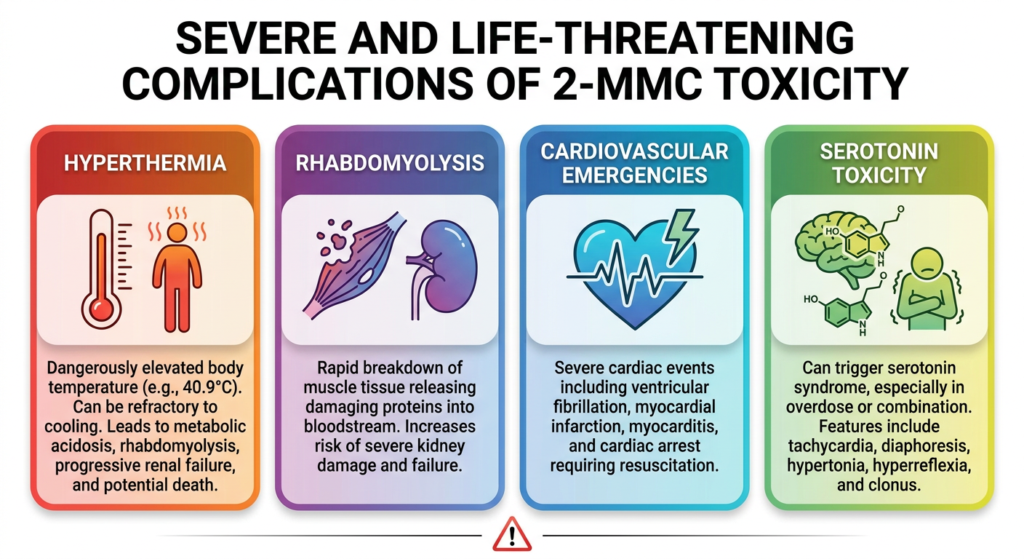
Severe and Life-Threatening Complications

When 2-MMC toxicity becomes severe, it can produce medical emergencies requiring intensive care. Evidence from synthetic cathinone poisonings shows several dangerous complications:

Hyperthermia: Dangerously elevated body temperature is one of the most serious complications. The 3-MMC review describes a fatal case with body temperature of 40.9°C lasting up to 20 hours, refractory to cooling measures, followed by metabolic acidosis, rhabdomyolysis, progressive renal failure, and death.

Rhabdomyolysis: This condition involves rapid breakdown of muscle tissue, releasing proteins into the bloodstream that can damage kidneys. A study comparing sympathomimetic toxicity found that 42% of patients developed rhabdomyolysis, and synthetic cathinone exposure specifically increased odds of severe rhabdomyolysis compared with other stimulants.

Cardiovascular emergencies: A Dutch cardiotoxicity case series documented severe cardiac events after synthetic cathinone use, including ventricular fibrillation requiring resuscitation, myocardial infarction, myocarditis, and cardiac arrest.

Serotonin toxicity: Although 2-MMC appears less serotonergic than mephedrone, it can still trigger serotonin syndrome, especially in overdose or when combined with other serotonergic drugs. A confirmed mephedrone serotonin syndrome case showed classic features including tachycardia, diaphoresis, hypertonia, hyperreflexia, clonus, and progression to hyperthermia.
ComplicationKey FeaturesWhy It Matters
HyperthermiaBody temperature above 40°C, refractory to coolingCan trigger multiorgan failure, DIC, coma, death
RhabdomyolysisMuscle breakdown, dark urine, elevated creatine kinaseLeads to acute kidney injury, electrolyte disturbances
Cardiac eventsArrhythmias, chest pain, ECG changes, arrestCan be fatal; requires immediate emergency care
Serotonin toxicityAgitation, confusion, muscle rigidity, hyperthermiaMedical emergency requiring specific treatment

2-MMC Overdose Risk

Direct 2-MMC overdose case data remain sparse, but the evidence from closely related cathinones provides clear warning signals. The 3-MMC toxicity review explicitly notes that because desired effects are short-lived, users often repeat administration within a single session, which may escalate overdose risk.

Why Overdose Risk is Higher Than It Appears

Several factors combine to make 2-MMC overdose more likely than users may realize:

Product misidentification: About half of supposed 3-MMC samples actually contained 2-MMC in early 2024 European drug-checking data. When users dose based on expectations for a different drug, they may take too much or redose too soon.

Extreme purity variation: A prospective drug-checking study found that powder purity ranged from 21% to 98%. Someone accustomed to weak product may accidentally consume several times more active drug when they encounter high-purity material.

Compulsive redosing: The short duration of 2-MMC creates strong pressure to redose. Each additional dose increases total drug exposure, cardiovascular strain, and risk of severe complications like hyperthermia and rhabdomyolysis.

Polydrug use: The 3-MMC review notes that many reported deaths and severe intoxications occurred after mixing 3-MMC with other psychoactive substances. Combining 2-MMC with alcohol, GHB, other stimulants, or serotonergic drugs multiplies risk.

Overdose Warning Signs

Someone who has taken 2-MMC or a product that may contain it needs urgent medical evaluation if they develop:

  • Severe chest pain or pressure
  • Very fast, irregular, or pounding heartbeat
  • Extremely high body temperature with heavy sweating and agitation
  • Severe confusion, disorientation, or inability to recognize surroundings
  • Hallucinations, paranoia, or psychotic symptoms
  • Seizures, convulsions, or uncontrollable muscle jerking
  • Collapse, loss of consciousness, or inability to wake
  • Severe muscle pain or dark-colored urine
  • Difficulty breathing or bluish skin

These warning signs are consistent with severe synthetic cathinone toxicity documented in emergency medicine literature and require immediate professional care.

2-MMC Addiction and Dependence Risk

The 2025 systematic review concluded that 2-MMC and 3-MMC may have higher dependence risk than mephedrone because their shorter duration of action increases craving and frequent redosing. This is one of the strongest and most concrete conclusions available in the current evidence base.

Why Short Duration Increases Addiction Risk?

Drugs with rapid onset and short duration can be particularly habit-forming because they create a repeated cycle of reward, decline, and craving within a single use session. This pattern strengthens compulsive use through several mechanisms:

  • Faster offset of desired effects creates stronger temptation to redose
  • More frequent dosing produces more reinforcement cycles
  • Greater relative dopaminergic activity (compared with serotonergic) fits stronger stimulant-seeking behavior
  • Short action reduces the satiating or prosocial buffering effects seen with more balanced entactogens like MDMA

Real-World Evidence of Problematic Use

The Netherlands provides an important warning about how quickly methylmethcathinones can move from novelty to treatment burden.

Among nightlife youth aged 16 to 35, past-year 3-MMC use increased almost four-fold within two years, reaching 33.7% in 2022 and becoming the third most commonly used substance after cannabis and MDMA.

Even more striking, the number of people seeking treatment for problematic 3-MMC use in the Netherlands rose from 33 in 2021 to 330 in 2023. Since 2-MMC is now emerging as a replacement in the same market, similar patterns of escalating use and treatment demand are likely.

Vulnerable Populations

The systematic review notes that low price, high availability, and positive social media recommendations have attracted very young users aged 14 to 17, who are especially vulnerable to impulsive redosing and mental health complications.

Adolescents and young adults may be particularly susceptible to developing problematic use patterns because their reward systems are still developing and they have less experience recognizing warning signs.

The Market Reality: Why Mislabeling Multiplies Risk?

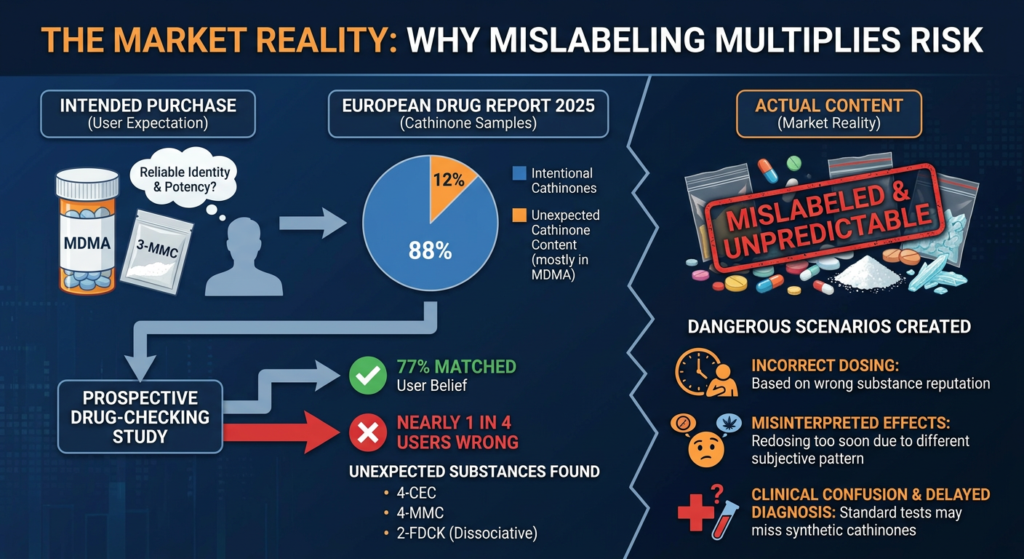
One of the most important findings across the evidence is that 2-MMC risk is shaped not only by its pharmacology but by how it is sold. Drug toxicity becomes much harder to predict when users cannot reliably identify the compound or estimate potency.

The European Drug Report 2025 documented that among samples found to contain cathinones, 88% were intentionally submitted as cathinones, but the remaining 12% were mostly MDMA samples with unexpected cathinone content. This indicates both intentional use and adulteration into other stimulant markets.

A prospective drug-checking study found that only 77% of submitted samples matched what users believed they had purchased. Nearly one in four users were wrong about the identity of their product. Unexpected substances included 4-CEC, 4-MMC, and 2-FDCK, a dissociative drug pharmacologically very different from cathinones.

This widespread mislabeling creates several dangerous scenarios:

  • Users may dose based on the reputation or expected duration of 3-MMC but receive 2-MMC instead
  • Someone expecting MDMA may misinterpret the different subjective pattern of a cathinone and redose too soon
  • Clinicians treating intoxication may not know which substance is actually responsible
  • Standard drug tests may miss synthetic cathinones entirely, delaying proper diagnosis
Clinical Management of 2-MMC Toxicity

The best-supported emergency management priorities for severe stimulant and synthetic cathinone toxicity are aggressive IV fluids, rapid correction of hyperthermia, and benzodiazepines to reduce muscle activity and metabolic demand, according to rhabdomyolysis research.

Benzodiazepines are central to treatment because they reduce agitation, seizure risk, sympathetic overdrive, and excessive muscle activity that contributes to hyperthermia and rhabdomyolysis. Hyperthermia must be treated as time-critical because delayed control can lead to renal failure, disseminated intravascular coagulation, coma, and death.

In suspected severe 2-MMC intoxication, clinicians should monitor temperature, heart rate and blood pressure, ECG changes, creatine kinase, renal function, electrolytes, acid-base status, and mental status. The 3-MMC review notes that LC-MS/MS is a standard method for identifying the specific drug responsible for intoxication, which matters because routine screens may miss novel cathinones.

Why 2-MMC is a Growing Public Health Concern?

The European Union Drugs Agency reported unprecedented imports and seizures of synthetic cathinones, with annual quantities increasing to 37 tonnes in 2023, with preliminary data suggesting continued large quantities through 2024. In 2024 and 2025 EU communications, synthetic cathinones are explicitly described as gaining ground on Europe’s stimulant market.

By 2026, EU legal measures had brought 2-MMC under control across the EU, indicating that policymakers judged the substance to present sufficient harm or public health risk to warrant formal action. That legal status reinforces that 2-MMC is no longer viewed as a marginal or purely hypothetical issue.

A recurring pattern in new psychoactive substances is that market penetration often precedes clear treatment pathways and public recognition. By the time clinicians and users understand a new cathinone well, the market may already have shifted again. This is why substitution data and analog toxicology are so important for understanding emerging risks.

What You Need to Know About 2-MMC?

The available evidence supports several clear conclusions about 2-MMC:

It is a real and growing presence in the European stimulant market, not an isolated niche drug. It is frequently encountered through substitution, especially in products sold as 3-MMC.

It has a pharmacological profile similar to mephedrone with comparable dopaminergic but less serotonergic activity, and shorter duration than 4-MMC. This combination likely increases craving and redosing, raising dependence risk.

Closely related methylmethcathinones can produce severe toxicity including severe hypertension, psychosis, seizures, hyperthermia, rhabdomyolysis, cardiac arrest, and death. While direct 2-MMC case data remain limited, the analog evidence is strong enough to justify serious concern.

Street supply is highly unreliable with major purity variation and frequent mislabeling. About half of products sold as 3-MMC in early 2024 actually contained 2-MMC, and purity ranged from 21% to 98%.

The most defensible overall judgment is that the major risk of 2-MMC lies in its combination of stimulant reinforcement, short action, high redosing pressure, and supply-chain unreliability. That combination is exactly what produces both addiction escalation and acute toxicity in the real world.

If you or someone you know is struggling with stimulant use or experiencing concerning symptoms after taking 2-MMC or related substances, our professional help is available. Thoroughbred Wellness & Recovery offers comprehensive addiction treatment including medical detox, dual diagnosis care, and evidence-based therapies designed to support lasting recovery.

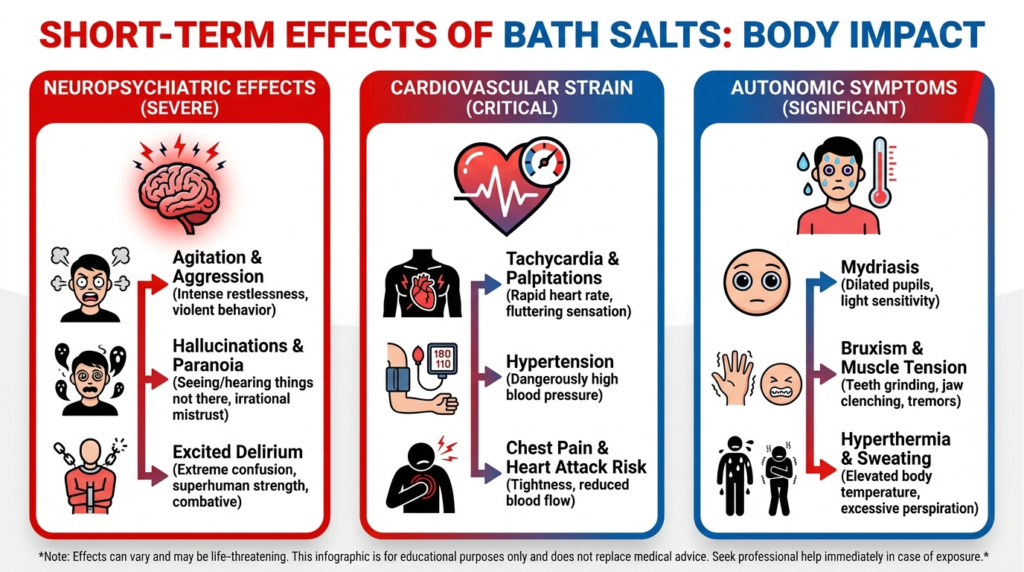
Bath Salts Effects: Short-Term, Long-Term & Side Effects

Bath salts—synthetic cathinones sold as stimulants, can trigger severe agitation, paranoia, and dangerous cardiovascular strain within hours of use.

A 2024 systematic review found that 38% of users develop psychotic symptoms such as hallucinations or delusions, while poison center data show that 82% of acute cases involve agitation and 56% present with tachycardia.

These drugs push the brain and body into simultaneous psychiatric crisis and autonomic overdrive, creating risks that extend far beyond the initial high.

This article breaks down what bath salts do to your body in the short term, what happens with repeated use, and why the dangers are more serious than many people realize.

What Are Bath Salts?

Bath salts are laboratory-made stimulants chemically related to cathinone, a psychoactive compound found in the khat plant. Despite the misleading name, they have nothing to do with bathing products.

The term describes a shifting category of synthetic cathinones marketed to mimic cocaine, MDMA, or amphetamines while evading drug laws through rapid chemical modification.

Common compounds include mephedrone, MDPV, methylone, butylone, ethylone, and newer analogs such as α-PVP and pentylone.

Because the market changes quickly and products are often mislabeled, users frequently do not know which specific drug they are taking. One packet labeled “bath salts” may contain a single cathinone, a mixture of several, or entirely different substances such as caffeine or other adulterants.

This chemical instability is not just a chemistry detail. It directly shapes the clinical picture by increasing unpredictability of onset, intensity, and duration.

It also means that routine toxicology screens often miss exposure, so a negative lab test does not rule out bath salts intoxication.

How Bath Salts Affect the Brain and Body?

Synthetic cathinones exert their effects by disrupting monoamine neurotransmission, especially dopamine, norepinephrine, and serotonin.

Depending on the compound, they may increase release of these neurotransmitters, block their reuptake, or both. This produces two broad domains of harm:

  • Central effects: euphoria, increased energy, psychosis, paranoia, hallucinations, aggression, insomnia, compulsive behavior
  • Peripheral sympathetic effects: tachycardia, hypertension, vasoconstriction, hyperthermia, diaphoresis, chest pain, arrhythmias, renal and cardiac stress

The same pharmacologic action that creates euphoria also creates danger. Dopamine excess contributes to stimulation, reinforcement, compulsive redosing, and psychosis.

Norepinephrine excess produces autonomic overdrive: tachycardia, hypertension, vasoconstriction, thermogenesis, agitation, and cardiac workload. Serotonin effects may contribute to mood changes, hallucinations, hyperthermia, and in some contexts serotonin toxicity features.

This combined central and peripheral activation is why bath salts can simultaneously affect the mind, heart, kidneys, muscles, and temperature regulation.

Short-Term Effects of Bath Salts

Acute Neuropsychiatric Effects

The most visible and dangerous early effects are often psychiatric and behavioral. Across reviews and emergency medicine sources, common early manifestations include agitation, anxiety, paranoia, delusions, hallucinations, psychosis, irritability, violent behavior, bizarre behavior, and disorientation.

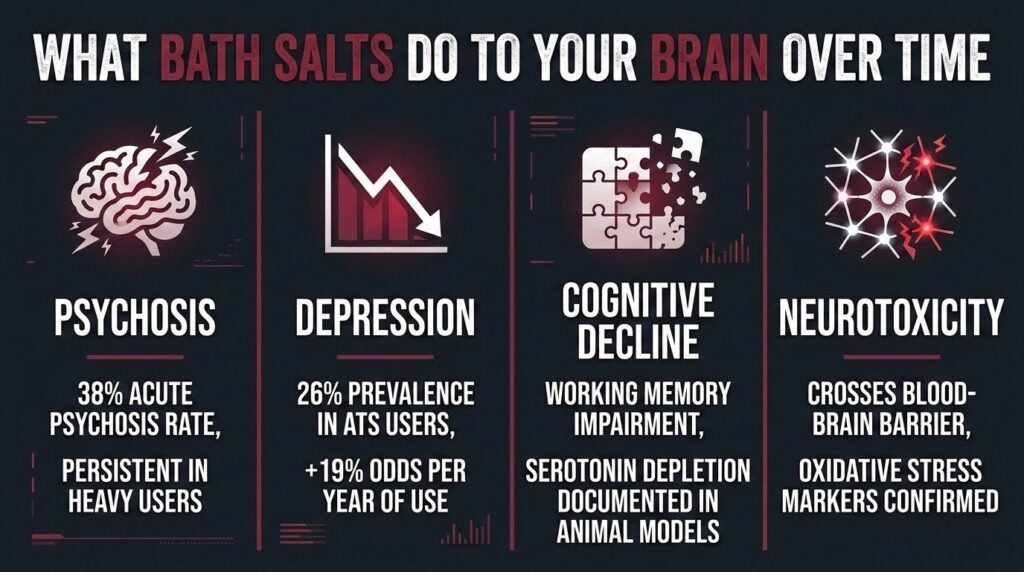
A 2024 systematic review and meta-analysis found psychotic symptoms in an estimated 38% of synthetic cathinone exposure cases, supporting a substantial association between use and hallucinations or delusions.

In acute bath salts intoxication, psychosis usually refers to symptoms such as hearing or seeing things that are not present, fixed false beliefs especially persecutory ones, severe suspiciousness, disorganized thought or behavior, and agitation linked to fear or misinterpretation.

This is not a minor side effect. Psychosis can drive dangerous behavior, self-harm, aggression, police confrontation, dehydration from prolonged agitation, and failure to seek medical care. It can also be difficult to distinguish from primary psychiatric illness when the substance used is unknown.

A Kentucky and Louisiana poison center series covering 236 calls over eight months found that agitation was reported in 82%, combative behavior in 57%, hallucinations in 40%, and paranoia in 36%.

One patient died from a self-inflicted gunshot wound while psychotic. These are extreme examples, but they illustrate the real-world consequence of stimulant-induced psychosis when paired with fear, insomnia, and autonomic arousal.

Cardiovascular and Autonomic Effects

Bath salts commonly produce a sympathomimetic toxidrome, meaning they overstimulate the fight or flight system. Common short-term cardiovascular and autonomic effects include tachycardia, hypertension, diaphoresis, mydriasis, tremor, dysrhythmias, chest pain, and hyperthermia.

The clinical significance is straightforward: these are not just stimulant feelings. They are markers of real cardiovascular strain. A 2024 scoping review identified 40 published cases of severe cardiac complications after synthetic cathinone use, including cardiac arrest in 28 cases, ventricular tachycardia in 4, ST-elevation myocardial infarction in 2, non-ST-elevation myocardial infarction in 2, cardiomyopathy in 1, and myocarditis in 2. Among the severe cardiac cases reviewed, 27 of 35 patients with reported outcomes died, mostly after sudden cardiac arrest.

This is one of the most important findings in the modern literature. It demonstrates that synthetic cathinones do not merely raise the pulse; they can precipitate catastrophic cardiac events. The distinction between psychiatric case and cardiac case is often artificial.

A patient presenting psychotic and combative may already be developing occult myocardial ischemia, dangerous arrhythmia, hyperthermia, severe CK elevation, or renal hypoperfusion.

Neurologic Effects: Seizures and Encephalopathy

Seizures are a recognized acute complication of synthetic cathinone exposure. A 2014 study of pediatric synthetic cathinone exposures identified 1,328 exposures in persons under age 20 from 2010 to early 2013. Seizures occurred in 73 cases, representing 5.5% of exposures. Of those, 50.7% had a single seizure, 39.7% had multiple seizures, and 9.6% developed status epilepticus. Fever and acidosis were associated with seizure activity.

A seizure is not only a dramatic neurologic event; it also signals broader systemic instability. Synthetic cathinone-related seizures may be linked to hyperthermia, acidosis, neurotransmitter excess, sleep deprivation, co-intoxication, and excitotoxic stress. These factors can contribute to secondary brain injury, rhabdomyolysis, kidney injury, and prolonged delirium.

Temperature Dysregulation and Hyperthermia

Hyperthermia is a well-recognized severe effect of sympathomimetic intoxication and is repeatedly reported with synthetic cathinones. It may emerge from increased motor activity, agitation, ambient heat, vasoconstriction, impaired cooling, and serotonergic stimulation.

Hyperthermia is not just another symptom. It is a force multiplier that worsens seizure risk, rhabdomyolysis, kidney injury, coagulopathy, cardiac stress, and multi-organ failure. This is one of the strongest examples of connection between research branches: neurologic, renal, cardiac, and critical care toxicology all converge on hyperthermia as a severity amplifier.

Muscle and Kidney Injury

Severe synthetic cathinone toxicity can lead to rhabdomyolysis, often through a combination of extreme agitation, prolonged muscular activity, hyperthermia, vasoconstriction, and dehydration. A case report of recurrent bath salts intoxication described acute kidney injury, rhabdomyolysis, hyperuricemia, metabolic acidosis, and neurologic and cardiovascular symptoms.

This case matters because it illustrates how stimulant-driven agitation, dehydration, hyperthermia, and muscle breakdown can translate into kidney damage. While a single case report cannot quantify incidence, it confirms a plausible and dangerous pathway of end-organ injury.

Timeline: What Happens in the First Hours and Days?

The immediate timeline of synthetic cathinone intoxication follows a predictable pattern:

  • Peak absorption: approximately 1.5 hours after use
  • Primary psychological effects: often around 3 to 4 hours
  • Physiologic effects: can persist about 6 to 8 hours
  • Crash period: often 2 to 4 hours
  • Some compounds, especially mephedrone: may produce effects lasting longer than 24 hours in some cases

This timeline is clinically important for three reasons. First, the visible high may end before medical risk does. Hyperthermia, dehydration, arrhythmia risk, organ stress, or emerging psychiatric symptoms can continue after the euphoric phase. Second, the first 24 hours are not always the full story.

Delayed psychiatric or systemic complications can appear after initial stabilization. Third, long-acting or repeatedly dosed exposures create overlap between intoxication and withdrawal or crash. This can blur diagnosis and worsen agitation or suicidality.

Human reviews indicate that some neuropsychiatric harms may emerge after the initial intoxication period. One especially important example is delayed-onset catatonia after synthetic cathinone exposure, underscoring that complications may not present in a simple use then recover sequence.

Likewise, hepatotoxicity and other metabolic injuries may worsen over subsequent days after overdose rather than at the moment of peak intoxication.

Long-Term Effects of Bath Salts

Persistent or Recurrent Psychosis

Among all long-term concerns, psychiatric sequelae, especially psychosis, have the strongest direct relevance. The 2024 systematic review and meta-analysis concluded that synthetic cathinone consumption is associated with psychotic symptoms such as hallucinations and delusions, but available studies often lack enough detail on duration and diagnostic criteria to firmly determine rates of persistent substance-induced psychotic disorder.

Importantly, that same review cites a two-case series reporting persistent psychotic symptoms after long-term heavy mephedrone use, indicating that at least some users can experience psychiatric symptoms extending beyond acute intoxication. It would be inaccurate to claim that bath salts routinely cause permanent psychosis in all users.

The literature does not support that. But it would be equally inaccurate to dismiss persistent psychosis as anecdotal noise. The existence of systematic evidence for acute psychosis plus documented cases of persistent symptoms after heavy use strongly supports the conclusion that synthetic cathinones can precipitate prolonged psychotic illness in a subset of users, especially under heavy and chronic exposure.

Depression and Broader Psychiatric Burden

Direct long-term synthetic cathinone data on depression are limited, but the broader amphetamine-type stimulant literature is informative. A 2026 systematic review and meta-analysis of 70 studies found substantial psychiatric burden among people using amphetamine-type stimulants, including an estimated 26% prevalence of depression.

It also found that each additional year of ATS use was associated with a 19% increase in the odds of depression, though the studies varied in quality.

Synthetic cathinones are part of the stimulant spectrum, and this evidence cannot be translated mechanically into cathinone-specific rates. Still, the broader pattern is important because bath salts share central features with other ATS: dopaminergic overstimulation, repeated crash cycles, insomnia, psychiatric destabilization, and high abuse potential.

The implication is that repeated bath salts use likely contributes to depressive burden through similar mechanisms, even if exact prevalence remains unsettled.

A 2026 longitudinal analysis among people with stimulant use disorder found that sleep disturbance predicted more stimulant use the following week, and greater stimulant use predicted subsequent sleep disturbance.

While not bath salts-specific, this finding is highly relevant because sleep deprivation is both a consequence and a multiplier of stimulant-related psychiatric harm. Over time, recurrent sleeplessness can worsen anxiety, paranoia, depression, and vulnerability to psychotic symptoms.

Cognitive and Memory Effects

The long-term cognitive effects of synthetic cathinones remain under-characterized in humans, but animal studies raise concern.

A 2012 study on methylone and mephedrone found that, two weeks after binge-like dosing, mephedrone reduced working memory performance in mice and methylone produced widespread depletion of serotonin and serotonin transporter levels in rats. Both drugs appeared to have long-term effects on behavioral or biochemical markers of neurotoxicity.

Another animal study found neurocognitive dysfunction after repeated binge-like self-administration of MDPV, suggesting that some synthetic cathinones may impair cognition through prolonged exposure paradigms that better mimic abuse patterns.

This evidence is suggestive, not definitive for humans. Animal models are valuable for mechanistic plausibility and for detecting risks before large human datasets exist, but doses may exceed typical human use, environmental conditions may not match real-world exposures, and species differences limit direct translation.

Still, the convergence between memory effects, serotonergic changes, and repeated-binge models argues that cognitive consequences are plausible and probably under-studied rather than absent.

Neurotoxicity: Real Risk, Uneven Evidence

The question of whether bath salts cause long-term brain injury is one of the most disputed issues in the literature. The best answer is nuanced. The 2023 systematic review on synthetic cathinones and neurotoxicity found broad neurotoxic risk signals, with adverse outcomes extending beyond simple intoxication to include encephalopathy, coma, convulsions, severe psychosis, hyperthermia, and death.

It also concluded that synthetic cathinones can cross the blood-brain barrier and be identified in the brain, demonstrating biological plausibility for direct neural injury.

However, the 2017 neurotoxicology review emphasized that descriptions of synthetic cathinone neurotoxic properties are still not abundant and that classic markers such as DAT or SERT deficits were usually seen only after very high doses, repeated dosing, or aggravating conditions like high ambient temperature.

The mephedrone-specific neurotoxicity review is especially helpful because it captures the conflicting data. It reports that some animal studies found no lasting dopaminergic terminal damage or major monoamine changes, while other studies found persistent serotonergic deficits after binge-like dosing, especially at high ambient temperature.

Oxidative stress markers, including increased lipid peroxidation and altered antioxidant enzymes, were observed in some models. Experimental conditions strongly shape outcomes, making studies difficult to compare.

The most defensible synthesis is this: long-term neurotoxicity is not uniformly demonstrated across all synthetic cathinones or all exposure patterns. But the risk is real enough that it cannot be dismissed, especially under conditions of heavy binge use, overheating, repeated exposure, and polysubstance use.

The most consistent preclinical signals point toward serotonergic disruption, oxidative stress, and cognitive effects, rather than universal catastrophic dopaminergic terminal destruction.

Side Effects of Bath Salts by Body System

Psychiatric and Behavioral

  • Euphoria, increased energy, agitation, anxiety
  • Paranoia, hallucinations, delusions, psychosis
  • Violent behavior, aggression, bizarre behavior
  • Insomnia, irritability, confusion
  • Recurrent psychosis, persistent psychotic symptoms in some heavy users
  • Depression burden, prolonged psychiatric instability

Cardiovascular

  • Tachycardia, hypertension, palpitations, chest pain
  • Diaphoresis, mydriasis, tremor
  • Dysrhythmias, ventricular arrhythmias
  • Myocardial infarction, myocarditis, cardiomyopathy
  • Cardiac arrest

Neurologic

  • Seizures, multiple seizures, status epilepticus
  • Encephalopathy, coma, confusion
  • Hyperreflexia, tremor
  • Possible cognitive impairment, memory deficits

Thermoregulatory

  • Hyperthermia, sweating, fever
  • Heat-related contribution to neurotoxicity and organ injury

Renal and Metabolic

  • Dehydration, acidosis
  • Rhabdomyolysis, elevated CK
  • Acute kidney injury
  • Hyperuricemia

Systemic

  • Multi-organ damage
  • Disseminated intravascular coagulation
  • Hepatic failure
  • Death

Risk Factors That Worsen Outcomes

The literature suggests that harm is strongly shaped by several modifiers:

Dose and pattern of use: High-dose and binge-like use are repeatedly associated with more severe toxicity and stronger neurotoxic signals in preclinical work.

Ambient temperature and hyperthermia: High temperature is one of the clearest amplifiers of harm, linked to persistent monoaminergic abnormalities in animal models and to worse human outcomes such as seizures and systemic stress.

Polysubstance use: Co-ingestants are common and can worsen outcomes. In adolescent seizure cases, THC, alcohol, and opioids were frequent co-exposures.

Psychiatric vulnerability: People with preexisting psychosis or schizophrenia are particularly vulnerable to stimulant-induced symptom worsening.

Unknown adulteration: Users may not know they consumed a synthetic cathinone at all, especially when drugs are sold as MDMA or other substances.

Detection limitations: Missed identification can delay treatment, obscure recurrence patterns, and reduce opportunities for preventive counseling.

Why Detection is So Difficult?

Routine toxicology testing often misses synthetic cathinones. A negative standard tox screen does not exclude exposure, because laboratory identification depends on institutional assay capacity and whether the specific compound is included in the test panel. This has two major implications.

First, clinical diagnosis must often be syndromic. Emergency physicians are advised to treat based on clinical suspicion rather than waiting for confirmation. Second, epidemiology likely undercounts true exposure. Missed laboratory detection and unrecognized adulterants distort prevalence and outcome data.

This is not a trivial limitation. It means severe episodes may be misclassified as generic stimulant intoxication, primary psychosis, panic disorder, or unknown overdose, thereby obscuring the true risk profile of bath salts.

Clinical Management and Emergency Response

Although this report focuses on effects over time rather than treatment protocols, the literature supports several practical clinical implications. There is no specific antidote for synthetic cathinone intoxication. Management is supportive and targeted at physiologic stabilization.

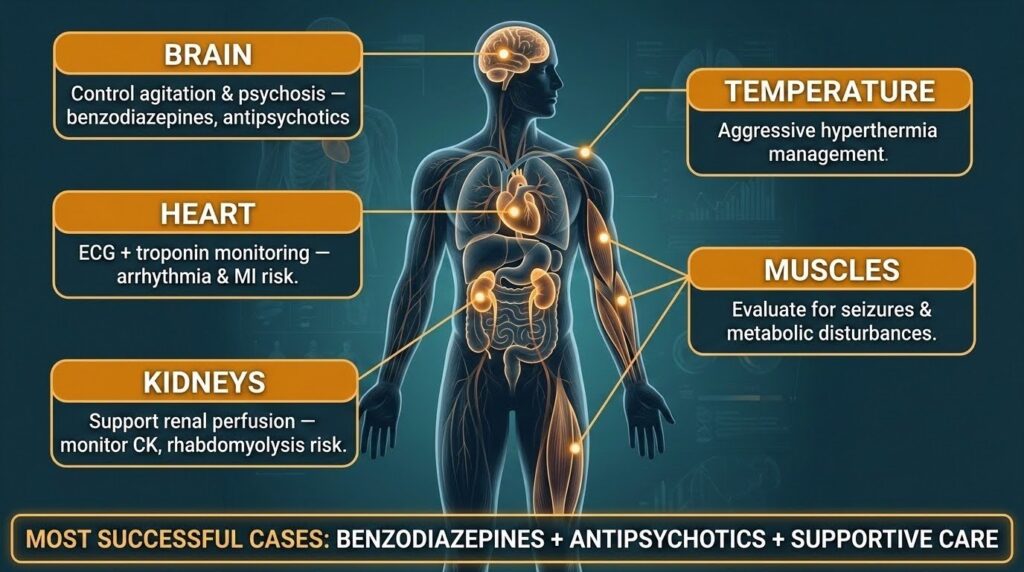
The most consistently recommended approach includes control of agitation and psychosis, aggressive supportive care, support of renal perfusion, management of hyperthermia, monitoring for cardiac complications, and evaluation for seizures, rhabdomyolysis, and electrolyte or metabolic disturbances. The majority of successfully treated cases used benzodiazepines, antipsychotics, and general supportive care.

Given the evidence, appropriate medical evaluation should consider ECG and cardiac monitoring, troponin if chest pain, palpitations, syncope, or concerning history, temperature monitoring, renal function and CK, acid-base status when severe, toxicology testing when available, and detailed recreational drug history.

Because psychiatric and systemic complications can evolve after initial intoxication, some patients require observation or follow-up beyond the first few hours. Anyone with psychosis, severe paranoia, persistent insomnia, or post-intoxication behavioral change should not be considered resolved solely because the acute stimulant period ended.

Comparing Short-Term and Long-Term Effects

In the short term, bath salts commonly trigger a severe sympathomimetic and hallucinogenic toxidrome. Agitation, paranoia, hallucinations, psychosis, tachycardia, hypertension, hyperthermia, seizures, dysrhythmias, metabolic derangement, and organ stress are all well documented.

These effects typically begin quickly, peak within hours, and can remain medically dangerous after the euphoric phase fades.

In the longer term, the most convincing evidence points to psychiatric harm. Psychosis is common during exposure and can persist beyond intoxication in at least some heavy users. Recurrent stimulant use likely increases depression, sleep disruption, and broader psychiatric burden over time.

Animal and mechanistic studies further suggest that repeated, high-dose, or heat-amplified exposure can produce oxidative stress, serotonergic abnormalities, and cognitive deficits, even if the human long-term neurotoxicity literature remains incomplete and uneven.

The clearest overall answer to what happens to your body over time is this: in the first hours, the body is pushed into dangerous overactivation, brain, heart, temperature regulation, and metabolism all strained at once. In the following days, crash symptoms, insomnia, residual agitation, delayed psychiatric syndromes, hepatic or renal complications may emerge.

Over weeks to years with repeated use, the main risks shift toward recurrent psychosis, depressive burden, sleep dysfunction, possible cognitive problems, and cumulative systemic injury.

Why Bath Salts Are More Dangerous Than Many People Realize?

The public image of bath salts as primarily crazy behavior drugs is scientifically outdated. Acute agitation may dominate the scene, but arrhythmia, myocardial ischemia, cardiomyopathy, and cardiac arrest are not rare oddities; they are core severe complications supported by both modern reviews and poison center data.

The most valid overall conclusion is not merely that bath salts are dangerous, but that they are disproportionately hazardous because they combine high short-term lethality and psychiatric destabilization with uncertain-but-credible longer-term neuropsychiatric fallout that current testing and surveillance still underestimate.

Bath salts should be understood not merely as party stimulants that sometimes cause agitation, but as an unstable class of potent synthetic stimulants whose hallmark danger is simultaneous brain toxicity, autonomic overdrive, and potentially sudden cardiovascular collapse. In clinical and public health terms, the gravest mistake is to treat apparent agitation as the main problem while underestimating occult cardiac injury, hyperthermia, renal stress, and exposure uncertainty.

Conclusion

If you or someone you care about is struggling with synthetic cathinone use or experiencing psychiatric or physical symptoms after exposure, our professional support can make a critical difference.

With Thoroughbred, recovery is possible, and you do not have to face this alone. Reach out to our admissions team and get addiction counseling to begin your path toward with clarity and freedom.

Isotonitazene: Effects, Potency, Side Effects & Overdose Risks

Isotonitazene is a synthetic opioid that emerged in the illicit drug supply by 2019 and has since become one of the most dangerous substances in the ongoing overdose crisis.

This drug is often hidden in heroin, fentanyl, or counterfeit pills, meaning many people are exposed without knowing it. The evidence shows that isotonitazene can cause severe respiratory depression at very small doses, and standard drug tests frequently miss it.

This article explains what isotonitazene is, how it affects the body, why it is so dangerous, and what you need to know about overdose response and treatment.

What is Isotonitazene?

Isotonitazene belongs to a class of drugs called nitazenes, which are synthetic opioids derived from 2-benzylbenzimidazole.

The CDC describes nitazenes as novel synthetic opioids originally developed decades ago as possible pain medications but never approved for medical use in the United States.

These compounds were abandoned because early research showed extremely high potency, severe respiratory depression, and a very narrow margin between a psychoactive dose and a fatal dose.

Isotonitazene has no approved medical use and no recognized industrial purpose. It is structurally distinct from both morphine and fentanyl, which matters because this chemical novelty affects how the drug is detected by toxicology tests, how quickly it can be scheduled under drug laws, and potentially how it behaves in the body.

The drug first appeared in modern illicit markets in 2019. The European Monitoring Centre was first notified about isotonitazene in a biological sample in July 2019, and it has since been implicated in over 200 overdose deaths across Europe and North America. That number is likely an undercount because many laboratories do not routinely test for nitazenes.

By February 2026, the United Nations Office on Drugs and Crime reported that 34 nitazene analogues had been detected in at least 37 countries, underscoring the rapid global spread of this drug class.

How Isotonitazene Works in the Body?

Isotonitazene is a full opioid agonist, meaning it strongly activates mu-opioid receptors in the brain and body. These are the same receptors responsible for the effects of morphine, heroin, fentanyl, and prescription opioids. When isotonitazene binds to these receptors, it produces euphoria, pain relief, sedation, and respiratory depression.

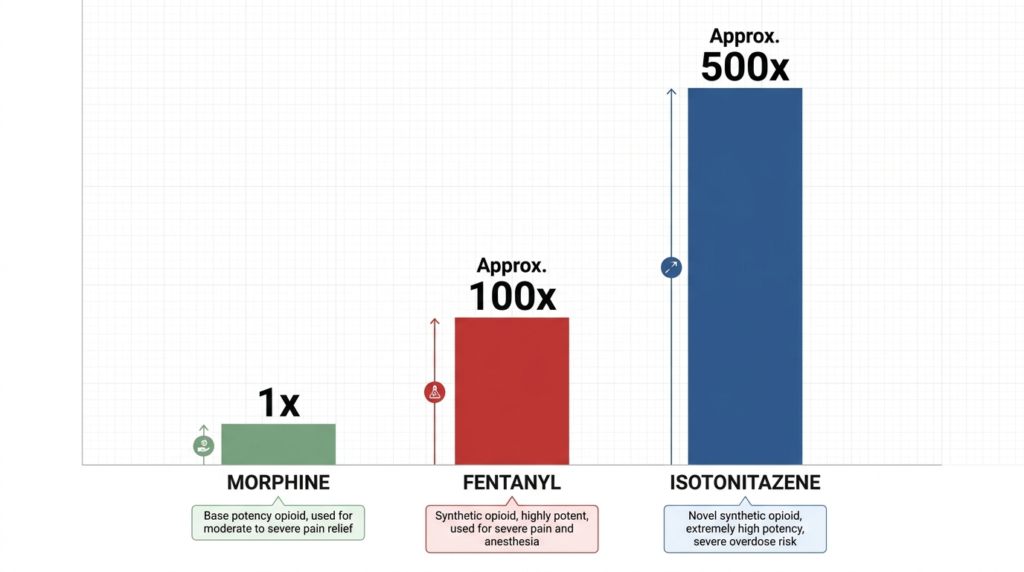
What makes isotonitazene especially dangerous is how efficiently it activates these receptors. Peer-reviewed signaling studies report that isotonitazene was about 500 times more potent than morphine and emphasized its dangerous high efficacy at the mu-opioid receptor. Another study found that isotonitazene had very high receptor affinity and in some assays was more than 100 times more potent than fentanyl in activating opioid pathways.

This extreme receptor-level potency means that very small amounts of isotonitazene can produce intense opioid effects. It also means the margin between a dose that produces euphoria and a dose that stops breathing is extremely narrow. That makes dosing precision in illicit manufacture extraordinarily difficult and increases lethality when the drug is substituted into counterfeit products.

One of the most concerning findings from recent research is that isotonitazene metabolites may also be pharmacologically active. Animal data cited in clinical reviews suggest that an isotonitazene metabolite caused greater respiratory depression and a longer return to baseline breathing than an equivalent amount of fentanyl.

This raises the possibility that some overdoses may be more prolonged or severe than fentanyl intoxication, and that the effects may not wear off as quickly as expected.

Isotonitazene Potency Compared to Fentanyl and Morphine

Understanding how potent isotonitazene is requires looking at different types of evidence. Potency claims vary across sources because they measure different things: receptor binding, animal studies, or clinical observations.

The most reliable summaries come from government and peer-reviewed sources. The CDC reports that some nitazene analogs, including isotonitazene, protonitazene, and etonitazene, have potency that greatly exceeds fentanyl.

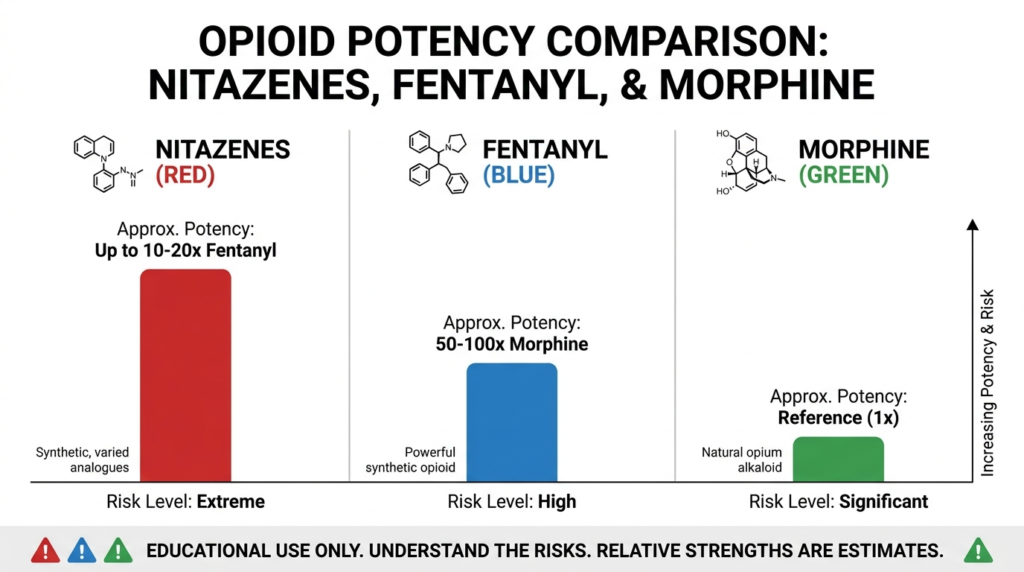
A 2025 review presented a comparative table in which fentanyl was listed at about 50 times heroin potency, while isotonitazene was listed at about 250 times heroin potency, suggesting that isotonitazene may be approximately five times more potent than fentanyl in that framework.

Some commercial sources claim isotonitazene may be up to 20 times more potent than fentanyl or 500 times stronger than morphine, but these figures should be treated as secondary estimates rather than settled fact because they are not always transparently linked to primary data.

The exact numeric potency ratio matters less than the convergent conclusion from the stronger sources: isotonitazene is clearly a high-potency opioid that can exceed fentanyl in effect at low doses. The evidence is strong enough to reject any minimization of its lethality, even if precise potency multiples remain unsettled.

What makes this potency especially dangerous is that isotonitazene has a very narrow safe dose consumption range. A 2025 review states that the distance between an intended psychoactive dose and a dangerous respiratory-depressant dose may be extremely small. Combined with illicit production, where manufacturing precision is poor, this produces a structurally unstable overdose environment.

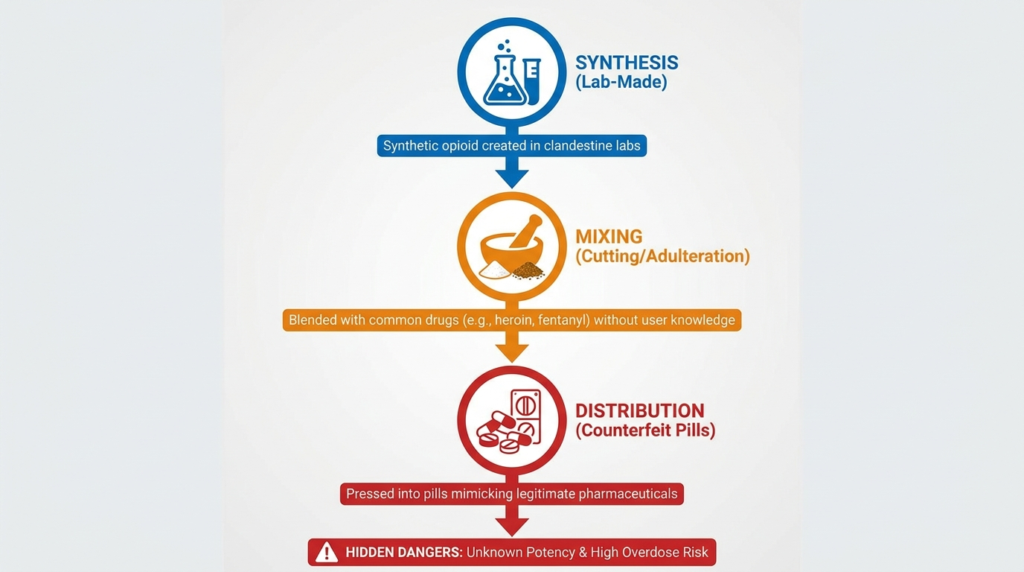
How Isotonitazene Enters the Drug Supply?

One of the most dangerous features of isotonitazene is that people are frequently exposed without knowing it. A peer-reviewed review reports that much of the isotonitazene sold on the street is not marketed as isotonitazene. The DEA found it was commonly used as a filler in heroin or sold in counterfeit opioid tablets such as fake hydromorphone, increasing the risk of unintentional exposure.

This theme appears repeatedly across the literature. Isotonitazene has been found:

  • Mixed into heroin
  • Pressed into counterfeit pills
  • Sold as other opioids
  • Present in products that users believe are something else

Counterfeit tablet contamination is especially concerning because it reaches people who may not identify as heroin users and may have lower opioid tolerance. DEA-related material notes isotonitazene encountered in counterfeit tablets marked “M30” or “M-8.”

Field and laboratory reports continue to show nitazenes in falsified pharmaceutical products. For example, Southern California drug checking identified nitazenes in counterfeit M30 pills in late 2025, indicating nitazenes in counterfeit oxycodone-style tablets in at least some U.S. markets.

The World Health Organization also reported that N-desethyl isotonitazene had been identified in falsified pharmaceuticals and linked to multiple deaths and hospital admissions.

Nitazenes may also appear in non-opioid mixtures. Reviews describe nitazenes as frequently mixed with fentanyl, heroin, methamphetamine, benzodiazepines, cocaine, and xylazine or misrepresented as prescription medications. This creates additional risk of unwilling ingestion by opioid-naïve people.

Hidden contamination is not merely a detection problem. It changes risk profiles in multiple ways. Opioid-naïve users may be exposed unexpectedly, tolerant users may misjudge potency, test methods may miss the analogue, and bystanders may delay recognition because they think the person took a non-opioid or a known pill.

This is why isotonitazene should be viewed as a market-structure hazard, not only a pharmacology hazard.

Isotonitazene Effects and Side Effects

Because isotonitazene is an opioid agonist, its acute effects largely resemble those of other opioids. The Alcohol and Drug Foundation lists the short-term effects of nitazenes as:

  • Euphoria
  • Relaxation
  • Drowsiness and clumsiness
  • Pain relief
  • Reduced stress
  • Itchiness
  • Nausea and vomiting
  • Fever and sweating
  • Slow breathing
  • Slow heart rate

The classic opioid toxidrome remains the most clinically useful framework for suspected isotonitazene intoxication: reduced consciousness or stupor, respiratory slowing or arrest, pinpoint pupils, blue or gray lips or skin, and non-responsiveness. 

Colorado public-health educational summaries note that nitazene overdoses look like other opioid overdoses, including slowed or stopped breathing, loss of consciousness, pinpoint pupils, and blue or gray lips or fingernails.

Nitazenes can be injected, inhaled, swallowed, and in some reports vaped. The route matters because onset, peak effect, and overdose recognition may differ.

Injection may produce rapid onset and abrupt overdose, smoking or vaping may lead users to underestimate opioid exposure, and counterfeit tablets may delay recognition because ingestion may be assumed to involve prescription-strength dosing.

Nitazene cases often involve multiple substances, which can obscure symptom patterns. A 2025 review notes nitazenes are rarely encountered in isolation and are frequently mixed with fentanyl, heroin, methamphetamine, benzodiazepines, and xylazine.

This complicates clinical interpretation because stimulant co-use may temporarily mask sedation, while sedatives such as benzodiazepines or alcohol may amplify respiratory depression.

Isotonitazene Addiction and Dependence

The dependence risk of isotonitazene is best understood through standard opioid biology rather than through a separate unique addiction mechanism. Like other full mu-opioid agonists, isotonitazene strongly engages reward, analgesia, sedation, and withdrawal pathways.

The DEA states that because isotonitazene has an opioid pharmacological profile, frequent use may be associated with dependence, and substances acting as mu-opioid receptor agonists are well established to have high abuse potential.

A 2025 review similarly states that nitazenes, like other opioids, have a high potential for abuse and dependence through stimulation of the brain’s dopaminergic reward system.

Long-term nitazene effects are not well studied but are thought to be similar to other opioids, including increased tolerance and dependence.

This is clinically important because the same process that drives tolerance may also increase frequency of use and withdrawal avoidance, while tolerance to euphoric effects may not fully protect against respiratory depression, particularly when potency and batch variability are extreme.

Withdrawal symptoms after isotonitazene use have been documented in clinical settings. A 2025 clinical cohort from New South Wales identified seven acute withdrawals among 27 laboratory-confirmed nitazene exposures, demonstrating that withdrawal from regular nitazene opioid use is not merely theoretical but clinically observed.

Reported withdrawal symptoms include:

  • Sweats
  • Tremor
  • Anxiety
  • Nausea and vomiting
  • Cravings
  • Restlessness
  • Runny nose
  • Flu-like symptoms

These are broadly consistent with opioid withdrawal syndromes. Three features may make nitazene withdrawal especially difficult.

First, high potency means very small quantities can sustain physical dependence. Second, unknown analogue mixtures mean users may be dependent on more than one nitazene or additional opioids. Third, active metabolites or longer toxicity windows mean withdrawal onset and symptom pattern may be less predictable in some cases.

Isotonitazene’s addiction risk is probably at least as serious as its overdose risk in long-term public-health terms, because a drug that is highly potent, short on reliable self-dosing cues, and commonly hidden in adulterated supplies creates a powerful cycle of tolerance, withdrawal, redosing, and accidental poisoning.

Isotonitazene Overdose Risks

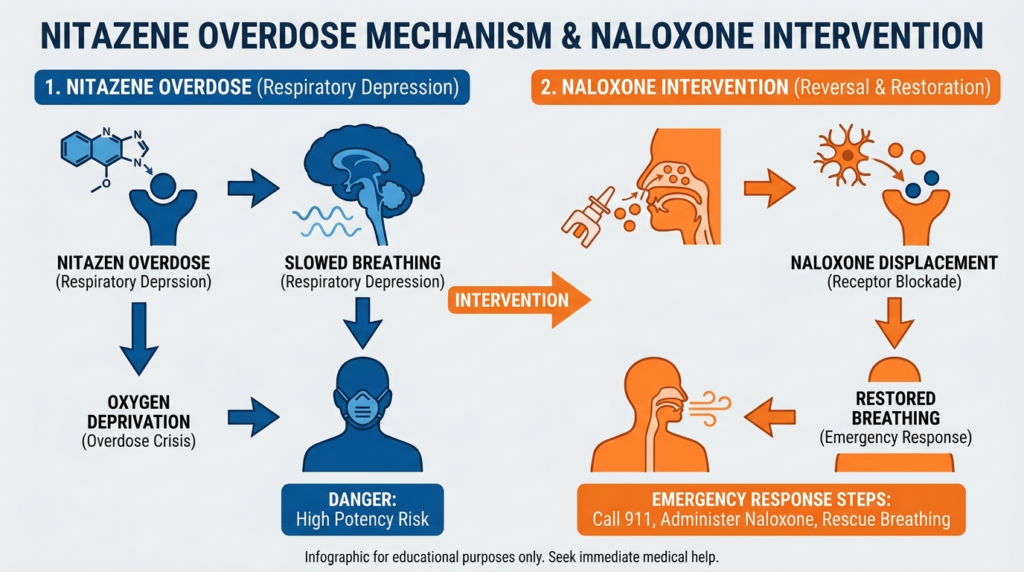
The overdose mechanism is fundamentally opioid-induced respiratory depression. A clinical review explains that nitazenes produce effects similar to any other opioid, including sedation and respiratory depression, and that morbidity and mortality are therefore due to hypoxia following hypoventilation and apnea.

Even experienced opioid users may misjudge isotonitazene risk because the substance may be hidden, the product may be counterfeit, the analogue may be stronger than expected, concentration within a batch may be uneven, and co-exposures may intensify sedation.

Evidence indicates a rapidly increasing fatal burden. A review reported that one surveillance interval identified 52 nitazene-involved fatal overdoses, with four times as many in 2021 as in 2020.

More broadly, the NFLIS database reportedly identified more than 4,300 reports of nitazenes since 2019 as of January 2024. Internationally, nitazenes have been implicated in a rising share of opioid-related deaths in several countries, and a 2026 Scientific Reports article describes them as a globally spreading threat with deaths in Europe, North America, and Australia.

The broader opioid market is becoming more chemically heterogeneous. CDC documentation on para-fluorofentanyl noted that it reemerged in heroin packets, counterfeit pills, and autopsy toxicology findings, demonstrating a more diverse and unpredictable illicit market.

Nitazenes are entering this already unstable environment rather than replacing fentanyl cleanly. That means users may face stacked opioid risks, not simply a switch from one substance to another.

Those at greatest risk likely include people using heroin or illicit opioids, users of counterfeit opioid tablets, opioid-naïve individuals exposed unintentionally, people combining opioids with alcohol, benzodiazepines, or other sedatives, and people using alone without naloxone access.

Signs and Symptoms of Isotonitazene Overdose

Overdose signs are those of severe opioid poisoning:

  • Slow or shallow breathing
  • Halting or stopped breathing
  • Extreme drowsiness
  • Non-responsiveness
  • Pinpoint pupils
  • Blue or gray lips or skin
  • Passing out
  • Coma

The Alcohol and Drug Foundation advises calling emergency services immediately if symptoms include slow or shallow breathing, bluish or greyish lips, passing out, coma, or death risk.

2025 cohort of laboratory-confirmed nitazene exposures found acute poisoning typically presented with sedation and hypoventilation, with severe cases requiring endotracheal intubation due to cardiac arrest and hypoxemia.

Because some nitazenes or metabolites may have prolonged effects, initial reversal does not eliminate danger. The same cohort concluded that ongoing monitoring is necessary to detect renarcotization after naloxone response. This aligns with broader review literature noting prolonged effects, repeated naloxone need, and occasional naloxone infusions.

Naloxone and Emergency Response

This is one of the most important high-confidence findings: naloxone works. The CDC states that naloxone can reverse nitazene-involved overdoses, though multiple doses may be required because of high potency. Reviews similarly state that nitazenes should respond to naloxone and that there is not an opioid naloxone has failed to reverse as of current review writing.

The reasons repeated naloxone may be necessary include high agonist potency, active metabolites, prolonged duration, co-ingestion of other depressants, delayed absorption in some formulations, and recurrent respiratory depression after initial improvement.

2025 review notes that because of high potency, slow dissociation from the mu-opioid receptor, and prolonged effects of active metabolites, higher or repeated doses of naloxone and sometimes continuous infusions may be required.

2025 scoping review of nitazene overdoses found limited data but concluded that most reviewed nitazene cases involved hospitalization, high naloxone dosing, and relatively long lengths of stay. Among the included cases, median total naloxone dose was 3.00 mg for isotonitazene, though sample size was small.

At the same time, a 2025 Australian cohort found that standard parenteral naloxone doses were typically effective, with a median reversal dose of 400 micrograms, though repeat dosing occurred in 45% of naloxone-treated cases.

These findings are not contradictory. They suggest that many cases respond to conventional naloxone, but recurrent or severe poisoning may require repeated doses or escalation.

The evidence supports the following objective conclusions:

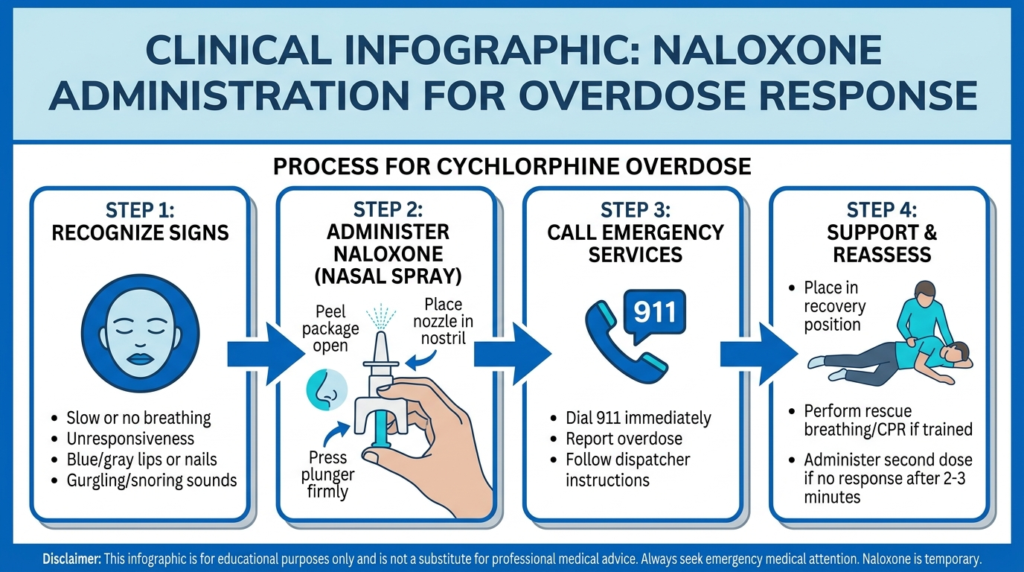
  • Use naloxone for any suspected opioid overdose involving nitazenes
  • Do not assume one dose is enough
  • Call emergency services immediately
  • Provide rescue breathing or oxygenation support where possible
  • Monitor for recurrent sedation or respiratory slowing after apparent reversal

Detection Challenges: Why Isotonitazene is Often Missed?

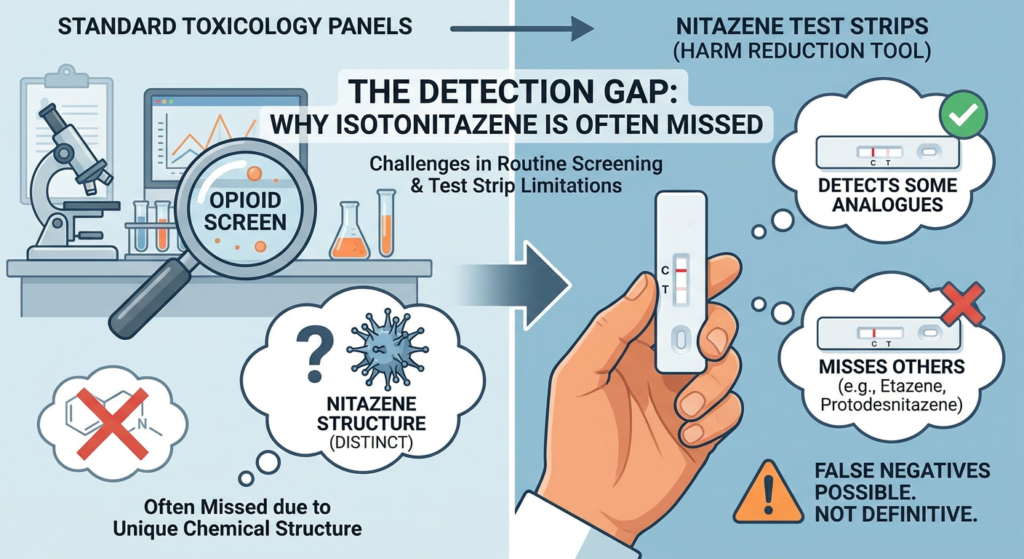
Nitazenes may evade routine toxicology panels. A clinical review notes their structures are distinct from morphine and therefore may not be identified by standard drug screens.

A broader review of drug testing in the era of new psychoactive substances explains that traditional immunoassays and even many targeted confirmatory mass spectrometry panels only detect substances they were specifically designed to detect.

Nitazene immunoassay strips are a major harm-reduction development, but the deeper evidence makes clear they are not definitive. A 2025 peer-reviewed evaluation found that commercial nitazene strips detected 28 of 36 nitazene analogs tested, meaning a substantial minority were missed. The reported limit of detection varied widely, from 250 ng/mL to 100,000 ng/mL, indicating uneven sensitivity depending on the analogue.

Isotonitazene itself was detectable by one strip at a reported limit of detection of 1,500 ng/mL, but several analogues were not detected at all, including metodesnitazene, etazene, protodesnitazene, and 5-aminoisotonitazene.

A 2025 systematic review reported that isotonitazene limit of detection was around 2,000 to 3,000 ng/mL, with lot-to-lot variation, and that 24 of 33 tested analogues cross-reacted at concentrations below or equal to 9,000 ng/mL, while some desnitazene derivatives had poor or no response even at high concentrations.

Two risks matter: false negatives and false positives. A negative strip does not rule out nitazene presence. This is one of the most important practical findings in the entire literature. False positives can occur as well.

The 2025 strip evaluation found caffeine-related false positives in seized heroin samples at high concentrations. NDEWS also reported that some Southern California field strip positives were not confirmed by lab testing and may have been associated with metamizole.

The systematic review found that in reviewed authentic drug-sample studies, all six tested real-world samples were positive with no false negatives reported, suggesting strips may be useful as a rapid field screen when followed by confirmatory mass spectrometry.

My concrete view is that nitazene test strips are worth using but dangerous to overtrust. A positive result is actionable; a negative result is not reassuring enough to support assumptions of safety. This is the most defensible interpretation of the higher-quality evidence.

Isotonitazene in the Context of the Broader Opioid Crisis

A common mistake is to think of fentanyl as the terminal stage of illicit opioid danger. The data do not support that view. CDC material has already shown that para-fluorofentanyl reemerged in heroin packets and counterfeit pills, indicating ongoing supply diversification. Nitazenes represent a further phase of diversification rather than an isolated anomaly.

Nitazenes emerged into a market already destabilized by illicitly manufactured fentanyl supplanting heroin and counterfeit pills becoming more common. Their entry intensifies three ongoing trends: more potent drugs, more counterfeit presentation, and more analytical uncertainty.

Nitazenes are not just stronger fentanyl-like drugs. They are structurally distinct, variably detectable, and rapidly proliferating as analogues. This matters clinically and operationally.

Routine screens miss them, some test strips miss entire subgroups, scheduling one analogue does not stop emergence of the next, and clinical familiarity lags behind market evolution. That is why several recent reviews describe nitazenes as a distinct and rapidly escalating public-health threat.

Treatment of Isotonitazene Addiction and Opioid Use Disorder

There is currently no large nitazene-specific body of long-term addiction treatment trials. However, current public-health guidance still supports the use of evidence-based opioid use disorder treatment principles.

The CDC’s 2024 OUD guidance emphasizes that opioid use disorder is a medical condition and that treatment is important to prevent overdose and death; treatment can help, and recovery is possible. CDC references continue to support buprenorphine and methadone as core evidence-based treatments for opioid dependence.

This is a key synthesis point: federal guidance is not nitazene-specific, but that should not be interpreted as a gap so large that treatment principles are unusable. Since isotonitazene is an opioid agonist causing opioid dependence, the best-supported inference is that standard opioid use disorder medications remain the most evidence-based available response, even if formal nitazene-specific trials are lacking.

SAMHSA’s rules and guidance have continued expanding flexibility for treatment access, including telehealth screening for buprenorphine and, under certain conditions, methadone initiation, reflecting efforts to improve access in an era of ongoing synthetic-opioid mortality.

Although medications remain foundational, nitazene dependence may complicate clinical management because of uncertain opioid exposure histories, polysubstance co-use, variable potency, potential prolonged withdrawal or toxicity, and incomplete toxicology detection. This argues for more individualized induction and monitoring, not abandonment of medication treatment.

My concrete conclusion is that buprenorphine and methadone should be offered aggressively, not cautiously, to people exposed to isotonitazene or other nitazenes, because the risk of untreated opioid use disorder in this drug environment is likely greater than the risk of withholding treatment due to uncertainty. The evidence may be indirect, but it is still stronger than any alternative strategy based on abstinence-only delay or purely symptomatic detox.

What You Need to Know: Key Takeaways

Based on the full evidence hierarchy, my valid and concrete conclusion is this: isotonitazene is one of the clearest examples of a next-stage opioid threat, not simply because it is potent, but because it combines extreme potency with concealment, analytical invisibility, and rapid analogue turnover. That makes it, in practical public-health terms, more destabilizing than many better-known opioids.

I do not think the evidence supports sensational claims that every isotonitazene exposure is categorically worse than fentanyl in every dimension. That would overstate the data. However, I do think the evidence strongly supports the judgment that isotonitazene is disproportionately dangerous because users frequently do not know they are taking it, emergency and laboratory systems may not immediately recognize it, and standard single-dose overdose expectations may underestimate recurrence or severity. That combination makes it a high-priority target for public-health action.

If reduced to the most important evidence-based takeaways:

  • Isotonitazene is a very potent illicit opioid
  • It often appears hidden in heroin, fentanyl products, or counterfeit pills
  • It can cause severe respiratory depression and death
  • Naloxone works, but more than one dose may be needed
  • A negative test strip does not rule out nitazenes
  • Addiction treatment works; buprenorphine and methadone remain central
  • The best response is rapid overdose recognition, naloxone access, honest drug-checking communication, and expanded treatment access

If you or someone you know is struggling with opioid use or has been exposed to isotonitazene, remember we’re here to help. So, reach out to Thoroughbred Wellness and Recovery’s addiction treatment today to explore evidence-based care options that can support your lasting recovery.
Nitazenes: Potency, Effects, Overdose Risks & Comparison to Fentanyl

Nitazenes are a rapidly expanding class of synthetic opioids now detected across at least 37 countries, often hidden in heroin, counterfeit pills, and even benzodiazepines.

Some analogues exceed fentanyl in laboratory potency by wide margins, yet the greatest danger lies not in molecular strength alone but in their stealth contamination of drug supplies where users may not expect opioids at all.

This article explains what nitazenes are, how they compare to fentanyl and morphine, what overdose symptoms look like, and why naloxone still works but may require repeated doses and longer observation.

What Are Nitazenes?

Nitazenes belong to the benzimidazole opioid family, a group of synthetic compounds first developed in the 1950s as potential analgesics.

Researchers at CIBA AG synthesized several nitazene compounds, including etonitazene and clonitazene, but abandoned them before clinical use because of extreme potency, severe respiratory depression, and an unacceptably narrow margin between therapeutic and toxic doses. For decades, nitazenes remained pharmacological curiosities with only isolated illicit appearances.

That changed in 2019 when isotonitazene was first reported to the United Nations Office on Drugs and Crime Early Warning Advisory. By early 2024, 13 nitazene analogues had been identified across six global regions.

By February 2025, that number rose to 26 substances in 30 countries. By February 2026, the UNODC documented 34 nitazene analogues across at least 37 countries, marking one of the fastest expansions of any synthetic opioid class in modern surveillance history.

Nitazenes are structurally distinct from both morphine-derived opioids and fentanyl analogues, which matters for two reasons. First, standard opioid immunoassays may fail to detect them.

Second, their chemical diversity allows clandestine producers to generate new analogues faster than regulatory systems can schedule them. This structural novelty creates detection gaps, legal lag, and incomplete cross-reactivity with field tests.

How Nitazenes Work: Mechanism and Pharmacology?

Nitazenes act primarily as strong agonists at the mu-opioid receptor, the same target responsible for the effects of morphine, heroin, and fentanyl.

Receptor profiling studies show that nitazenes are far more selective for mu-opioid receptors than for kappa- or delta-opioid receptors, with kappa potencies 7 to 7,920 times lower and delta potencies 24 to 9,400 times lower than mu potencies.

This intense mu-opioid receptor activation drives the core toxicology: analgesia, euphoria, sedation, respiratory depression, and overdose death through hypoventilation and apnea.

Because nitazenes produce opioid effects via the same receptor system as other opioids, their overdose mechanism is fundamentally familiar. The central danger is depression of respiratory drive leading to hypoxia, cardiac arrest, and death if untreated.

This is not a novel toxidrome requiring an entirely new clinical framework. The main emergency remains respiratory failure, and the main intervention remains restoring oxygenation and administering naloxone.

What distinguishes nitazenes clinically is not an exotic mechanism but rather duration and recurrence. Some nitazenes may have active metabolites that contribute to respiratory depression lasting longer than fentanyl at equivalent exposure.

This helps explain why some patients experience recurrent respiratory depression after initial reversal and why repeated naloxone doses or infusions are sometimes necessary.

Nitazenes Effects and Side Effects

As opioid agonists, nitazenes produce expected opioid effects including analgesia, euphoria, sedation, miosis, reduced respiratory drive, and decreased level of consciousness. These effects overlap heavily with fentanyl, heroin, and morphine, and there is no special nitazene toxidrome that bystanders can reliably distinguish in the field.

Non-overdose effects outside acute toxicity can include euphoria, relaxation, sedation or “the nod,” itching, nausea and vomiting, sweating or fever, slowed breathing and heart rate, constipation with repeated use, and tolerance and dependence over time.

However, the evidence base for long-term nitazene-specific side effects remains limited because these substances are not well studied in controlled human contexts. Most knowledge is extrapolated from opioid pharmacology and case reports rather than long-term cohort research.

What may distinguish some nitazene cases from routine heroin overdose is not unique symptoms but duration and recurrence. Reviews and advisories repeatedly note prolonged toxicity, repeat naloxone dosing, and the need for extended observation because respiratory depression may recur after initial reversal.

Nitazenes Potency Compared to Morphine and Fentanyl

Potency comparisons are the most requested and most misused part of the nitazene discussion. Potency can refer to receptor affinity, in vitro signaling, antinociceptive potency in animals, human clinical dose-response, or real-world lethality.

These are related but not interchangeable. The strongest evidence base currently consists of receptor studies and animal behavioral assays, while human data remain limited.

Potency Relative to Heroin and Morphine

A 2025 review in *Substance Abuse Treatment, Prevention, and Policy* provides comparative values showing that fentanyl is about 50 times heroin potency, metonitazene about 100 times, protonitazene about 100 to 200 times, isotonitazene about 250 to 1,000 times, and etonitazene about 500 to 1,000 times heroin or morphine potency. Behavioral studies place isotonitazene around 3 times fentanyl and etonitazene around 10 to 12 times fentanyl in antinociceptive assays.

Four nitazenes with subnanomolar mu-opioid receptor potency have been identified: N-pyrrolidino etonitazene, N-pyrrolidino isonitazene, N-pyrrolidino protonitazene, and N-desethyl isotonitazene.

These compounds ranked among the most potent in receptor studies, indicating that newer analogues and metabolites may rival or exceed the already alarming potencies of earlier nitazenes.

Why Laboratory Potency May Overstate Human Risk?

The 2025 comparative pharmacology review cautions that human potency data are scarce and that in vitro potency can be much higher than apparent human in vivo potency.

Post-mortem concentrations for many nitazenes are similar to fentanyl, suggesting that in some real-world contexts their lethality may be comparable to fentanyl despite dramatic laboratory potency estimates. This is a crucial corrective to simplistic ranking claims.

The most accurate summary is that some nitazenes are markedly more potent than morphine and can exceed fentanyl, but nitazenes as a class should not be treated as having one fixed relationship to either drug.

The public health problem is not merely that some nitazenes exceed fentanyl; it is that the unregulated supply can contain compounds ranging from approximately fentanyl-like to far more potent, often without the user’s knowledge.

Are Nitazenes Stronger Than Fentanyl?

The question of whether nitazenes are stronger than fentanyl cannot be answered with a simple yes or no because nitazenes are a heterogeneous class spanning compounds below, around, and above fentanyl in potency. Some are less potent, some roughly similar, and some stronger.

Isotonitazene has been described around 3 times fentanyl in behavioral studies. Etonitazene is around 10 to 12 times fentanyl. Some newer analogues exceed fentanyl in vitro. However, the human review literature warns against assuming these ratios translate directly to overdose severity or naloxone resistance in clinical settings.

For scientific precision, nitazenes are best compared to fentanyl rather than morphine, because fentanyl is the current real-world synthetic opioid benchmark in illicit markets. But for communicating scale to non-specialists, morphine remains helpful.

The most concrete conclusion supported by the evidence is that the most concerning nitazenes and some metabolites clearly exceed fentanyl in preclinical potency, yet in actual overdose management, many nitazenes may behave as fentanyl-like or somewhat worse rather than as uniformly incomparable outliers.

Saying nitazenes are “more potent than fentanyl” is partly accurate but analytically incomplete. It obscures three realities: not all nitazenes exceed fentanyl, laboratory potency may overstate human clinical potency, and market danger depends on concealment, formulation, route, and co-use, not potency alone.

Nitazenes Overdose Symptoms

Nitazene overdose resembles other opioid overdoses. The hallmark signs are sedation or unresponsiveness, slow, shallow, irregular, or absent breathing, hypoxia, pinpoint pupils, cyanosis or bluish or greyish lips and skin, loss of consciousness, coma, and death if untreated.

The review literature is explicit that morbidity and mortality primarily result from hypoxia after hypoventilation or apnea, not from some unusual toxic mechanism unique to nitazenes.

Detailed possible signs include inability to wake the person, slow, shallow, or irregular breathing, snoring, choking, or gurgling sounds, blue, pale, grey, or ashen lips or fingertips, limp body, cold or clammy skin, pinpoint pupils, vomiting, reduced heart rate, seizures in some mixed-drug scenarios, and coma.

Public health guidance therefore emphasizes treating suspected nitazene overdose exactly like suspected opioid overdose: call emergency services, support breathing, position a vomiting person on their side, and administer naloxone.

A key misconception is that nitazenes require an entirely novel clinical framework. The deeper review evidence does not support that. The main danger remains opioid-induced respiratory depression causing hypoxia and death, not a distinct syndrome beyond opioid toxicity. Co-exposures can create added features, but the central emergency remains respiratory failure.

Why Nitazene Overdoses Are Especially Dangerous?

One of the strongest recurring findings across evidence branches is that nitazenes are often consumed unintentionally.

They appear in products expected to contain other opioids or entirely different drugs, including benzodiazepines and counterfeit pills. WEDINOS data cited in clinical review showed that from April 2022 to March 2023, 36 samples containing nitazenes were detected and none were originally thought to contain nitazenes; 22% were thought to contain only benzodiazepines such as alprazolam or diazepam.

Nitazenes have also been identified in counterfeit hydromorphone and in counterfeit oxycodone tablets reported to European systems. UNODC’s 2026 report on synthetic opioids appearing in new forms adds another layer: between 2024 and 2026, among synthetic opioid samples with product-form information, nitazenes were most frequently detected in tablets (60%) and then powders (33%).

UNODC explicitly warns that synthetic opioids in products not typically associated with opioid use increase overdose risk because opioid toxicity may go unrecognized.

This hidden exposure substantially raises risk for opioid-naïve individuals, people taking what they think is a benzodiazepine or oxycodone, people who use stimulants or club drugs not expecting opioid contamination, and people using counterfeit medications.

Because nitazenes can be sold as counterfeit sedatives, pain pills, or nontraditional products, overdose risk extends to people intentionally using opioids, people using counterfeit benzodiazepines, people buying counterfeit prescription pain medication, people using vaping products, and bystanders or first responders less likely to suspect opioids.

Nitazenes are frequently found with other depressants, especially heroin or other opioids, benzodiazepines, alcohol, and GHB. Combining respiratory depressants increases overdose risk through additive or synergistic effects on breathing and consciousness.

The New Zealand High Alert example is particularly instructive: a fake oxycodone tablet containing both bromazolam and a nitazene created a dual-depressant risk in which naloxone could address the opioid component but not the benzodiazepine sedation.

Nitazenes Outbreaks and Severe Overdoses

Nitazene outbreaks are often not single neatly bounded events, but clusters of severe overdoses, hospitalizations, detections in drug checking, and post-mortem signals that trigger alerts. The research shows a pattern of repeated alerts across multiple regions.

Australia

Nitazenes are now described as an established feature of the Australian illicit drug market, with first confirmed detections in 2021.

Analytically confirmed emergency department cases involving protonitazene, metonitazene, isotonitazene, butonitazene, etodesnitazene, and etonitazepyne were documented across 32 cases from July 2020 to February 2024. Australian coronial data identified 17 deaths due to nitazene toxicity, involving etodesnitazene, metonitazene, and protonitazene, with the first death recorded in 2021.

Australian public drug alerts show nitazenes sold as or found in heroin, oxycodone, alprazolam, ketamine, cocaine, MDMA, GHB, methamphetamine, and other substances, with harms including multiple hospitalizations, ICU admissions, overdoses, and suspected deaths. Notable alerts include NSW alerts regarding heroin-associated overdoses and severe opioid overdoses in 2024.

Scotland and the Wider UK

Scotland’s RADAR alert shows a clear public health escalation: first published January 2023, post-mortem toxicology added November 2023, increasing detections in heroin and benzodiazepines added July 2024, legal status updated January 2025, and comprehensive intelligence update August 2025.

This is one of the strongest examples of an official public health system documenting a progressively worsening threat over time.

Public Health Scotland reported that nitazene-type drugs are now widely detected across Scotland and pose substantial risk of overdose, hospitalization, and death. Between January and March 2025, nitazenes were detected in 38 deaths in Scotland.

A BBC summary of Scottish data reported that nitazenes were present in 6% of all deaths, probably an underestimate because of testing limitations.

United States

According to the NDEWS summary of CDC SUDORS data, 320 overdose deaths across 38 jurisdictions in 2023 involved nitazene analogs, with the most concentration in Ohio, Pennsylvania, and Illinois. Metonitazene and isotonitazene were the most frequently implicated compounds.

The same NDEWS issue characterized the United States as having the highest documented burden of nitazene-related mortality at present.

Canada

Canada identified nitazenes in the unregulated drug supply in 2019, and the CCSA warning in 2022 emphasized rising presence, analog diversification, accidental use, and limitations in post-mortem and urine testing.

These early Canadian observations were important because they anticipated the now widely recognized pattern: hidden exposure in opioid products and counterfeit tablets, often alongside non-medical benzodiazepines.

New Zealand

The Wellington-region alert updated January 31, 2026 documented fake oxycodone tablets containing bromazolam and a nitazene later identified as N-desethyl protonitazene or one of its isomers. The tablets were pink, circular, and misrepresented as oxycodone; no oxycodone was detected.

This alert captures several major themes in one event: counterfeit medication, unexpected nitazene exposure, benzodiazepine-opioid combination, need for nitazene-specific test strips, and explicit warning that fentanyl strips do not detect nitazenes.

Overdose Response: Does Naloxone Work on Nitazenes?

A central question is whether naloxone reverses nitazene overdose. The best available review evidence states clearly that nitazene overdoses should still be reversible with naloxone, and as of publication there was not an opioid that naloxone had failed to reverse, including nitazenes.

This is one of the most important facts to communicate because misinformation claiming naloxone “doesn’t work” against ultra-potent opioids can delay lifesaving action.

Although naloxone works, high potency and prolonged effects may require repeated administration, larger total doses, and longer observation because overdose can recur after naloxone wears off. The scoping review summarized by NDEWS examined 19 overdose cases involving metonitazene, isotonitazene, protonitazene, and etonitazene.

Median naloxone doses ranged from 1 mg for protonitazene to 6 mg for metonitazene, and 59% of cases required multiple doses.

The 2025 review found a median parenteral dose of 1.20 mg for successful reversal in reviewed cases. The Australian cohort found a median parenteral reversal dose of 400 micrograms, with repeat dosing in 45% of naloxone-treated cases.

A bestBETs review concluded that most suspected or confirmed nitazene overdoses responded to standard naloxone dosing rather than dramatically higher-than-usual doses.

Why Multiple Doses May Be Required?

There are real reasons the literature seems inconsistent. Case mixes are tiny and heterogeneous. Many exposures involve other opioids and sedatives. Some patients receive prehospital naloxone before ED dosing is counted. Different analogues may behave differently. The total dose is not the same as the minimum effective dose.

The 2025 scoping review found median total naloxone doses of 6.00 mg for Metonitazene, 3.06 mg for etonitazene, 3.00 mg for Isotonitazene, and 1 mg for Protonitazene, but only 19 patients across 6 articles were included.

Where the evidence is strongest is not on “mega-dose naloxone,” but on the need for repeat dosing and longer observation. Missouri DHSS advises repeating naloxone after 2 to 3 minutes if breathing does not improve or if the person becomes unresponsive again, and emphasizes staying with the individual until EMS arrives.

JournalFeed recommends considering about 6 hours of observation after reversal when synthetic opioids are suspected, especially if multiple doses were required.

Rescue Breathing and Oxygenation Are Not Optional

The review literature strongly emphasizes that immediate response should focus on restoring breathing and oxygenation, including rescue breathing and naloxone. This is a vital nuance. Public messaging sometimes overfocuses on antidote administration, but in opioid overdose the proximate threat is lack of oxygen.

Based on the strongest sources, the practical sequence is: recognize opioid overdose signs such as slowed breathing, unresponsiveness, and blue lips; call emergency services immediately; administer naloxone if available; provide rescue breathing and airway support; repeat naloxone if needed after appropriate intervals; monitor for recurrence because symptoms may return; and do not leave the person alone.

Detection Challenges: Why Nitazenes Are Often Missed?

Nitazenes are structurally distinct from morphine and fentanyl and may not be identified by standard drug screens. This contributes to both clinical under-recognition and undercounting in surveillance. Specialized confirmatory testing such as LC-MS/MS or other advanced toxicology methods may be required.

UNODC’s 2026 advisory on test strips emphasizes that nitazene immunoassay strips often detect only a limited subset of analogues, commonly isotonitazene and protonitazene. Due to structural diversity, a negative test strip result does not reliably exclude all nitazene-type opioids.

This limitation becomes even more important as analogues diversify and as orphine analogues, a distinct emerging opioid class, are not detected by nitazene or fentanyl strips.

Ontario’s Drug Checking Community found that two commercially available nitazene test strips performed imperfectly, with correct results in 72% and 33% of assessed cases respectively, and limited effectiveness at detecting trace amounts in the street supply.

This creates a major operational problem: fentanyl test strips do not detect nitazenes, and nitazene test strips may not detect all analogues.

Harm Reduction and Practical Safety Advice

Across the strongest public health and service sources, the most consistent advice is: do not use alone, carry naloxone, expect more than one naloxone dose may be needed, start with a very small amount if using unregulated drugs, avoid mixing with opioids, benzodiazepines, alcohol, GHB, or other depressants, use drug checking where available, understand that fentanyl strips do not detect nitazenes, and seek opioid agonist treatment such as methadone or buprenorphine when appropriate.

The 2025 review emphasized expanding naloxone distribution and addiction care as key harm-reduction responses. This is fully consistent with CDC prevention strategies emphasizing harm reduction, partnerships, linkage to care, and overdose response capacity.

Drug checking can identify misrepresentation and contamination, but the evidence shows important limitations: nitazene strip sensitivity is imperfect, analogue coverage is incomplete, and access remains uneven. So drug checking should be treated as risk reduction, not risk elimination.

Why Does This Matter?

Nitazenes have transitioned from an emerging toxicological curiosity into a substantial and globally distributed overdose threat. Their danger lies in a convergence of extreme potency, analogue diversity, stealth contamination of multiple drug types, incomplete toxicology detection, and recurrent severe respiratory depression.

The clinical picture remains fundamentally opioid in nature: sedation, respiratory depression, hypoxia, coma, and death. The correct response remains equally fundamental: recognize overdose quickly, call emergency services, give naloxone, support breathing, and be prepared to repeat naloxone dosing.

Recent evidence from 2024 to 2026 shows that nitazene-related harms are escalating across regions rather than receding.

Australia’s confirmed deaths and emergency cases, Scotland’s repeated RADAR updates and mortality detections, the United States’ 320 documented deaths in 2023, UNODC’s tally of 34 analogues in 37 countries by 2026, and counterfeit-pill incidents in New Zealand all indicate that nitazenes are now embedded in the international unregulated drug supply.

Because they are often taken unknowingly, the population at risk is broader than people intentionally seeking strong opioids.

The most defensible public health conclusion is therefore not simply that nitazenes are “very dangerous,” but that they are dangerous in a way current systems still underestimate: they exploit the blind spots of toxicology, supply surveillance, and risk perception.

If you or someone you care about is struggling with opioid use or has been affected by contaminated drugs, remember we’re right here for your help. Thoroughbred Wellness & Recovery offers comprehensive dual diagnosis treatment that addresses both substance use and co-occurring mental health conditions with compassion, evidence-based care, and 24/7 support. Reach out today at 678-498-6853.

Cychlorphine: What It Is, Effects, Side Effects & Risks

Cychlorphine is an emerging synthetic opioid that has been linked to fatal overdoses across multiple states since mid‑2025.

Early laboratory data suggest it may be approximately 10 times more potent than fentanyl, making even tiny exposures potentially lethal.

This article explains what cychlorphine is, how it affects the body, its side effects, and what you need to know to stay safe.

What is Cychlorphine?

Cychlorphine, also known as N‑propionitrile chlorphine, is a novel synthetic opioid that belongs to a class of compounds called orphine analogues.

The Center for Forensic Science Research and Education first detected cychlorphine in mid‑2024, and fatal overdose cases involving the drug have risen sharply since mid‑2025.

Unlike fentanyl, cychlorphine is not a fentanyl analogue. It comes from a different chemical family related to benzimidazolone compounds such as brorphine and chlorphine.

This structural difference matters because it means cychlorphine often escapes detection by standard toxicology panels designed to catch fentanyl and its close relatives.

Cychlorphine has no approved medical use. It is not prescribed by doctors, not sold legally, and not repurposed from legitimate pharmaceutical channels.

Instead, it appears in the illicit drug supply, often mixed with fentanyl, methamphetamine, cocaine, or other substances without the user’s knowledge.

The Orphine Family

Cychlorphine is part of a broader and growing family of orphine analogues. These compounds trace their roots to pharmaceutical research from the 1960s and 1970s but only entered recreational drug markets around 2020 with the spread of brorphine. Since then, at least six orphine analogues have been confirmed in forensic casework.

This family context is important. Cychlorphine is not an isolated anomaly. It represents a new evolutionary branch in the synthetic opioid market, one that may continue to diversify as enforcement and scheduling decisions shift market incentives.

How Potent is Cychlorphine?

The most cited potency estimate comes from the Center for Forensic Science Research and Education, which reported that in vitro pharmacology data show cychlorphine to be approximately 10 times more potent than fentanyl. Tennessee officials and multiple public safety summaries have echoed this estimate.

To put that in perspective, fentanyl is already roughly 50 to 100 times more potent than morphine. If cychlorphine is truly 10 times stronger than fentanyl, it could be 500 to 1,000 times more potent than morphine. That means extremely small amounts can produce profound respiratory depression and death.

One Tennessee forensic case involved a fatal overdose where cychlorphine was the only drug identified, measured at approximately 0.5 nanograms in femoral blood.

A nanogram is one‑billionth of a gram. While a single concentration cannot define a population‑level lethal range, it supports the conclusion that extremely low measured levels can be associated with fatal outcomes.

Why Potency Estimates Matter

High potency means the margin between an effective dose and a lethal dose is exceptionally narrow. Even a tiny miscalculation, uneven mixing in a powder, or unknowing exposure can be fatal. This is especially dangerous when cychlorphine is mixed into other drugs without the user’s knowledge.

How Cychlorphine Works in the Body?

Cychlorphine is believed to act primarily as a mu‑opioid receptor agonist. This means it binds to the same receptors in the brain and body that other opioids target, producing effects similar to morphine, heroin, or fentanyl.

When cychlorphine activates these receptors, it can cause:

  • Pain relief
  • Euphoria
  • Sedation
  • Slowed breathing
  • Reduced consciousness
  • Constricted pupils

The most dangerous effect is respiratory depression. Opioids slow breathing by suppressing the brain’s respiratory centers. At high doses or in sensitive individuals, breathing can stop entirely, leading to death.

Because cychlorphine appears to be extremely potent, respiratory suppression may occur rapidly, at very small doses, and before bystanders recognize the severity of the situation.

Effects of Cychlorphine

The acute effects of cychlorphine are expected to resemble those of other strong opioids. Across public health and forensic sources, the reported or inferred effects include:

  • Euphoria
  • Analgesia or pain relief
  • Sedation
  • Drowsiness
  • Slowed breathing
  • Reduced consciousness
  • Respiratory depression

These effects are not unique to cychlorphine. They are the classic physiological consequences of excessive opioid receptor stimulation. What makes cychlorphine especially concerning is that the dose margin between effect and lethality may be exceptionally small.

Speed and Unpredictability

Highly potent synthetic opioids can shorten the survival window between intoxication and fatal respiratory arrest. Although direct human onset data are limited for cychlorphine, the combination of extreme potency and clandestine admixture strongly suggests high unpredictability in onset and severity.

When cychlorphine is mixed into stimulants or counterfeit pills, a person’s risk is not only pharmacological but cognitive. They may fail to recognize an opioid overdose as it begins because they did not expect to consume an opioid at all.

Side Effects of Cychlorphine

Given its likely action at the mu‑opioid receptor, side effects and overdose manifestations are expected to overlap with other potent opioids. These include:

  • Drowsiness
  • Profound sedation
  • Dizziness
  • Nausea and vomiting
  • Constricted pupils
  • Slowed breathing
  • Confusion
  • Loss of consciousness
  • Hypoxia
  • Death in severe overdose

Direct systematic clinical case series for cychlorphine are still limited, so these side effects are inferred from opioid class effects and supported by toxicological descriptions of profound sedation and respiratory compromise in emerging reports.

Side Effects Versus Overdose Signs

For cychlorphine, the distinction between side effect and overdose symptom may collapse quickly because of extreme potency.

A dose that might cause sedation in one context could produce rapid respiratory arrest in another, particularly when the product is impure or unevenly mixed, the user has low opioid tolerance, the route produces fast absorption, or other substances are present.

Polysubstance‑Related Adverse Effects

An especially important cychlorphine‑specific issue is that it is often found with other substances. The Center for Forensic Science Research and Education reported detection alongside fentanyl, oxycodone, methamphetamine, cocaine, carfentanil, nitazene analogues, novel benzodiazepines, and other orphine analogues.

This has two implications. First, the side effect profile in real life may be mixed or masked. Second, risk is often greater than the sum of individual substances because overdose recognition becomes harder. A stimulant‑opioid combination, for example, may temporarily obscure sedation while still permitting fatal respiratory decline.

Cychlorphine Overdose Risk and Deaths

The strongest documented fatality evidence includes 25 blood specimens from fatal overdoses positive for cychlorphine at the Center for Forensic Science Research and Education, more than 100 toxicology cases tentatively identified at NMS Labs, and an East Tennessee cluster that grew from 16 to 41 deaths across 11 counties between July 2025 and February 2026.

Cychlorphine was the sole opioid in 11 of 25 fatal cases reported by CFSRE. In the remaining cases, it appeared alongside fentanyl, methamphetamine, cocaine, and other substances. This finding is crucial because it weakens any attempt to dismiss cychlorphine as merely a background contaminant or incidental co‑detection.

Why Overdose Risk is Unusually High

The overdose risk from cychlorphine is elevated by the convergence of four factors:

1. Extreme potency – Very small amounts may be lethal.

2. Frequent adulteration and mixing – Users often do not know cychlorphine is present.

3. Poor routine detectability – Standard toxicology panels may miss it.

4. Potential need for repeated naloxone dosing – One dose may not be enough.

In my judgment, this combination makes cychlorphine more operationally dangerous than fentanyl in the present surveillance environment, even if future data refine the exact potency ratio. The crucial difference is not just receptor strength; it is the combination of strength plus invisibility in current systems.

Signs of Cychlorphine Overdose

The most dangerous and actionable signs are standard opioid overdose signs, with particular urgency due to cychlorphine’s apparent potency:

  • Severely slowed or stopped breathing
  • Unresponsiveness or inability to wake
  • Pinpoint pupils
  • Blue or gray lips or nails
  • Slow or irregular pulse
  • Gurgling or choking sounds

If you see these signs, call 911 immediately and administer naloxone if available.

Does Naloxone Work on Cychlorphine?

The strongest clinical principle in the evidence base is clear: naloxone remains the first‑line reversal agent for synthetic opioid overdose, including newly emerged potent synthetics. 

Marion County Public Health Department states that naloxone is still believed to be effective in reversing cychlorphine‑related overdoses.

This should settle the key operational question: do not withhold naloxone because cychlorphine is suspected.

Why Multiple Doses May Be Needed

Peer‑reviewed reviews on synthetic opioids note that higher naloxone doses may be necessary due to the increased potency of newer synthetic opioids, and that extended bioavailability can produce re‑intoxication after initial response.

This broader evidence supports local warnings from Tennessee officials and laboratory sources that cychlorphine overdoses may require multiple doses of naloxone.

Some media headlines state or imply that cychlorphine may not fully respond to naloxone. That wording should be interpreted cautiously. The stronger evidence does not show that naloxone is ineffective.

Rather, it suggests reversal may be incomplete or slower in some cases, higher or repeated doses may be needed, airway support and emergency care remain essential, and non‑opioid co‑intoxicants may limit apparent improvement.

What to Do in an Overdose

After naloxone administration:

  • Call emergency services immediately.
  • Be prepared to give additional naloxone if breathing worsens again.
  • Provide rescue breathing if trained.
  • Monitor until professional care arrives.
  • Do not assume waking up means the danger has passed.

Synthetic opioids may have longer duration or extended bioavailability relative to naloxone, creating a risk of rebound toxicity after apparent improvement. Therefore, observation after reversal is necessary.

Detection Challenges and Why They Matter?

A repeated finding across forensic and public health reporting is that standard toxicology panels may not detect cychlorphine because it is structurally distinct from commonly screened opioids and newly emerged in U.S. workflows.

This is not a failure of individual laboratories; it is a structural reality of analytical toxicology. Panels detect what they are built to detect.

Detection of cychlorphine may require expanded LC‑MS/MS or GC‑MS panels, high‑resolution mass spectrometry, updated spectral libraries, or referral to specialized or research laboratories for confirmation. This requirement means geographic detection may reflect lab capability as much as true prevalence.

Fentanyl Test Strips and Cychlorphine

The evidence strongly suggests fentanyl test strips should not be assumed to detect cychlorphine. Public health communication sources explicitly state that fentanyl test strips detect fentanyl, not cychlorphine, and several cychlorphine summaries note that current community test tools do not specifically detect it.

Fentanyl test strips are useful but limited and depend on analyte cross‑reactivity. They are not universal opioid detectors. They may still detect fentanyl in a mixed sample, which remains useful, but they do not offer validated cychlorphine‑specific reassurance.

Surveillance Consequence

The surveillance implication is severe: deaths can occur before routine mortality systems adequately register the compound. This lag was explicitly noted in Tennessee reporting and public health discussion of emerging‑drug detection workflows.

Detection limitations create several problems: delayed identification of local outbreaks, underestimation of mortality burden, misclassification of overdose causes, poorly targeted public health messaging, and difficulty evaluating whether interventions are working.

Cychlorphine Versus Fentanyl: How They Compare

DimensionCychlorphineFentanyl
Drug classNovel synthetic opioid; orphine analogueSynthetic opioid; anilidopiperidine
Medical approvalNo approved medical useApproved medical analgesic and anesthetic
First major forensic awarenessMid‑2024 detection; major alerts in 2026Clinical use since 1960s; illicit dominance over past decade
Main receptor actionLikely mu‑opioid receptor agonistMu‑opioid receptor agonist
Potency estimateApproximately 10 times fentanyl in early in vitro dataApproximately 50 to 100 times morphine
Routine toxicology detectionOften missed without expanded panelsMore established, though analogues still require tailored assays
Common street roleEmerging adulterant and mixture; sometimes sole opioidMajor primary illicit opioid and adulterant
Naloxone responseNaloxone advised; multiple doses may be requiredNaloxone effective, but multiple doses may also be needed

Fentanyl is already extraordinarily potent. The possibility that cychlorphine may be 10 times stronger means it could be dramatically more hazardous at tiny exposures. In practical terms, that means the margin for dosing error, contamination, or uneven distribution in powders or pills is even narrower than with fentanyl.

Fentanyl is dangerous, but clinicians at least have decades of experience with it in both legitimate and illicit contexts. Cychlorphine lacks that body of knowledge.

Therefore, even if two drugs had comparable potency, the one with less established detection, reversal expectations, and surveillance coverage would be more difficult to manage. That is currently cychlorphine.

My concrete conclusion is this: cychlorphine is not just like fentanyl but stronger. It is a more analytically elusive, less characterized, and potentially more lethal opioid threat than fentanyl in the current stage of surveillance and response.

Cychlorphine Withdrawal and Dependence

Direct cychlorphine‑specific withdrawal research is very limited. There are no large human studies defining onset, severity, or duration. Therefore, any statement must be inferential and clearly labeled as such.

However, because cychlorphine is a potent mu‑opioid receptor agonist and synthetic opioid, dependence and withdrawal are highly plausible with repeated use. Like other opioids, regular use may produce tolerance, dependence, and withdrawal when stopped.

Expected Withdrawal Symptoms

Reported symptoms of opioid withdrawal include:

  • Anxiety and restlessness
  • Insomnia
  • Muscle aches and pain
  • Abdominal cramps
  • Nausea, vomiting, diarrhea
  • Sweating
  • Chills and hot flashes
  • Runny nose and tearing
  • Pupillary dilation
  • Tremor
  • Irritability
  • Yawning
  • Gooseflesh

For short‑acting opioids, withdrawal generally begins within 8 to 24 hours after last use, peaks at 36 to 72 hours, and tapers over 4 to 10 days. For longer‑acting opioids, onset may be delayed to 2 to 4 days, with symptoms lasting around 10 days or longer.

Because cychlorphine’s human half‑life is not well characterized, its exact withdrawal timetable is unknown.

Still, three conclusions are reasonable: repeated cychlorphine use likely produces opioid physical dependence, withdrawal would likely resemble other opioid withdrawal syndromes, and the exact onset and duration could differ depending on formulation, duration of action, and co‑use with other opioids.

Why Detox Alone is Not Enough

Opioid withdrawal is often described as less directly lethal than alcohol or benzodiazepine withdrawal, but that simplification is incomplete.

Severe vomiting, diarrhea, dehydration, electrolyte abnormalities, and coexisting health conditions can make poorly managed withdrawal dangerous, and relapse after detox sharply increases overdose risk due to reduced tolerance.

National guideline literature strongly recommends opioid agonist treatment, particularly buprenorphine‑naloxone when appropriate, rather than withdrawal management alone. Withdrawal management without prompt transition to evidence‑based ongoing treatment is associated with relapse and elevated overdose risk.

This point is especially important for cychlorphine. A novel opioid with apparent extreme potency could make post‑detox relapse particularly deadly.

Where Cychlorphine Has Been Detected?

By spring 2026, cychlorphine had been reported in multiple U.S. states, several Canadian provinces, and parts of Europe. The Center for Forensic Science Research and Education confirmed toxicology specimens from 8 U.S. states and 3 Canadian provinces.

Yet geographic spread is almost certainly underestimated because routine screens often miss it. States with stronger routine analytical screening may detect emerging compounds earlier than states relying on targeted testing.

East Tennessee Cluster

The Tennessee cluster is the best documented regional signal. Initial reports linked cychlorphine to 16 deaths in East Tennessee between late 2025 and mid‑January 2026.

Later reporting from the Knox County Regional Forensic Center stated the drug had appeared in 41 deaths across 11 counties between July 2025 and February 2026, with additional cases under review.

That revision upward is itself analytically important. It suggests retrospective case finding increased once awareness and testing improved. In other words, case counts rose not only because exposure rose, but because recognition improved.

Marion County, Indiana

Marion County detected cychlorphine in 10 paraphernalia items from January 2025 to January 2026. All 10 items also contained fentanyl and methamphetamine, and peak prevalence was 1.2 percent of tested items in September 2025. Officials noted that prevalence remained low in local paraphernalia surveillance.

This local signal supports two interconnected conclusions: cychlorphine may still be relatively low prevalence in some markets, and even low prevalence can be highly consequential when the substance is extremely potent and difficult to detect.

Harm Reduction and Staying Safe

If cychlorphine overdose is suspected, current evidence supports the following steps:

1. Call emergency services immediately.

2. Give naloxone right away.

3. Give additional naloxone if needed.

4. Provide rescue breathing or airway support if trained.

5. Place the person on their side if vomiting risk exists.

6. Do not leave the person alone.

7. Expect the possibility of re‑sedation or recurrent respiratory depression.

Community‑Level Harm Reduction

Useful measures now include:

  • Carry naloxone
  • Avoid using alone
  • Use available drug‑checking services where possible
  • Do not assume fentanyl‑negative means opioid‑safe
  • Follow local health alerts
  • Seek treatment early if use has become compulsive or withdrawal‑driven

Limits of Current Tools

Standard fentanyl strips may not rule out cychlorphine, visual inspection is useless, routine toxicology often misses it, and community awareness remains low.

Why Cychlorphine Matters for Public Health?

The most urgent policy issue is not merely scheduling. It is analytical readiness. A drug can be legally controlled and still produce a severe mortality wave if detection capacity lags. The cychlorphine case demonstrates that surveillance infrastructure is as important as legal status.

The most justified policy priorities include expanding laboratory capacity, increasing naloxone saturation and training, improving forensic‑public health communication, building compound‑family surveillance rather than single‑drug surveillance, and expanding access to medication treatment for opioid use disorder.

A narrow schedule it and move on response would be insufficient. The most important intervention is not punitive scheduling alone; it is analytic modernization plus overdose‑response readiness plus treatment access. Cychlorphine is dangerous precisely because it can outrun outdated detection systems.

Final Thoughts

Cychlorphine is an emerging synthetic opioid of unusually high concern. The most credible current evidence shows that it belongs to the growing orphine analogue family, was first identified by CFSRE in 2024, appears approximately 10 times more potent than fentanyl in vitro, has been increasingly detected in fatal overdoses since mid‑2025, and is often missed by routine testing workflows.

It has been found both as a sole opioid and in complex polysubstance mixtures, particularly with fentanyl and methamphetamine. The East Tennessee cluster and multistate forensic detections indicate that the threat is real, growing, and likely undercounted.

From a clinical and public health perspective, the practical message is straightforward: treat suspected cychlorphine overdose as a medical emergency, use naloxone immediately and expect that multiple doses may be needed, monitor for recurrence because potent synthetic opioids may outlast naloxone, assume standard toxicology and drug‑checking tools may miss cychlorphine, recognize that repeated use likely creates opioid dependence and withdrawal, and do not rely on detox alone.

My concrete judgment, based on the strongest available evidence, is that cychlorphine represents a high‑severity, under‑recognized opioid threat whose public health danger lies as much in incomplete detection as in its apparent potency. If current trends continue, the communities that appear least affected may simply be those that are least able to see it.

If you or someone you care about is struggling with opioid use or facing the risks of emerging synthetic opioids like cychlorphine, we’re here for you. Reach out to Thoroughbred Wellness and Recovery’s addiction counseling today to explore compassionate and evidence‑based treatment options that can guide you toward lasting recovery.
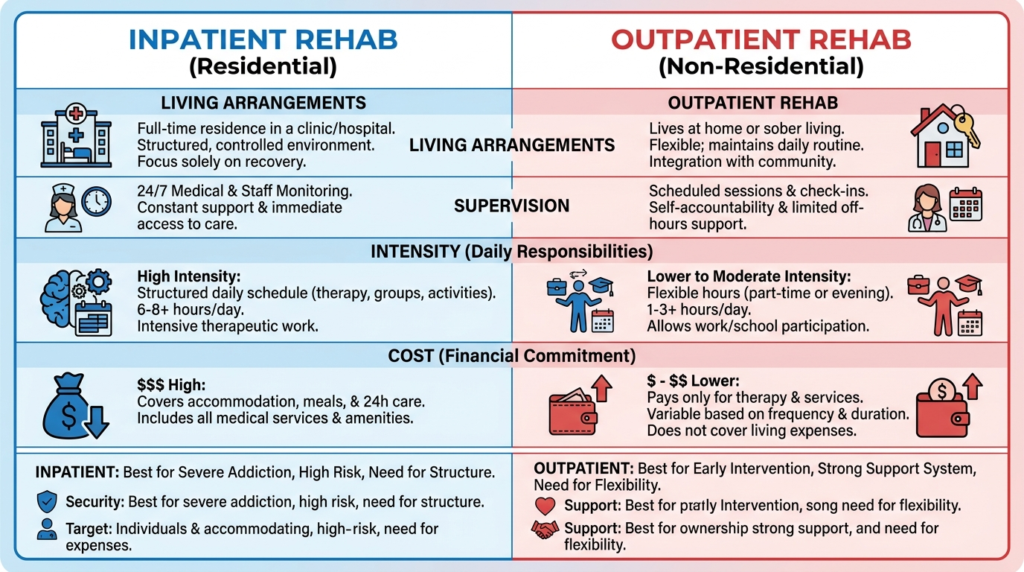
Medetomidine: Uses, Effects, Side Effects & Withdrawal Risks

Medetomidine is a veterinary sedative now appearing in street fentanyl across the United States, causing prolonged overdoses and severe withdrawal.

Originally developed for animal anesthesia, this alpha-2 adrenergic agonist has become a dangerous adulterant that complicates overdose response and introduces a life-threatening withdrawal syndrome marked by extreme blood pressure spikes, vomiting, and delirium.

This article explains what medetomidine is, how it works, and why its spread in the illegal drug supply has become a national emergency requiring new clinical protocols and faster public health response.

What is Medetomidine?

Medetomidine is an alpha-2 adrenergic agonist sedative used in veterinary medicine to sedate and provide pain relief in dogs and cats. It is not approved for human use in the United States.

The drug works by activating alpha-2 receptors in the brain and spinal cord, reducing norepinephrine release and suppressing sympathetic nervous system activity. This produces dose-dependent sedation ranging from moderate to deep, along with analgesia and muscle relaxation.

Veterinarians use medetomidine for restraint, premedication before surgery, and as part of combination anesthetic protocols. It is marketed as a racemic mixture containing two mirror-image molecules: dexmedetomidine and levomedetomidine.

Dexmedetomidine is the active component and is separately approved for human hospital sedation, but racemic medetomidine itself has no legitimate human medical application.

The drug’s potency is significant. Medetomidine is described by the CDC as more potent and longer-acting than both xylazine and clonidine, two related alpha-2 agonists.

This higher potency explains why medetomidine produces more profound sedation and more severe withdrawal symptoms when exposure stops abruptly.

What is Medetomidine Used For in Veterinary Medicine?

In dogs, medetomidine produces reliable sedation and analgesia across a range of procedures. Veterinarians administer it for handling and restraint, as a premedication before general anesthesia, and in combination with other drugs to reduce the doses of more dangerous anesthetics.

The NOAH Compendium notes that medetomidine has a marked anesthetic-sparing effect, meaning it significantly reduces the amount of agents like thiopentone, halothane, and propofol needed during surgery.

In cats, approved uses include sedation for restraint, combination with ketamine for anesthesia induction, pairing with butorphanol for sedation and pain relief, and use as a premedication before other anesthetic agents. The sedation level in cats is also dose-dependent and can range from moderate to deep.

This veterinary utility is based on predictable pharmacology: medetomidine suppresses arousal and sympathetic tone in a controlled clinical setting. The same properties that make it useful in animal care become dangerous when people unknowingly consume it mixed with fentanyl.

How Medetomidine Works?

Medetomidine acts primarily as an alpha-2 adrenergic receptor agonist in the central nervous system. By activating these receptors in the brain and spinal cord, it decreases noradrenergic activity and reduces sympathetic outflow. This mechanism produces several effects:

Central nervous system effects include sedation through decreased activity in the locus coeruleus, a brain region involved in wakefulness and arousal. The drug also provides analgesia through both central and peripheral mechanisms.

These effects explain why intoxicated patients remain deeply sedated even after naloxone restores breathing from co-occurring opioid toxicity. Naloxone reverses opioid receptor-mediated respiratory depression but does not reverse medetomidine’s alpha-2 agonist suppression of arousal.

Cardiovascular effects arise from both central and peripheral alpha-2 agonism. Public health reports describe medetomidine intoxication as producing marked bradycardia, hypotension, and sometimes initial hypertension before later blood pressure drops.

These hemodynamic changes distinguish medetomidine-containing intoxication from straightforward opioid overdose, which typically does not produce the same degree of sustained slow heart rate.

Withdrawal effects represent the opposite pattern. When regular medetomidine exposure stops abruptly, the body experiences sympathetic and autonomic rebound. This produces tachycardia, severe hypertension, tremor, anxiety, and other signs of autonomic hyperactivity.

Understanding this bidirectional effect is essential for recognizing both intoxication and withdrawal.

Medetomidine Effects and Side Effects

Expected Effects in Veterinary Use

When used appropriately in animals, medetomidine’s desired effects include sedation, analgesia, muscle relaxation, facilitation of handling or restraint, premedication before anesthesia, and reduced dose requirements for other anesthetics. These effects are predictable and manageable in controlled veterinary settings.

Adverse Effects and Toxicity

Across veterinary and toxicology sources, medetomidine’s adverse effect profile includes bradycardia, hypotension, profound sedation, central nervous system depression, hyperglycemia, hallucinations, and possible biphasic blood pressure changes.

The key concern is not that medetomidine has unusual toxicity for an alpha-2 agonist, but that the same expected pharmacology becomes dangerous and difficult to manage when exposure is unplanned, mixed with opioids, and not easily detectable on standard hospital toxicology screens.

Comparison With Xylazine and Dexmedetomidine

Medetomidine is often compared with xylazine because both are veterinary alpha-2 agonists now found in the illegal drug supply. It is also compared with dexmedetomidine because dexmedetomidine is its active enantiomer and an established human sedative.

FeatureMedetomidineXylazineDexmedetomidine
Drug classAlpha-2 agonistAlpha-2 agonistAlpha-2 agonist
Human approvalNoNoYes
Veterinary useYesYesLimited
Relative potencyMore potent than xylazineLess potentActive enantiomer
Illicit supply roleIncreasing adulterantEstablished adulterantNot typically illicit
Intoxication signsProfound sedation, bradycardiaSedation, bradycardiaSedation, bradycardia
Withdrawal concernSevere, ICU-levelRecognizedKnown in hospital settings

Sources indicate medetomidine is more potent and longer-lasting than xylazine, which may explain why intoxication and withdrawal can be more severe and prolonged.

Some expert summaries estimate medetomidine may be 100 to 200 times more potent than xylazine, though these claims should be treated cautiously as they come from local health summaries rather than national consensus guidance.

Medetomidine Overdose: Recognition and Response

Clinical Presentation of Intoxication

Human intoxication from medetomidine in the illicit opioid supply is now characterized with increasing clarity.

The CDC states that medetomidine can cause profound sedation, marked bradycardia, and hypotension. The Chicago MMWR report found that patients with confirmed cases commonly had bradycardia and no or only partial response to naloxone.

Typical findings across official and peer-reviewed sources include depressed mental status or prolonged unresponsiveness, pinpoint pupils when opioids are co-involved, hypoxemia or respiratory compromise from opioid co-exposure, sinus bradycardia often striking enough to stand out, low blood pressure with some hypertensive episodes, and prolonged sedation after naloxone has improved ventilation.

Why Naloxone May Seem Ineffective

A major clinical problem is that medetomidine exposure can make naloxone appear ineffective even when it is successfully treating the opioid component of overdose.

The CDC repeatedly emphasizes that naloxone does not reverse medetomidine itself, but naloxone should still be given because fentanyl is involved in most medetomidine-related overdoses. The goal is to restore breathing, not necessarily full alertness.

The MMWR Chicago investigation reinforces this by showing that fentanyl was identified in all drug samples and blood specimens containing medetomidine.

Thus, continued heavy sedation after naloxone does not mean naloxone was pointless. It means clinicians and responders may be dealing with a mixed opioid plus alpha-2 agonist intoxication.

Community Response Recommendations

The CDC’s practical recommendation is to repeat naloxone every two to three minutes as needed to achieve adequate ventilation, place the person in the recovery position, and recognize that medetomidine-related sedation will wear off over time.

Call 911 and provide ongoing monitoring. This guidance resolves a common confusion: if the person remains sedated after naloxone, bystanders may mistakenly think more and more naloxone is required purely to achieve consciousness. The CDC instead emphasizes breathing as the critical endpoint.

Clinical Management

For clinicians, current official recommendations include considering medetomidine when there is prolonged sedation after suspected opioid overdose despite naloxone, providing supportive cardiorespiratory care, watching for bradycardia and hypotension, considering comprehensive drug screening including blood testing for medetomidine when available, and consulting a toxicologist or poison center. In the Chicago cluster, some patients required atropine for bradycardia.

Medetomidine Withdrawal Symptoms

The most distinctive and clinically disruptive feature of medetomidine may not be intoxication but withdrawal.

The CDC states that stopping medetomidine after regular use can precipitate severe withdrawal resembling clonidine withdrawal, with symptoms including tachycardia, severe hypertension, anxiety, tremor, fluctuating alertness, chest pain, and intractable nausea and vomiting.

Core Symptom Cluster

Across Philadelphia, Pittsburgh, CDC guidance, and city-level advisories, the symptom pattern is remarkably consistent. The most characteristic symptoms and signs include:

  • Tachycardia
  • Severe hypertension
  • Agitation and anxiety
  • Tremor, often without clonus or hyperreflexia
  • Nausea and vomiting, frequently severe or intractable
  • Fluctuating alertness, delirium, or encephalopathy in severe cases
  • Diaphoresis
  • Restlessness
  • Chest pain in some severe cases

In Philadelphia, the MMWR field report identified 165 patients with one or more of these symptoms resistant to escalating conventional treatment: agitation, anxiety, severe hypertension, tachycardia, tremor without clonus or hyperreflexivity, and vomiting.

Timing of Symptom Onset

The syndrome often begins quickly. The CDC states symptoms may begin within hours of last use and peak 18 to 36 hours later. Other clinical syntheses describe onset within six to 24 hours of the last use.

A particularly important operational point from the Pittsburgh report is that many patients did not arrive at the emergency department already in full withdrawal. Eight of ten confirmed cases developed symptoms several hours after arrival, suggesting that patients may appear stable or only mildly symptomatic initially and then abruptly deteriorate.

Distinguishing Features From Opioid Withdrawal

Standard opioid withdrawal is typically uncomfortable and distressing, but it is not usually characterized by severe hypertension, marked tachycardia beyond routine withdrawal, fluctuating alertness or delirium, refractory vomiting with autonomic storm, ICU-level hemodynamic management, or need for dexmedetomidine infusion. Yet these are exactly the features repeatedly documented in medetomidine withdrawal.

Philadelphia clinicians specifically reported that symptoms did not resolve with medications that had previously been effective for fentanyl and xylazine withdrawal.

Local public health summaries similarly found that emergency department withdrawal protocols became less effective after medetomidine entered the supply; patients had smaller reductions in Clinical Opioid Withdrawal Scale scores, higher ICU admission rates, and more patient-directed discharges.

Medetomidine Withdrawal Treatment

Core Treatment Principle

The most consistent treatment principle across public health advisories, MMWR reports, and hospital guidance is that care must address both the patient’s concurrent opioid withdrawal or opioid use disorder and the medetomidine-related autonomic rebound.

This dual-treatment model is central because patients are usually exposed to fentanyl plus medetomidine, not medetomidine alone.

Clonidine

Clonidine is the most consistently recommended oral alpha-2 agonist option for suspected medetomidine withdrawal when the patient can tolerate oral therapy and is hemodynamically suitable.

It directly addresses autonomic hyperactivity and pharmacologically resembles the alpha-2 agonist effect being withdrawn. Regional protocols emphasize early initiation of clonidine rather than waiting for severe escalation.

Clonidine serves as initial therapy in mild-to-moderate suspected withdrawal, a bridge or adjunct while opioid therapy is initiated, and step-down therapy after ICU dexmedetomidine infusion. Some protocols combine oral clonidine with transdermal clonidine patch, guanfacine, and occasionally tizanidine in refractory cases.

Dexmedetomidine Infusion

Dexmedetomidine is the best-supported hospital therapy for severe medetomidine withdrawal. In Philadelphia, 137 of 165 patients were treated with and responded to dexmedetomidine infusion.

In Pittsburgh, nine of ten confirmed cases admitted to ICU received dexmedetomidine for autonomic hyperactivity. The CDC explicitly notes that the syndrome in Philadelphia was resistant to prior regimens but responsive to dexmedetomidine.

Dexmedetomidine works because it is an enantiomerically related alpha-2 agonist and therefore directly treats the withdrawal mechanism more effectively than opioid medications or nonspecific sedatives.

It is generally indicated when there is severe hypertension or tachycardia, uncontrolled vomiting, encephalopathy or delirium, failure of oral clonidine-based therapy, inability to tolerate oral medications, or ICU-level instability.

Methadone or Buprenorphine

Even though opioid medications do not fully treat medetomidine withdrawal, they remain necessary because most affected patients also have opioid dependence and concurrent fentanyl withdrawal.

The key principle is to treat opioid withdrawal and medetomidine withdrawal simultaneously, not sequentially. Hospital protocols recommend either methadone initiation or buprenorphine induction or micro-induction while alpha-2 agonist therapy is being administered.

Antiemetics and Symptom-Directed Care

Nausea and vomiting are often severe and require active treatment. Several guidance documents note that ondansetron may be ineffective.

Alternative choices frequently recommended include prochlorperazine, droperidol, metoclopramide, and olanzapine in some protocols.

When to Escalate to ICU Care

The Philadelphia data showing 91 percent ICU admission are not incidental. ICU-level care is often required because patients may need continuous hemodynamic monitoring, dexmedetomidine infusion, airway protection, management of encephalopathy, and rapid titration of sedatives and antihypertensive effect via withdrawal control.

Escalation is especially warranted when there is severe or rapidly rising blood pressure, persistent tachycardia, fluctuating alertness, uncontrolled vomiting, chest pain, or refractory symptoms despite oral treatment.

Emergence in the Illegal Drug Supply

Timeline and Geographic Spread

Medetomidine was first identified in the illegal drug supply in 2021. From mid-2023 to mid-2024, it appeared sporadically in multiple jurisdictions including Chicago, Philadelphia, and Pittsburgh. By late July 2024, it had been detected in drug samples and biologic specimens in at least 18 states and the District of Columbia.

The scale of expansion after that point was substantial. NFLIS reports rose from 247 in 2023 to 2,616 in 2024, a 950 percent increase. Reports continued rising sharply to 8,233 in 2025. These figures indicate a rapidly diffusing adulterant rather than a localized anomaly.

Philadelphia as the Leading Indicator

Philadelphia offers the clearest example of how fast medetomidine can transform a regional drug market. During the last four months of 2024, medetomidine was detected in 72 percent of illegal opioid samples tested, while xylazine detection dropped from 98 percent to 31 percent.

Additional local public health reporting showed that from May 2024 to November 2024, medetomidine-positive dope samples rose from 29 percent to 87 percent, while xylazine-positive samples fell from 97 percent to 42 percent.

A later public-facing summary reported that medetomidine was detected in about 15 percent of all fatal overdoses in Philadelphia between May 2024 and May 2025, further reinforcing its public health significance.

Evidence of Clandestine Synthesis

The CDC’s 2026 Health Advisory makes a particularly important analytical point: illicit samples showed racemic medetomidine without preservatives typical of medical or veterinary products, making diversion of pharmaceutical-grade material unlikely and suggesting clandestine manufacture.

This matters because it changes how policymakers should think about control strategies. If the main source were veterinary diversion, interventions would focus more narrowly on veterinary supply chains. The evidence instead points toward broader illicit synthesis and trafficking.

Major Outbreaks and Epidemiologic Evidence

Chicago, May 2024

The Chicago cluster remains one of the most important published investigations because it provides robust clinical and epidemiologic detail.

CDC investigators identified during May 11 to 17, 2024, twelve confirmed cases, 26 probable cases, and 140 suspected cases involving medetomidine mixed with opioids, making it the largest reported cluster of confirmed medetomidine-involved overdoses.

Key findings included that the event was first recognized after hospitals and the Illinois Poison Center noticed atypical opioid-overdose presentations, especially on Chicago’s West Side. Fentanyl was present in all medetomidine-positive blood and drug samples.

Most confirmed patients had bradycardia, many showed no or only partial response to naloxone, and at least 16 people were hospitalized and one died.

Philadelphia Withdrawal Reports

If Chicago clarified intoxication, Philadelphia clarified withdrawal. The CDC’s 2026 HAN states that from September 2024 to January 2025, 165 patients across three Philadelphia health systems were hospitalized for fentanyl withdrawal complicated by severe autonomic dysfunction temporally associated with medetomidine in the supply. Among these patients, 150 required ICU care and 39 required intubation or mechanical ventilation.

These reports establish several advanced clinical lessons: withdrawal can be more distinctive than intoxication, routine screens may miss medetomidine exposure, severe cases often require ICU-level management, and the burden on emergency and inpatient systems can be substantial.

Diagnostic Challenges

Medetomidine withdrawal is often diagnosed clinically rather than through immediate laboratory confirmation. Several factors complicate diagnosis: the patient may not know medetomidine was present, routine toxicology may confirm fentanyl but miss medetomidine, symptoms overlap partially with opioid or xylazine withdrawal, and deterioration may occur hours after presentation.

One of the deepest and most important research insights comes from the Pittsburgh analysis: medetomidine parent compound was detected in only two patients on comprehensive urine screening, but retrospective metabolite analysis identified medetomidine exposure in all ten tested samples. This finding leads to a clinically decisive rule: a negative medetomidine screen does not rule out medetomidine exposure or withdrawal.

Clinicians should strongly suspect medetomidine withdrawal when a patient with fentanyl or street opioid exposure has severe tachycardia, severe hypertension, tremor without clonus or hyperreflexia, severe nausea or vomiting, waxing and waning alertness or delirium, and poor response to escalating opioid withdrawal treatment.

Complications and Risks

Medetomidine withdrawal is dangerous because it is not merely uncomfortable. It can produce serious end-organ complications. Severe sympathetic rebound can lead to myocardial injury, non-ST elevation myocardial infarction in reported cases, and cardiomyopathy in some institutional guidance. The broader Philadelphia multicenter study found myocardial injury in 29 percent of patients.

Reported neurologic complications include encephalopathy, posterior reversible encephalopathy syndrome, fluctuating alertness or delirium, and less commonly seizure-like activity or true seizures often with co-exposures. Encephalopathy occurred in 35 percent of patients in the larger Philadelphia cohort.

Institutional guidance and expert summaries note metabolic and systemic complications including hypokalemia, lactic acidosis, QTc prolongation, and severe dehydration risk from vomiting. The syndrome also carries system-level risks including high ICU occupancy, intubation and sedation needs, prolonged ED observation, heavy toxicology consultation demand, and high rates of patient-directed discharge.

Public Health Implications

Medetomidine matters not only because it increases overdose complexity, but because it changes the structure of harm in the illicit opioid market.

It adds a second dangerous sedative layer to fentanyl, creating a compound toxidrome of opioid respiratory depression plus alpha-2 agonist sedation and cardiovascular suppression. It complicates community overdose response because when breathing improves but consciousness does not, bystanders may become confused about whether naloxone worked.

It creates a distinct withdrawal burden. Unlike xylazine’s already serious harms, medetomidine appears to introduce a particularly severe autonomic withdrawal syndrome, straining ED and ICU resources. Philadelphia’s experience suggests the resulting health-system burden can be very large in a short time.

The growth trajectory, geographic spread, and evidence of clandestine synthesis all suggest medetomidine’s rise is a market-level phenomenon. It is reasonable to infer that medetomidine is being added because it changes the perceived or functional profile of illicit opioids, potentially prolonging sedative effects or modifying subjective effects.

The Chicago investigation showed that rapid recognition depended on hospitals, poison centers, toxicology laboratories, emergency services, and public health agencies working together. Medetomidine is therefore a model case for why emerging-adulterant response cannot rely on a single surveillance stream.

Conclusion

Based on the strongest and most current evidence, medetomidine should be regarded not merely as another fentanyl adulterant, but as a clinically transformative one. It changes overdose presentation, prolongs sedation after opioid reversal, and introduces a severe withdrawal syndrome that is distinct enough to alter triage, inpatient care, and public health surveillance.

Among emerging adulterants, its practical danger lies less in mysterious novelty than in the fact that it reliably adds a second pharmacologic crisis on top of fentanyl: first a mixed opioid–alpha-2 intoxication, then in regular users a potentially violent autonomic withdrawal syndrome.

Its spread is rapid and national, not isolated. Its co-occurrence with fentanyl is extremely common in documented cases. Its physiologic signature is recognizable and clinically important. Its withdrawal burden may be more system-straining than its intoxication burden. Current detection and treatment infrastructure is not yet fully adapted to it.

If the question is what medetomidine is and what it is used for, the complete answer is that it is a veterinary alpha-2 adrenergic agonist sedative and analgesic used in dogs and cats for sedation, restraint, premedication, and anesthesia support. It works by reducing central norepinephrine release and sympathetic activity. Its predictable effects include sedation, analgesia, bradycardia, and hypotension.

In the illicit drug supply, especially when mixed with fentanyl, it can cause profound prolonged sedation, marked bradycardia, incomplete apparent response to naloxone, and severe withdrawal with hypertension, tachycardia, vomiting, tremor, and fluctuating alertness.

Naloxone still should be used in suspected overdoses because fentanyl is usually co-involved, but response should be judged by breathing, not wakefulness. The strongest current public health evidence indicates medetomidine is an expanding national overdose and withdrawal threat that requires clinical vigilance, better testing, and coordinated surveillance.

If you or someone you know is struggling with substance use or experiencing withdrawal symptoms, we’re here to help you. Reach out to Thoroughbred Wellness and Recovery today and meet our addiction counseling professionals who understand the complexities of today’s drug supply and can provide comprehensive and compassionate care.

PHP vs IOP: Cost, Time, and Treatment Differences

Choosing between a Partial Hospitalization Program and an Intensive Outpatient Program (PHP vs IOP), can feel overwhelming when you or someone you care about needs addiction or mental health treatment.

The first thing to know is that both levels provide structured outpatient care while allowing you to return home each night, but they differ significantly in daily time commitment, clinical intensity, and the amount of independence expected between sessions.

According to the American Society of Addiction Medicine, PHP typically requires 20 or more hours of treatment weekly with near-daily clinical contact, while IOP generally involves 9 to 19 hours per week with greater flexibility for work, school, or family responsibilities.

This article will walk you through the practical differences, help you understand which level might fit your situation, and explain how these programs work together as part of a continuum of care.

What is a Partial Hospitalization Program?

A Partial Hospitalization Program is the most intensive form of outpatient treatment available without requiring an overnight stay. PHP delivers a full day of structured programming, usually five to seven days per week, often running about six hours each day.

The ASAM Criteria designates PHP as Level 2.5, now also called High Intensity Outpatient in the Fourth Edition framework, and it is designed for people who need substantial daily support but not 24-hour inpatient supervision.

Most PHP schedules run from morning through late afternoon, resembling a full-time commitment. You attend group therapy, individual counseling, medication management sessions, psychiatric evaluations, and skills-building activities throughout the day.

The clinical team typically includes psychiatrists, nurses, therapists, and case managers who monitor your progress closely and can respond quickly if symptoms worsen or medication needs adjustment.

PHP is often used as a step-down level after inpatient hospitalization or residential treatment. It can also serve as an alternative to hospitalization when someone is struggling significantly but can still return home safely each evening.

According to Virginia’s licensing standards, PHP must provide at least 20 hours of skilled treatment services weekly and maintain access to psychiatric consultation within eight hours by phone or 48 hours in person.

What is an Intensive Outpatient Program?

An Intensive Outpatient Program provides structured treatment at a lower intensity than PHP, typically requiring about nine to 19 hours of programming per week. IOP corresponds to ASAM Level 2.1 and is designed for individuals who need more than weekly outpatient therapy but can function safely and maintain stability between treatment sessions.

IOP schedules are more flexible than PHP, often meeting three to five days per week for about three hours per session. Many programs offer evening or weekend slots, making it easier to continue working, attending school, or managing family responsibilities while in treatment.

You participate in group therapy, individual counseling, relapse prevention work, and medication management, but with more time outside the program to practice recovery skills in real-world settings.

IOP can serve as a primary treatment option for people with moderate symptoms and stable home environments, or as a step-down level after PHP or residential care. The American Academy of Child and Adolescent Psychiatry notes that IOP is appropriate when someone can manage longer periods outside structured care without significant decompensation.

PHP vs IOP: Key Differences in Structure and Schedule

The most visible difference between PHP and IOP is the time commitment. PHP typically requires 20 to 30 hours of treatment weekly, often structured as five to six hours per day across five to seven days.

This schedule leaves little room for employment or school during active treatment. IOP, by contrast, usually involves nine to 15 hours weekly, commonly three hours per day for three to five days, allowing you to maintain work, education, or caregiving roles.

PHP provides a more immersive therapeutic environment with daily clinical contact, which means faster detection of problems and quicker intervention when symptoms shift. IOP offers more independence and expects you to apply coping skills between sessions, then process what worked or didn’t during your next group or individual session.

The staffing and clinical capability also differ. PHP programs must provide or arrange psychiatric services, medical services, laboratory work, toxicology screening, and emergency services, according to ASAM implementation guidance. IOP includes these services but with less frequent monitoring and more reliance on scheduled appointments rather than daily oversight.

FeaturePHPIOP
Weekly hours20+ hours9–19 hours
Daily schedule5–7 days, ~6 hours/day3–5 days, ~3 hours/day
Clinical monitoringDaily or near-dailyScheduled, less frequent
Work/school compatibilityLimitedOften feasible
Best forHigher acuity, unstable symptomsModerate symptoms, greater stability

How ASAM Dimensions Guide the PHP vs IOP Decision?

The ASAM Criteria bases level-of-care decisions on a comprehensive assessment across six dimensions rather than diagnosis alone.

These dimensions include acute intoxication and withdrawal potential, biomedical conditions, emotional and behavioral complications, readiness to change, relapse risk, and recovery environment. This multidimensional approach means that two people with the same diagnosis might need different levels of care depending on their unique circumstances.

For example, someone with moderate alcohol use disorder who has stable housing, strong family support, and no co-occurring psychiatric symptoms might do well in IOP. Another person with the same diagnosis but recent suicidal thoughts, unstable housing, and medication changes underway would likely need PHP’s daily structure and closer monitoring.

The recovery environment dimension is especially important. A 2025 peer-reviewed review found that housing-focused interventions, including recovery housing, were associated with reduced opioid use and improved abstinence outcomes. This research reinforces that where you go after each treatment session matters as much as what happens during the session.

If your home environment is chaotic, triggering, or unsupportive, PHP’s daily therapeutic contact may be necessary to maintain gains. If your home is stable and supportive, IOP’s greater independence becomes more viable.

php vs iop

Who Should Choose PHP?

PHP is generally the better choice when you need near-daily structure and monitoring but not 24-hour inpatient care.

Common situations that point toward PHP include recent discharge from psychiatric hospitalization or residential treatment with ongoing instability, frequent or recent suicidal thoughts requiring close monitoring, unstable medical or psychiatric conditions needing daily oversight, complex medication regimens in flux, high relapse risk or prior failure at lower levels of care, and co-occurring disorders with interactive severity.

PHP is also appropriate when symptoms significantly interfere with daily functioning. If you struggle to maintain basic self-care, work, or family responsibilities without intensive support, the full-day structure of PHP can provide the containment needed to stabilize.

According to treatment implementation sources, PHP is often indicated when the main clinical question is not whether you need treatment, but whether you can remain safe and functional during the hours between sessions.

One important nuance is that PHP still assumes you can return home safely at night. If your home environment is unsafe enough, PHP may need to be paired with recovery housing or supportive living arrangements to be effective.

Who Should Choose IOP?

IOP is typically the better choice when you have moderate symptom severity, can remain stable between sessions, and need treatment that fits around work, school, or family obligations.

IOP works well for people stepping down from PHP or residential treatment after stabilization, those with stable medication regimens or only minor adjustments needed, individuals with supportive and relatively safe home environments, and those who can apply coping skills between sessions without significant decompensation.

IOP can also serve as a primary treatment option, not just a step-down level. If you have moderate addiction or mental health symptoms, adequate support at home, and the ability to manage daily responsibilities with structured weekly support, starting directly in IOP may be appropriate.

According to clinical comparison sources, IOP is ideal for people who are stable enough to live at home and still need intensive support to prevent relapse and build recovery skills.

The flexibility of IOP schedules is a major advantage. Many programs offer evening sessions from 3:30 to 6:30 pm or similar time blocks, allowing you to work during the day and attend treatment afterward. This continuity can preserve income, insurance coverage, professional identity, and social connections that support long-term recovery.

Transitioning Between PHP and IOP

Movement between PHP and IOP is expected and should be driven by clinical progress rather than fixed timelines. The ASAM Fourth Edition emphasizes regular reassessment and the use of transition criteria to determine whether you are ready for a less intensive level, need a more intensive level, or should continue where you are.

The most common progression is inpatient or residential treatment, then PHP, then IOP, then standard outpatient care. However, this sequence is not mandatory. Some people start directly in IOP, others move from IOP up to PHP if symptoms worsen, and some bypass PHP entirely depending on their needs.

Step-down from PHP to IOP typically occurs when symptoms stabilize, crisis risk decreases, you can manage longer periods outside structured care, coping skills improve, medication adherence strengthens, and home support becomes more reliable.

Step-up from IOP to PHP is indicated when symptoms worsen, daily functioning declines, you cannot remain safe between sessions, relapse risk increases, home instability emerges, or psychiatric or medical concerns intensify.

According to treatment provider guidance, these transitions should follow clinical criteria rather than arbitrary calendars. Regular reassessment allows your treatment team to adjust intensity as your needs change, ensuring you receive the right level of support at each stage of recovery.

PHP vs IOP for Addiction Treatment

Both PHP and IOP are effective levels of care for substance use disorders, including alcohol, opioids, stimulants, and prescription drug addiction. The choice between them depends on severity, stability, and support rather than the specific substance involved.

PHP is often preferred for addiction treatment when withdrawal risk is present or recently managed, cravings are intense and frequent, relapse has occurred at lower levels of care, co-occurring psychiatric symptoms complicate treatment, or the home environment includes active substance use or other triggers.

The daily structure of PHP reduces unstructured time when cravings and triggers are most dangerous, and the frequent clinical contact allows rapid medication adjustments and crisis intervention.

IOP is often sufficient for addiction treatment when withdrawal is not a current concern, cravings are manageable with coping skills, you have a stable and supportive living situation, you need to maintain employment or family responsibilities, and you can practice recovery skills in real-world settings between sessions.

IOP’s focus on applying skills outside treatment and processing successes and setbacks during sessions can strengthen long-term self-management.

Both levels typically include evidence-based therapies such as Cognitive Behavioral Therapy, Dialectical Behavior Therapy, motivational interviewing, relapse prevention, and medication-assisted treatment when appropriate. The difference is not in the type of therapy but in the frequency, intensity, and immediacy of clinical support.

PHP vs IOP for Mental Health Treatment

PHP and IOP are also used extensively for mental health conditions including depression, anxiety disorders, bipolar disorder, PTSD, OCD, and other psychiatric concerns. The same intensity and support principles apply: PHP is better for higher acuity and instability, while IOP is better for moderate symptoms with adequate stability.

For mental health treatment, PHP is often indicated after psychiatric hospitalization, when suicidal thoughts or self-harm behaviors require close monitoring, during medication changes or trials, when symptoms significantly impair daily functioning, or when co-occurring substance use complicates psychiatric treatment. The American Academy of Child and Adolescent Psychiatry notes that PHP is appropriate when symptoms are worsening and may lead to hospitalization if unaddressed.

IOP is often appropriate for mental health treatment when symptoms are moderate and relatively stable, you can remain safe outside treatment hours, medication is working and requires only minor adjustments, you have adequate support at home, and you need structured therapy while maintaining work, school, or family roles. IOP’s flexibility makes it easier to continue normal routines, which can support recovery identity and community connection.

It is important to note that diagnosis alone does not determine the right level. Two people with major depression might need different levels of care depending on suicidality, functioning, medication stability, and home support. The decision should be based on a comprehensive assessment of all relevant factors.

Cost and Insurance Considerations

PHP generally costs more than IOP because it involves more weekly hours, more intensive staffing, greater psychiatric involvement, and broader clinical capability. However, both levels are typically covered by insurance when medically necessary.

Most major insurers including Aetna, Blue Cross Blue Shield, Cigna, Humana, and UnitedHealthcare cover PHP and IOP for addiction and mental health treatment.

Insurance authorization for PHP versus IOP is based on medical necessity, which is determined through structured assessment and documentation aligned with criteria such as ASAM. Payer scrutiny of level-of-care decisions is increasing, which means accurate placement and regular reassessment are important not only clinically but also for reimbursement.

If cost is a concern, it is worth noting that appropriate level-of-care placement can actually reduce overall costs by preventing relapse, crisis episodes, emergency department visits, and hospitalization.

Choosing IOP when PHP is needed may seem less expensive initially, but it can lead to treatment failure and higher costs downstream. Conversely, remaining in PHP longer than necessary increases burden and cost without added benefit.

iop vs php

Making the Right Choice for Your Situation

The best way to determine whether PHP or IOP is right for you is through a comprehensive assessment by a qualified treatment provider.

This assessment should evaluate your substance use or mental health symptoms, withdrawal risk, medical and psychiatric conditions, relapse potential, readiness to change, and recovery environment including housing stability and support systems.

Ask yourself these questions as you consider your options: Can I remain safe at home between treatment sessions? Do I need daily clinical monitoring or can I manage with scheduled appointments? Are my symptoms stable or do they fluctuate unpredictably? Do I have a supportive home environment or is it chaotic and triggering? Can I maintain work, school, or caregiving responsibilities during treatment? Have I tried a lower level of care and struggled to maintain progress?

If most of your answers point toward instability, high risk, or weak support, PHP is likely the better starting point. If your answers suggest moderate symptoms, adequate stability, and strong support, IOP may be sufficient and more sustainable.

Remember that the goal is not to choose the most intensive program available, but to choose the least intensive level that is still safe and effective for your unique situation.

Finding PHP and IOP Programs That Fit Your Needs

When evaluating PHP and IOP programs, look for providers that use evidence-based assessment frameworks such as ASAM, offer a continuum of care so you can transition smoothly between levels, provide both individual and group therapy, include medication management and psychiatric support, address co-occurring mental health and substance use disorders, and offer flexible scheduling options especially for IOP.

It is also important to consider practical factors such as location, transportation, insurance acceptance, and whether the program culture feels like a good fit. Some programs offer holistic therapies such as mindfulness, art therapy, or experiential activities alongside traditional clinical treatment, which can enhance engagement and outcomes.

The right program will conduct a thorough assessment before admission, explain clearly why they are recommending a particular level of care, involve you in treatment planning decisions, and commit to regular reassessment and adjustment as your needs change. Treatment should feel collaborative, not prescriptive, and should respect your strengths, preferences, and life circumstances.

Why the Difference Between PHP and IOP Matters?

Understanding the difference between PHP and IOP matters because choosing the right level of care affects your safety, your ability to engage in treatment, your capacity to maintain important life roles, and your likelihood of long-term recovery success.

Under-treatment can leave you vulnerable to relapse, crisis, or worsening symptoms. Over-treatment can disrupt employment, education, family functioning, and financial stability in ways that undermine recovery.

The PHP versus IOP decision is not about which program is “better” in the abstract. It is about which level of care matches your current needs, risks, and strengths. Both are valuable and effective when used appropriately, and both are part of a continuum designed to provide the right intensity of support at each stage of your recovery journey.

By understanding how PHP and IOP differ in structure, intensity, monitoring, and expectations, you can make a more informed decision and advocate for the level of care that truly fits your situation. Recovery is not one-size-fits-all, and the treatment system is designed to offer options that meet people where they are.

If you or someone you care about is navigating the decision between a PHP Program in Atlanta, and an IOP Program in Atlanta, reach out to a qualified treatment provider for a comprehensive assessment. The right level of care can make all the difference in building a foundation for lasting recovery and a healthier, more fulfilling life.

Contact Thoroughbred Wellness & Recovery to explore your options today!

Inpatient vs Outpatient Rehab: Key Differences, Costs & Treatment

Choosing between inpatient and outpatient rehab can feel overwhelming when you or someone you care about needs help.

The right treatment is not “inpatient” or “outpatient” as fixed categories, but an ASAM-guided stepped continuum that begins at the least restrictive safe setting, escalates when medically or socially necessary, and transitions downward as stabilization improves.

This article explains the operational differences between inpatient and outpatient rehab, typical intensity patterns, costs, insurance rules, and decision factors so you can make an informed choice.

What is Inpatient vs Outpatient Rehab?

Inpatient rehab, also called residential treatment, means you live at the facility 24/7 while receiving care. You sleep there, eat there, and participate in structured programming throughout the day.

Inpatient settings provide round-the-clock supervision, medical monitoring, and a controlled environment away from triggers and daily stressors.

Outpatient rehab means you attend treatment sessions at a clinic or facility but return home each day. Outpatient care spans a wide spectrum, from standard weekly counseling to intensive outpatient programs that meet multiple times per week for several hours.

You maintain your daily responsibilities like work, school, or caregiving while receiving structured support.

The distinction matters because inpatient and residential treatment are often used for severe, complex, or unsafe presentations, while outpatient care can achieve outcomes comparable to inpatient care for many patients and may improve access, retention, and cost-efficiency when safety permits.

Understanding the Treatment Continuum

Modern addiction treatment is not a simple choice between two options. The American Society of Addiction Medicine (ASAM) Criteria describe a continuum of care ranging from early intervention to medically managed intensive inpatient services.

The ASAM framework is the most widely used system for placement, continued service, and transfer decisions for people with addiction and co-occurring conditions.

ASAM Levels of Care

ASAM LevelDescriptionSettingTypical Intensity
0.5Early InterventionCommunity/primary careVaries
1.0Outpatient ServicesOffice/clinicLess than 9 hours/week
2.1Intensive Outpatient Program (IOP)Non-residential clinic9–19 hours/week
2.5Partial Hospitalization Program (PHP)Day treatment center20+ hours/week
3.1Clinically Managed Low-Intensity ResidentialResidential facility24-hour structure, lower clinical intensity
3.3Population-Specific High-Intensity ResidentialResidential facility24-hour specialized programming
3.5High-Intensity ResidentialResidential facility24-hour intensive clinical services
3.7Medically Monitored Intensive InpatientResidential or inpatient24-hour medical monitoring
4.0Medically Managed Intensive InpatientHospitalHighest acuity, medically managed

This continuum shows that “outpatient” itself is not one thing. Standard outpatient, IOP, and PHP are all outpatient levels, but they differ substantially in intensity and supervision.

Likewise, “inpatient” often conflates medically managed hospital care, medically monitored withdrawal management, and longer-term residential rehabilitation.

Core Features of Inpatient Rehab

Inpatient or residential treatment provides 24/7 onsite care and structure. You are removed from your home environment and participate in daily programming that typically includes coordinated individual therapy, group therapy, family therapy, recovery education, and relapse prevention.

Programs often include medically directed care coordination, holistic wellness activities, and supervised downtime.

Lengths of stay often run around 30 to 45 days or longer, depending on patient need and insurance authorization.

These programs are especially relevant when you have moderate-to-severe substance use disorder, recently relapsed, lack a safe or reliable home environment, have co-occurring psychiatric symptoms needing steady support, have not done well in outpatient treatment, or require detox and close monitoring.

Advantages of Inpatient Treatment

Safety during withdrawal and instability is one of the strongest reasons to choose inpatient or residential treatment. Patients with risk of severe withdrawal, especially from alcohol, benzodiazepines, or heavy opioid dependence with complications, may require 24-hour monitoring or hospital-level care.

Environmental protection removes you from daily triggers, unstable housing, substance-using peers, and interpersonal chaos. ASAM’s focus on recovery environment as a core dimension makes this more than a lifestyle preference; it is a formal placement factor.

Intensive containment for relapse and psychiatric risk helps patients with repeated outpatient failure, high relapse likelihood, or co-occurring psychiatric instability. This is reflected in both ASAM-oriented descriptions and CMS logic, which treats higher intensity as necessary when lower-intensity services have failed or are inadequate.

Limitations of Inpatient Treatment

Despite its importance, inpatient care has significant limitations. High cost is the most obvious. Residential and inpatient care are among the most expensive substance use disorder treatment modalities.

Industry sources suggest residential treatment usually costs several thousand to tens of thousands of dollars per month or per episode.

Disruption of work and caregiving affects treatment feasibility and continuity. Many patients cannot easily leave employment, childcare, or school obligations. Outpatient levels exist partly to address this reality.

Limited duration and transition risk mean residential stays are time-limited and usually require step-down planning. A patient who leaves residential care without a well-supported outpatient follow-up plan may face a sharp drop in support.

Core Features of Outpatient Rehab

Outpatient care includes several distinct levels. Standard outpatient treatment generally involves under 9 hours per week for adults. Intensive outpatient programs provide roughly 9 to 19 hours per week, often delivered 3 to 5 days per week for 2 to 4 hours per day.

Partial hospitalization programs offer 20 or more hours per week, often around 4 to 6 hours per day for 5 to 7 days per week.

Standard Outpatient Treatment

Standard outpatient treatment typically involves one or two therapy sessions per week and is most appropriate for patients with lower acuity, stronger support systems, stable housing, and ability to maintain sobriety outside a controlled environment. It may also be used as a lower-intensity step-down level after more intensive treatment.

Intensive Outpatient Programs

IOP commonly includes group therapy, individual therapy, relapse prevention, psychiatric check-ins, medication management or coordination, and family services in some programs.

IOP is well suited for patients who need more accountability and structure than weekly therapy but do not need 24-hour supervision, or for patients stepping down from inpatient or PHP care.

Partial Hospitalization Programs

PHP sits between IOP and residential care. CMS describes the level as appropriate when inpatient hospitalization is unnecessary but a less intensive outpatient program has failed or would not suffice, and when the patient has adequate support outside program hours.

This makes PHP a crucial bridge level. It can be a step-down from inpatient or residential care, or a step-up from standard outpatient or IOP when instability increases but 24-hour care is still not required.

Advantages of Outpatient Care

Lower cost is substantial. Outpatient care is usually much less expensive than inpatient care. Cost compilations indicate outpatient programs may cost a few thousand dollars per episode or around $5,000 for a three-month program at the lower end, versus much higher residential totals.

Flexibility and continuity with daily life allow you to maintain employment, school, parenting, and community ties. This can increase real-world treatment adherence for people who cannot leave home for weeks at a time.

Practice in the real environment lets you practice coping skills in real-world settings rather than only in a protected environment. That can be an advantage if the home and social context are reasonably stable.

Limitations of Outpatient Care

Greater exposure to triggers can be dangerous if you live with substance use, violence, unstable relationships, or easy access to drugs or alcohol. ASAM explicitly identifies recovery and living environment as a key placement factor.

Lower containment for severe withdrawal and instability means outpatient settings are often not sufficient for severe withdrawal risk, acute suicidality, psychosis, uncontrolled medical issues, or repeated inability to remain abstinent outside structure.

Dependence on support systems and patient functioning requires transportation, scheduling stability, family or peer support, housing safety, and reliable engagement. These social determinants are often underestimated but central to outcomes.

Inpatient vs Outpatient Care Difference: Direct Comparison

DimensionInpatient/Residential RehabOutpatient Rehab
Living arrangementPatient resides at facility or hospitalPatient lives at home, sober housing, or recovery residence
Supervision24/7 structure; may include continuous medical monitoringScheduled sessions; no overnight supervision
Best forSevere SUD, unsafe home environment, significant withdrawal/medical/psychiatric riskMild-to-moderate SUD or step-down care when home environment is stable
IntensityResidential 24-hour care; hospital-level options for highest acuityOP less than 9 hours/week; IOP 9–19; PHP 20+
CostHighestLower overall
Daily responsibilitiesUsually requires time away from work/school/caregivingCompatible with work, school, family roles
Exposure to triggersReduced during stayOngoing exposure outside sessions
Step-down roleOften starting point after detox or crisis stabilizationOften continuation/maintenance and reintegration
Insurance reviewUsually stricter authorization due to higher costStill reviewed for medical necessity, but often easier to sustain

The deepest connection across the research is that the real difference between inpatient and outpatient care is not merely intensity—it is where and how risk is managed.

In inpatient or residential settings, the program manages much of your immediate risk through physical containment, staffing, medication supervision, and environmental control. In outpatient settings, you must manage much of that risk between sessions, often with support from family, peers, medications, or recovery housing.

Inpatient vs Outpatient Costs

Cost data vary widely, but the most reliable general conclusion is that inpatient or residential treatment costs more than outpatient treatment. Medical detox and hospital-level care can cost even more than standard residential care.

Actual patient out-of-pocket spending depends more on insurance design, network status, authorization, and state program rules than on headline facility pricing alone.

Example Cost Ranges

Affordable inpatient treatment often starts around $6,000 per month, while outpatient rehab may cost around $5,000 for a three-month program.

Inpatient treatment often costs $6,000 to $20,000 for a 30-day stay, with specialized or premium care costing more. These figures should be treated as illustrative rather than definitive national benchmarks, but they are directionally consistent.

Out-of-Pocket Costs

Common patient cost-sharing elements include deductibles, copayments, and coinsurance. Inpatient rehab out-of-pocket exposure often includes copayments, 10 to 30 percent coinsurance, and deductibles that can reach thousands of dollars, though the exact figures depend on the plan.

A neglected cost issue is that fragmented treatment can be more expensive in the long run than an appropriately stepped continuum.

A patient who cycles repeatedly through detox without follow-up, or who is discharged from residential care without outpatient continuation, may incur repeated acute-care costs and relapse risk.

Insurance Coverage for Inpatient and Outpatient Rehab

Two federal protections are central to understanding insurance coverage. The Mental Health Parity and Addiction Equity Act generally prevents group health plans and insurers that offer mental health or substance use disorder benefits from imposing less favorable financial requirements or treatment limitations on those benefits than on comparable medical or surgical benefits.

The Affordable Care Act requires mental health and substance use disorder services as one of the ten essential health benefit categories in non-grandfathered individual and small-group plans.

This distinction is crucial. Parity means if covered, it must be treated comparably. ACA essential health benefits mean certain plans must include mental health and substance use disorder benefits in the first place.

What Parity Does and Does Not Guarantee?

Parity does not mean every treatment center is covered, every requested level of care is automatically approved, or every denial is illegal. Parity generally means that limitations on mental health and substance use disorder benefits cannot be more restrictive than those applied to comparable medical or surgical benefits.

Therefore, insurers may still require medical necessity review, use provider networks, require prior authorization, deny non-covered facilities, and review continued stays. The key legal question is whether these controls are applied comparably and lawfully.

How Insurers Determine Coverage?

Most commercial payers and Medicaid programs use ASAM criteria to determine medical necessity for level-of-care placement. Payers assess whether documentation supports the assigned level across the six dimensions. This is one of the most important practical insights.

Insurance coverage is not primarily determined by marketing labels. It is determined by covered benefit category, network and contract status, authorization rules, documented medical necessity at the requested level, and continued review.

Private Insurance

Private insurance plans commonly cover detox, inpatient or residential treatment, outpatient therapy, and medication-assisted treatment to some degree, but coverage specifics vary widely by plan design, network rules, and cost-sharing obligations.

Patients with private insurance should expect potential variation in deductible exposure, coinsurance for residential stays, prior authorization requirements, out-of-network penalties, and duration review.

Medicaid

Medicaid is one of the most important payers for substance use disorder treatment, but it is also one of the most variable.

Medicaid beneficiaries continue to face substantial barriers to substance use disorder treatment access, including stigma, fragmented and underfunded delivery systems, limited service coverage, inadequate provider supply, and low provider participation.

In a June 2018 review, only 12 states paid for the full array of clinical substance use disorder services, including outpatient and residential treatment of varying intensity plus medication-assisted treatment.

That is one of the most policy-significant statistics because it shows that benefit variation remains profound even when parity and opioid-response initiatives are discussed nationally.

How to Choose Between Inpatient and Outpatient Treatment?

The most evidence-supported decision process is layered and multidimensional.

Step 1: Assess Acute Medical and Withdrawal Risk

If you have significant withdrawal risk, unstable medical conditions, or severe psychiatric symptoms, inpatient or medically monitored care may be necessary. Severe alcohol or sedative withdrawal is a key indicator for inpatient admission.

Step 2: Assess Recovery Environment

If home is unsafe, unstable, or saturated with triggers, outpatient care may be clinically unrealistic even if symptoms look moderate on paper. ASAM identifies recovery and living environment as a core dimension.

Step 3: Assess Current Functioning and Obligations

If you are medically stable, motivated, and supported but cannot leave work or caregiving, IOP or PHP may preserve treatment access better than insisting on residential admission.

Step 4: Assess Past Treatment Response

Repeated relapse or failure at outpatient levels may justify a step-up to residential care. Conversely, successful stabilization in residential care should trigger timely step-down rather than arbitrary extension.

Step 5: Verify Insurance and Benefit Fit

Check in-network status, prior authorization needs, covered ASAM levels, expected cost-sharing, medication coverage, and whether recovery residence or outpatient combinations might substitute for full residential treatment if clinically appropriate.

Patient Profiles and Likely Fit

  • Severe alcohol withdrawal risk, unstable vitals, suicidality: Hospital or inpatient or medically monitored withdrawal management
  • Repeated relapse, unsafe housing, co-occurring psychiatric symptoms: Residential treatment
  • Stable medically, needs daily structure, lower level failed, good evening support: PHP
  • Moderate symptoms, needs frequent therapy but can live safely at home: IOP
  • Mild symptoms, strong supports, or stable step-down after higher care: Standard outpatient

Telehealth and Virtual Intensive Outpatient Programs

COVID-19 triggered rapid expansion of telephone and video-based telehealth across the substance use disorder care continuum. Although use declined after the pandemic peak, both phone and video continued to be viewed positively, suggesting persistence rather than complete reversion.

A large retrospective cohort of 4,724 participants in a telehealth substance use disorder intensive outpatient program from 2021 to 2023 found nearly 80 percent stayed engaged for at least 30 days, 91 percent achieved at least 30 consecutive days of abstinence during treatment, and nearly 45 percent had a successful response to care such that they no longer required IOP treatment.

A 2025 randomized trial found that a combined medication and behavioral activation intervention for people with opioid use disorder was feasible and acceptable, with 88 percent of intervention sessions completed and 100 percent retention at 6 months. Compared with controls, participants had fewer missed medication doses and visits and fewer opioid-positive toxicology screens.

These findings show that for a severe substance use condition with high mortality risk, outpatient medication treatment can work, structured behavioral augmentation can improve engagement, and virtual and hybrid delivery are feasible.

Questions to Ask Before Admission

1. What ASAM level of care is being recommended, and why?

2. What specific risks make outpatient unsafe or make residential unnecessary?

3. Is detox needed separately from rehabilitation?

4. What are the daily or weekly hours of programming?

5. Is the provider in network?

6. Does the plan require prior authorization?

7. What is the estimated out-of-pocket cost?

8. What medications for addiction treatment are available?

9. What is the step-down plan after discharge?

10. If home is unsafe, is recovery housing available with outpatient treatment?

Red Flags in Treatment Selection

  • A program recommends residential care without explaining why lower levels are unsafe.
  • A plan denies care without a clinically specific rationale tied to level-of-care criteria.
  • Detox is offered without a clear rehabilitation follow-up plan.
  • Marketing language replaces clinical assessment.
  • No discussion occurs about medications, co-occurring conditions, or living environment.

Evidence-Based Opinion: Which Is More Effective?

Based on the most relevant, reliable, and current sources, the clearest valid answer is that outpatient treatment is the more effective default form of substance abuse treatment for most people, provided they can be safely managed outside an inpatient setting.

Inpatient or residential treatment is more effective for a smaller, clinically higher-risk subgroup requiring 24-hour structure, withdrawal management, or environmental containment.

This opinion is justified by several core findings. No strong overall evidence proves inpatient or residential superiority across the full substance use disorder population. IOPs can achieve benefits similar to inpatient care for alcohol and drug disorders. Inpatient or residential care likely has short-term advantages in completion and stabilization, especially in severe cases.

Severe withdrawal and imminent safety risk are clear indications for inpatient care. Modern outpatient treatment has improved substantially through telehealth, hybrid care, medication support, and structured digital components.

Engagement, completion, functional capacity, and aftercare predict outcomes more strongly than site of care alone. In plain terms, inpatient is not better because it is inpatient; it is better when you need what only an inpatient can provide.

Otherwise, well-structured outpatient care, especially IOP, medication-centered treatment, and telehealth-enabled programs, is often equally effective and usually more practical, scalable, and sustainable.

Conclusion

The most defensible conclusion from the available evidence is not that inpatient or outpatient rehab is universally superior. It is that effectiveness depends on matching you to the right level of care, then sustaining engagement over time.

For most people with substance use disorders, outpatient treatment, including intensive outpatient, medication-based treatment, and telehealth-enhanced models, is the more effective overall strategy because it can achieve similar outcomes without unnecessary disruption and with greater continuity.

For people with severe withdrawal risk, acute danger, or highly unstable and complex presentations, inpatient or residential treatment is more effective because it offers capabilities that outpatient care cannot safely replicate.

The real answer is clinically sharper than a tie: outpatient is the best default, inpatient is the best exception when clearly indicated, and long-term success depends less on where treatment starts than on how well treatment is matched, completed, and continued.

If you or someone you care about is ready to explore the right level of care, reach out to Thoroughbred Wellness & Recovery for a confidential assessment and personalized guidance.

Substance Abuse Public Defenders vs Private Attorneys

Public defenders, prosecutors, and private practice attorneys all face elevated substance use risk, but the drivers and intensity differ sharply.

Public defenders in Georgia likely carry the heaviest burden because they combine profession-wide lawyer vulnerability with extreme caseloads, chronic trauma exposure, and the moral injury of working in under-resourced systems.

A national attorney study found that 20.6% of lawyers screened positive for problematic drinking, yet that baseline masks critical differences by practice setting. This article explains how job stress, burnout, and trauma exposure create distinct substance use risk profiles across Georgia’s legal profession.

Why Georgia Lawyers Face Elevated Baseline Risk?

Georgia participated in the landmark 2016 study of 12,825 practicing attorneys that documented elevated rates of hazardous drinking compared with similarly educated professionals. The same research found that 28% of attorneys reported depression symptoms, 19% anxiety, and 23% stress.

These figures establish that all Georgia lawyers start from a high-risk professional baseline, but they do not capture how attorney role shapes exposure to the specific stressors that drive substance misuse.

The State Bar of Georgia recognizes this reality. Its mental wellbeing resources explicitly address depression, stress, alcohol or drug abuse, and psychological issues, directing lawyers to confidential help through a dedicated hotline.

Georgia also operates Lawyers Helping Lawyers, a peer support program, and offers bar members six prepaid clinical sessions annually through its Lawyer Assistance Program. These structures signal that Georgia’s legal community understands substance use as an occupational hazard, not a personal failing.

Public Defenders Face the Most Concentrated Risk Cluster

Public defenders in Georgia likely face the highest substance use risk among the three groups because their work combines multiple validated addiction risk factors simultaneously.

Recent reporting on a 2023 RAND study found that public defenders across the nation are handling roughly three times the caseload they can effectively manage.

Georgia’s public defense offices reflect this national pattern, with attorneys juggling major crimes, juvenile cases, mental health advocacy, and appellate work under severe resource constraints.

Caseload Pressure and Moral Injury

The Eastern Judicial Circuit public defender office in Savannah describes a multi-division practice handling indigent representation across all criminal phases, with staff including investigators, social workers, and a mental health advocate attorney.

While this holistic model reflects Georgia’s commitment to quality defense, it also reveals the emotional intensity and complexity of the work. Public defenders routinely represent clients in acute crisis, facing severe allegations, poverty-related instability, and co-occurring mental health and addiction issues.

This creates what one Slate analysis calls the “stress of injustice”: the chronic emotional injury of knowing what adequate representation requires yet lacking the time, resources, or systemic support to deliver it.

That mismatch between professional ethics and institutional reality produces moral injury, a recognized driver of substance misuse. Public defenders may turn to alcohol or other substances to numb feelings of guilt, helplessness, or despair when they cannot provide the defense their clients deserve.

Secondary Trauma Exposure

Public defenders also face exceptionally high secondary trauma exposure. A systematic review of legal professionals found that criminal lawyers show significantly higher secondary trauma than non-criminal lawyers.

Another study of Wisconsin public defenders documented elevated PTSD symptoms, depression, burnout, and functional impairment compared with administrative staff, with differences mediated by longer work hours and greater contact with trauma-exposed clients.

Georgia public defenders work with clients whose lives intersect directly with violence, abuse, addiction, and severe mental illness. They review disturbing evidence, hear traumatic narratives, and absorb the cumulative weight of human suffering.

Unlike mental health professionals who receive trauma training and supervision, public defenders often lack structured debriefing or trauma-informed support. This leaves them vulnerable to intrusive recollections, sleep disturbance, emotional numbing, and hyperarousal, symptoms that increase the likelihood of self-medication with alcohol or sedatives.

Structural Barriers to Recovery

Public defenders also face practical barriers that amplify risk. Many work nights and weekends to manage impossible caseloads, leaving little time for therapy, exercise, or recovery.

Some who seek counseling report encountering clinicians who ask morally alienating questions like “How could you defend that person?”—a response that can shut down treatment rapport immediately.

Time scarcity, confidentiality fears, and inability to step away from the office further reduce access to effective care, making substance use a comparatively easier and more culturally familiar coping mechanism.

Prosecutors Carry Serious but Somewhat Different Burdens

Prosecutors in Georgia also face elevated substance use risk, though the drivers differ from public defenders.

Prosecutors work in the same criminal-court environment saturated with trauma, but their stress profile centers more on adversarial pressure, victim contact, moral responsibility, and cultural expectations of toughness.

Trauma Exposure and Emotional Suppression

A Texas prosecutor-focused article explains that prosecutors face a “double-whammy” of legal-profession stress plus repeated secondary trauma from victims’ experiences.

Prosecutors routinely hear “the worst or most horrifying thing” that has happened to victims, review graphic evidence of rape, homicide, child abuse, and violence, and must remain analytical and objective while carrying expectations of bringing justice.

One Georgia prosecutor quoted in recent reporting described the work bluntly: “Everything we see is terrible, especially at the felony level.”

Prosecutors also operate in a professional culture that often treats emotional vulnerability as weakness. The expectation to be “tough-minded and strong” can suppress help-seeking and normalize hidden reliance on alcohol or drugs to manage anxiety, sleep disruption, or emotional overload.

This cultural dynamic is especially hazardous because it delays treatment and increases the likelihood that substance use will escalate before anyone intervenes.

Workload and Perfectionism

Like public defenders, prosecutors face staffing shortages and mounting caseloads. Remaining attorneys inherit more work and struggle to maintain work-life balance. The adversarial nature of prosecution also fosters perfectionism and chronic vigilance, as mistakes can dramatically alter case outcomes.

This combination of high stakes, emotional suppression, and throughput pressure creates conditions conducive to substance misuse, particularly when alcohol becomes the default tool for decompression after intense courtroom days.

Comparison With Public Defenders

Prosecutors likely face somewhat lower overall substance use risk than public defenders because they typically have more hierarchical institutional structure, regularized employment benefits, and formal supervision.

They also may experience less of the helplessness and ethical overload common in under-resourced indigent defense systems. However, the difference is not trivial.

Prosecutors remain a high-risk group requiring tailored support, especially around trauma exposure, adversarial culture, and the burden of repeated contact with victims’ suffering.

Private Practice Attorneys Show the Widest Internal Variation

Private practice attorneys in Georgia are the most heterogeneous group. Some face substance use risk equal to or exceeding public defenders and prosecutors, while others work in lower-stress environments with greater autonomy and support. The key is that “private practice” is not one uniform exposure category.

High-Risk Private Practice Niches

Certain private practice settings carry serious burnout and substance use risk. Younger attorneys and those in small firms show especially high distress symptoms nationally, often due to professional isolation, cash-flow pressure, lack of mentoring, and high responsibility without institutional support.

Private criminal defense attorneys may share many of the same trauma and stress exposures as public defenders, especially when handling high-volume or emotionally intense cases.

Family law attorneys, personal injury lawyers handling catastrophic cases, and immigration practitioners also face meaningful vicarious trauma and compassion fatigue.

review of vicarious trauma among legal professionals notes that lawyers working with trauma-exposed clients can experience significant emotional reactions and that repeated exposure may create ethical responsibilities for employers to monitor and address the harm.

Even law firms offering pro bono trauma work recognize the need for secondary trauma guidance, underscoring that trauma exposure is not limited to public-sector criminal practice.

Protective Factors and Variability

Many private attorneys have access to protective factors that public defenders and prosecutors often lack. These include greater autonomy over caseload and scheduling, ability to change practice areas or firms, higher compensation supporting access to private treatment, and in some cases, workplace cultures that prioritize well-being.

However, these advantages are unevenly distributed. Solo practitioners, small-firm lawyers, and attorneys in high-billing, alcohol-centered firm cultures may face risks comparable to or exceeding some public-sector lawyers.

The most accurate conclusion is that private practice contains both the most resourced and the most precarious attorneys. While the average private practitioner may not face the same cumulative trauma-and-caseload burden as a public defender, some private practice segments plainly face very high risk.

How Burnout and Stress Translate Into Substance Use?

Understanding the comparative risk requires understanding the pathways from occupational stress to substance misuse.

Burnout and job stress do not increase substance use risk simply by making work unpleasant. They do so through several linked mechanisms.

Chronic Overload and Decompression Drinking

Heavy caseloads, nights, weekends, impossible deadlines, and digital discovery demands produce emotional and physical exhaustion.

Alcohol becomes a fast, socially accepted means of sedation and decompression. This pathway affects all lawyer sectors but is magnified in understaffed defender and prosecutor offices where recovery time is minimal.

Trauma-Related Dysregulation

Repeated exposure to traumatic client or victim material can cause sleep disruption, intrusive imagery, and bodily tension. Lawyers may use alcohol, benzodiazepines, or other substances to sleep or blunt physiological arousal.

The trauma literature strongly supports this mechanism for criminal practitioners, who often lack the trauma training and supervision available to mental health professionals.

Moral Injury and Numbing

Public defenders who cannot provide what justice requires, and prosecutors carrying impossible burdens inside flawed systems, may feel guilt, anger, cynicism, or hopelessness.

Substances may function as numbing agents against these self-conscious emotions. This pathway is especially visible in the public defense “stress of injustice” literature.

Stigma-Driven Treatment Delay

The legal profession’s stigma around mental health and addiction is well documented. If public defenders and prosecutors also face role-specific stigma, such as being asked “How could you defend that person?” or being expected to “be tough-minded”, they may delay treatment even longer than other lawyers. Untreated distress then increases the likelihood of escalating substance use.

Comparative Risk Summary

Risk DimensionPublic DefendersProsecutorsPrivate Attorneys
Profession-wide baselineHighHighHigh
Trauma exposureVery highVery highVariable
Caseload pressureVery highHighVariable
Moral injuryVery highModerate to highVariable
Autonomy and controlLowLow to moderateVariable, often higher
CompensationOften lowOften lower than private marketVariable, often higher
Help-seeking barriersHighHighHigh but less role-specific
Overall substance use riskHighestVery highHigh but heterogeneous

What Georgia Can Do?

Reducing substance use risk in public criminal practice requires structural interventions, not merely individual wellness advice. For public defenders especially, addiction prevention cannot be separated from caseload reform, adequate funding, and trauma-informed organizational culture.

Prosecutors need explicit rejection of toughness norms and formal pathways for processing traumatic exposure. Private firms should not assume lower risk in pro bono or criminal-adjacent work and should tailor support to high-risk niches.

Georgia’s Lawyer Assistance Program and peer support structures are valuable foundations, but they must be supplemented with role-specific resources.

Criminal practitioners need clinicians and peer supporters who understand defending unpopular clients, repeated victim contact, secondary trauma from evidence review, and moral injury from structural injustice. Offices should normalize trauma education, confidential debriefing, reflective supervision, mental health leave, and manager training.

Why Does This Matter for Georgia Lawyers?

The evidence shows that burnout and job stress raise substance use risk across the legal profession, but they do so more intensely and more predictably for public defenders and prosecutors than for private attorneys as a group.

Public defenders appear to bear the heaviest overall burden because they face extreme caseloads, underfunding, constitutional responsibility, and the “stress of injustice” in serving poor and marginalized clients in punitive systems.

Prosecutors face a parallel but somewhat different burden rooted in secondary trauma, emotional suppression, and responsibility for victims and public safety. Private attorneys remain at meaningful risk, especially in high-pressure or trauma-adjacent fields, but their risk profile is more varied and, on average, less densely concentrated.

If you or a colleague is struggling with substance use, stress, or burnout, confidential support is available. Reach out to explore Thoroughbred Wellness and Recovery’s dual diagnosis treatment that addresses both addiction and the underlying occupational trauma driving it.