Author: Thoroughbred BHC

Addiction Rehab for Attorneys: Treatment Options for Lawyers

Lawyers in Georgia face real and serious substance use challenges, but finding exact state numbers is harder than you might expect.

The strongest evidence comes from a landmark 2016 national study that included Georgia attorneys and found that 20.6% of licensed, employed lawyers screened positive for hazardous, harmful, or potentially alcohol‑dependent drinking.

This article explains why Georgia‑specific data remains scarce and what the available research reveals about addiction among attorneys in the state.

Why Georgia‑Specific Attorney Addiction Data is Hard to Find?

The scarcity of Georgia‑level statistics is not accidental. It reflects deliberate policy choices designed to encourage lawyers to seek help without fear of exposure.

Confidentiality is Built Into the System

Georgia’s primary support mechanism for lawyers is the State Bar’s Lawyer Assistance Program, which is explicitly confidential.

The program offers six prepaid clinical sessions per calendar year through SupportLinc and CuraLinc, covering stress, anxiety, depression, substance abuse, family problems, and workplace conflicts. Because the system prioritizes early intervention and trust over public reporting, it generates little visible data.

A parallel peer support network, Georgia Lawyers Helping Lawyers, adds another confidential layer. Lawyers can speak with fellow Bar members about addiction, depression, and personal issues without formal documentation. This design helps people get help early but makes prevalence tracking nearly impossible.

No Recent Georgia‑Only Prevalence Survey Exists

Despite Georgia’s participation in the 2016 ABA–Hazelden Betty Ford Foundation study, no publicly available Georgia‑specific breakout data has emerged. The national study surveyed 12,825 licensed, employed attorneys from 19 states, including Georgia, but state‑level results were not released separately.

In 2025, the American Bar Association launched a new nationwide mental health research project with Krill Strategies to update the 2016 findings using improved random sampling methods. Until Georgia participates and publishes state results, the profession must rely on national benchmarks.

Public Health Systems Do Not Track Lawyers Separately

Georgia’s Department of Behavioral Health and Developmental Disabilities collects treatment data by facility type, service category, and geographic region, but not by occupation. The Georgia Crisis and Access Line connects residents to substance abuse and mental health services statewide, yet the system is not designed to identify or report on attorneys as a distinct professional group.

What National Attorney Statistics Reveal About Georgia?

Even without Georgia‑only numbers, the national data provides a strong foundation for understanding the scope of the problem.

Alcohol Use Among Lawyers

The 2016 study remains the most authoritative source. Key findings include:

  • 20.6% of attorneys screened positive for hazardous, harmful, or potentially alcohol‑dependent drinking
  • More than 1 in 3 practicing attorneys showed problematic drinking patterns when measured by volume and frequency alone
  • Attorneys experience problematic drinking at higher rates than other professional populations

These figures are not trivial. One in five lawyers falling into clinically significant alcohol‑risk categories represents a substantial occupational health concern.

Mental Health Comorbidity

Substance abuse among lawyers rarely occurs in isolation. The same 2016 study found:

  • 28% reported depression symptoms
  • 19% reported anxiety symptoms
  • 23% reported stress symptoms

The National Conference of Bar Examiners noted these rates far exceed general population benchmarks, suggesting lawyers face a unique constellation of behavioral health risks.

Suicide Risk

More recent research adds urgency to the picture. About 8.5% of lawyers have contemplated suicide, compared with 4.3% of American adults overall, according to a Psychology Today summary of lawyer suicide‑risk research. Factors increasing suicidal ideation among attorneys include intermediate stress, loneliness, work overcommitment, and diagnosed mental illness.

Who is Most at Risk?

Younger Lawyers and Early‑Career Attorneys

One of the most important findings from the 2016 research challenges older assumptions. Contrary to the belief that drinking problems accumulate over time, the data showed:

  • Younger attorneys and those with fewer years in practice had higher alcohol‑use risk scores
  • Respondents age 30 or younger were more likely to have elevated AUDIT scores
  • Lawyers in their first 10 years of practice had the highest incidence of problem drinking and mental health concerns

This pattern suggests the profession may be socializing vulnerability into the earliest stages of legal practice, making early intervention especially critical.

Workplace Pressures and Billable Hours

A 2025 survey reported by ABA Journal found that 65.5% of lawyers and staff said billable‑hour pressures negatively affected mental well‑being, and 73% said work environment contributed to mental health issues over time. While not direct addiction statistics, these findings illuminate upstream drivers of alcohol misuse and self‑medication.

Stress, Loneliness, and Overcommitment

Research on lawyer suicide risk identified specific factors that increase vulnerability:

  • Intermediate stress: 5.5 times more likely to contemplate suicide
  • Loneliness: 2.8 times more likely
  • Intermediate work overcommitment: 1.6 times more likely
  • At least one diagnosed mental illness: 1.8 times more likely

These factors do not operate in isolation. They form an interconnected web of occupational hazards that make substance abuse both more likely and harder to address.

Why Lawyers Avoid Seeking Help?

Understanding prevalence requires understanding barriers to treatment. The 2016 study examined not just how many lawyers struggle but why so few seek help. The most common obstacles were:

  • Fear of others finding out
  • Concerns about confidentiality
  • Worries that disclosure could affect reputation or licensure

These barriers mean published statistics likely understate the true burden. Lawyers are precisely the kind of population likely to underdisclose health vulnerabilities, making even the one‑in‑five figure a conservative baseline rather than a ceiling estimate.

Georgia’s Institutional Response

Lawyer Assistance Program

The State Bar of Georgia’s LAP provides:

  • Six prepaid clinical sessions per calendar year
  • 24/7 hotline access at 800‑327‑9631
  • Email and web portal access
  • Text therapy and digital cognitive behavioral therapy
  • Virtual group support and mental fitness content

The program is available only to Bar members and is administered through SupportLinc and CuraLinc. It covers stress, anxiety, depression, substance abuse, family problems, workplace conflicts, and other psychological issues.

Peer Support Through Georgia Lawyers Helping Lawyers

This confidential peer‑to‑peer program connects lawyers suffering from stress, depression, addiction, or other personal issues with fellow Bar members. Peer support can be especially effective because it reduces the shame and professional judgment that often prevent lawyers from seeking clinical help.

Disciplinary Pathways for Impairment

Georgia’s disciplinary framework also recognizes substance‑related impairment. Under Bar Rule 4‑104, the State Disciplinary Board may refer a lawyer for medical or mental health evaluation when there are signs of mental illness, cognitive impairment, alcohol abuse, or substance abuse. These referrals are confidential, and proceedings may be paused while evaluation occurs.

This structure is important because it shows Georgia’s regulatory system formally acknowledges substance‑related impairment as a recurring issue, but it also means many such matters never appear in public discipline data.

Treatment and Recovery Options for Georgia Lawyers

Starting With Confidential Bar Resources

For most lawyers, the safest first step is contacting the LAP. The six prepaid sessions can be used for substance abuse concerns, and the program includes referral capability to outpatient treatment, intensive outpatient care, and other services. Because it is confidential and outside the disciplinary system, it lowers the friction that often prevents early intervention.

Statewide Behavioral Health Entry Points

Beyond the Bar, Georgia offers the Georgia Crisis and Access Line as a statewide resource connecting residents to substance abuse and mental health treatment services. The 988 crisis line provides free, confidential 24/7 support for emotional distress.

Licensed Treatment Programs

Georgia regulates Drug Abuse Treatment and Education Programs through administrative rules that establish minimum licensing and inspection requirements. As of January 1, 2026, oversight of these programs and narcotic treatment programs transferred from the Department of Community Health to the Department of Behavioral Health and Developmental Disabilities.

Licensed treatment options include:

  • Outpatient counseling
  • Intensive outpatient programs
  • Ambulatory detox
  • Residential treatment programs
  • Medication‑assisted treatment for opioid use disorder

Recovery Housing Challenges

One significant gap in Georgia’s system is the lack of statewide licensing for recovery residences. The Georgia Attorney General’s consumer guidance warns that while some recovery homes are legitimate, others may provide substandard conditions or engage in illegal patient brokering.

A 2026 bill, SB 526, would have created a statewide Recovery Residences Licensing Act under DBHDD, but it died in committee on April 2, 2026. Until licensing passes, lawyers considering sober living should prefer homes with credible accreditation and verify any claims of state approval independently.

Comparing Lawyers to Other Professionals in Georgia

Georgia’s approach to impaired healthcare professionals offers an instructive contrast. The Georgia Composite Medical Board already recognizes the Georgia Professional Health Program as a contracted provider for evaluation, treatment, and monitoring services for licensees with substance use disorders and mental health conditions.

House Bill 219, which passed both chambers in 2026 and was sent to the Governor on April 6, would establish a broader professional health program for impaired healthcare professionals. The bill includes strong confidentiality protections, shielding participant interviews, reports, and monitoring results from subpoenas and discovery.

This comparison shows Georgia policymakers understand how to build confidential‑but‑structured impaired‑professional systems. Lawyers already have a confidential LAP and peer support model, but not a similarly visible statutory monitoring framework.

Why Limited Data Does Not Mean Limited Need?

Several indicators suggest attorney substance abuse in Georgia is common enough to warrant serious attention:

  • The State Bar maintains multiple overlapping supports including clinical counseling, peer support, suicide awareness, and wellness infrastructure
  • Georgia’s public materials discuss alcohol and drug abuse plainly in LAP descriptions and policy documents
  • The ABA’s decision to update the 2016 national study in 2025 confirms the profession still sees serious, unresolved risk
  • Georgia’s disciplinary rules explicitly contemplate alcohol and substance‑related impairment as sufficiently common to justify confidential evaluation procedures

Institutions rarely maintain this level of infrastructure for insignificant issues.

What the Evidence Supports About Georgia Attorneys?

Based on the strongest available evidence, the most accurate conclusion is this:

Substance abuse among Georgia attorneys is likely common enough to be a significant bar‑regulatory, occupational‑health, and client‑protection concern.

National attorney data strongly suggest that roughly one in five Georgia lawyers may fall into hazardous or harmful drinking risk categories, with early‑career lawyers likely at heightened risk. The real burden is probably understated because stigma and confidentiality fears suppress disclosure and treatment‑seeking.

Georgia should be treated as a likely participant in the same elevated‑risk national pattern, not as an exception. That conclusion is supported by Georgia’s participation in the 2016 study, the absence of contrary Georgia‑specific data, and the existence of substantial confidential assistance and disciplinary frameworks.

Recommendations for Improving Data and Access

For the State Bar of Georgia

  • Publish annual de‑identified LAP reports with aggregate utilization and referral data
  • Participate fully in national lawyer mental health research and release Georgia‑specific summaries where methodologically valid
  • Create a vetted referral network of licensed treatment providers appropriate for lawyers
  • Expand prevention programming in law schools and among early‑career lawyers

For Georgia Policymakers

  • Advance a workable recovery‑residence licensing framework under DBHDD with resident‑rights protections
  • Improve public treatment navigation tools so professionals can compare licensed providers
  • Support cross‑system data integration while preserving privacy

For Lawyers and Firms

  • Use LAP early, before impairment becomes disciplinary or criminal
  • Pair clinical care with peer support for more stable recovery
  • Vet sober living placements carefully given the current lack of statewide licensing
  • Address co‑occurring conditions, not just substance use in isolation

Conclusion

Georgia’s state‑level data on attorney addiction is limited because the state’s most important lawyer‑help mechanisms are designed to be confidential, member‑centered, and minimally public. The Bar’s LAP and peer support programs intentionally reduce visibility to reduce stigma and encourage early help‑seeking.

Despite the data gap, Georgia lawyers do have real recovery options. The strongest starting point is the confidential LAP, which offers six prepaid clinical sessions, 24/7 access, and referrals for substance abuse and related issues. Beyond the Bar, lawyers can access statewide behavioral health systems, licensed treatment programs, and carefully vetted recovery housing.

The most accurate answer is this: Georgia has limited public data not because attorney addiction lacks importance, but because the state has chosen a trust‑based assistance model that obscures measurement. That choice has value, but it should now be paired with careful aggregate reporting and stronger recovery‑system oversight. Confidentiality should remain absolute at the individual level; opacity should not remain total at the system level.

If you or a colleague is struggling with substance use, depression, or stress, reaching out for Thoroughbred’s confidential support can be the first step toward lasting recovery and professional renewal.

Can I Detox From Alcohol at Home? Risks, Dangers & What to Know

Stopping alcohol after heavy use can trigger withdrawal symptoms that range from uncomfortable to life-threatening. Many people wonder whether they can safely detox at home, but the answer depends on your individual risk factors, medical history, and support system.

According to the American Society of Addiction Medicine, some carefully selected patients with mild symptoms and no history of complications can undergo ambulatory withdrawal management, but home detox becomes unsafe when there is elevated risk for severe withdrawal, significant medical or psychiatric illness, or inadequate monitoring.

This article explains who can safely detox at home, which warning signs indicate danger, and when professional medical care is essential.

Understanding Alcohol Withdrawal and Why It’s Dangerous?

Alcohol withdrawal is not simply discomfort after quitting drinking. It is a neurophysiologic rebound syndrome that occurs when your brain, adapted to chronic alcohol exposure, suddenly loses that depressant effect.

The result is a hyperexcitable state that can produce tremor, sweating, anxiety, rapid heart rate, high blood pressure, hallucinations, seizures, and delirium tremens.

The National Institute for Health and Care Excellence emphasizes that withdrawal severity exists on a spectrum. Early symptoms may seem manageable, but they can escalate rapidly.

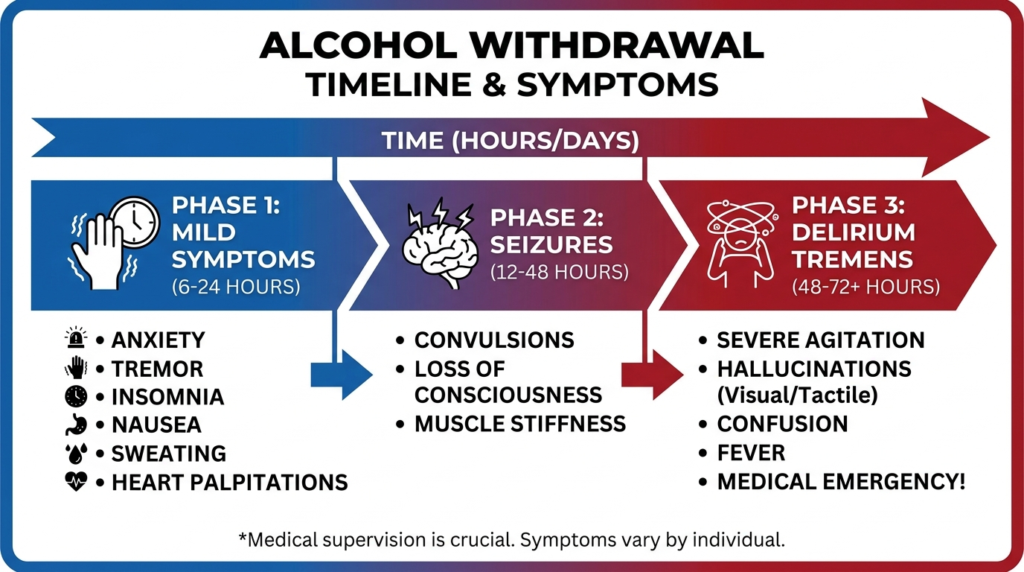
Seizures typically occur within 6 to 48 hours after the last drink, with peak risk around 24 hours. Delirium tremens, the most severe form of withdrawal, usually emerges 48 to 72 hours after cessation and carries a mortality risk of 1% to 5% even with treatment.

This delayed progression is one of the biggest dangers of home detox. You may feel only mildly anxious and shaky on the first day, assume the worst is over, and then experience a seizure or severe confusion the next day. That timeline makes unsupervised home detox especially risky.

When Home Detox May Be Appropriate?

Home-based alcohol withdrawal management is not inherently impossible, but it requires careful risk assessment and structured support.

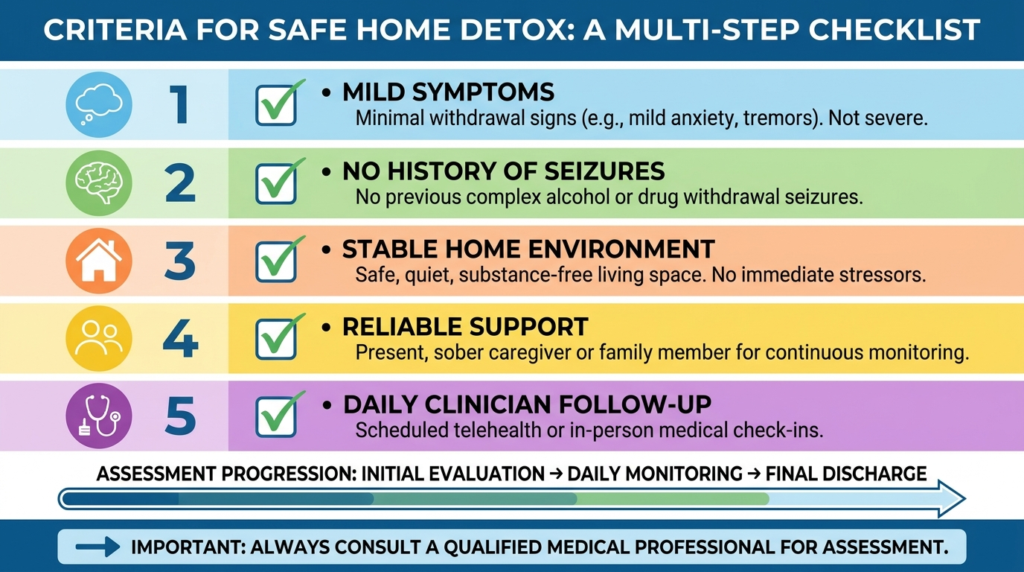
The evidence shows that ambulatory detox can be reasonable for a narrow group of people who meet all of the following criteria:

  • Mild to moderate withdrawal symptoms with no confusion, hallucinations, or seizure activity
  • No history of withdrawal seizures or delirium tremens
  • No significant medical problems such as liver disease, heart disease, infection, or head injury
  • No major psychiatric instability, suicidality, or cognitive impairment
  • A stable, alcohol-free home environment
  • A reliable support person who can monitor symptoms daily
  • Ability to attend daily or every-other-day follow-up with a clinician
  • Rapid access to emergency care if symptoms worsen

According to ASAM’s clinical practice guideline, even when these conditions are met, ambulatory management should include daily check-ins for up to five days, validated symptom monitoring, thiamine supplementation, medication when indicated, and clear criteria for transfer to a higher level of care.

This is fundamentally different from attempting to “tough it out” alone at home. Structured ambulatory withdrawal is a medical program with professional oversight, not a do-it-yourself strategy.

The Biggest Risks of Detoxing From Alcohol at Home

1. Seizures

Withdrawal seizures are among the most feared complications because they can occur with little warning and may lead to head injury, aspiration, recurrent seizures, or progression to delirium. Harvard Health notes that seizures can happen 6 to 48 hours after the last drink, often clustering over several hours.

At home, there is no immediate medical response, no IV access for medication, and no monitoring for postictal confusion or evolving delirium. A person may fall and strike their head, or family members may misinterpret the seizure as fainting or intoxication.

2. Delirium Tremens and Altered Mental Status

Delirium tremens involves severe confusion, disorientation, hallucinations, and autonomic instability. It is a true medical emergency that may require ICU-level care, IV benzodiazepines, continuous monitoring, and airway management. Home settings are poorly equipped to handle this level of acuity.

Because DTs usually occur later than early withdrawal symptoms, patients and families may falsely conclude the situation is improving. Also, altered mental status itself reduces the reliability of self-reported symptoms and makes it difficult to follow treatment instructions.

3. Misjudging Risk Based on Current Symptoms

One of the most dangerous mistakes is assuming that mild current symptoms mean low risk. The Prediction of Alcohol Withdrawal Severity Scale was developed specifically because common tools like CIWA-Ar quantify present severity but do not identify who is at risk of deterioration before symptoms escalate.

A person may have only mild anxiety and tremor at hour 10 but still be at high risk for seizures or delirium if they have a history of prior complicated withdrawal, multiple prior detoxifications, heavy daily intake, liver disease, older age, or comorbid illness. Risk prediction matters as much as current symptom measurement.

4. Prior Complicated Withdrawal and Kindling

Repeated withdrawals increase future severity risk through a phenomenon called kindling, in which prior withdrawal episodes sensitize the nervous system. The American Family Physician notes that prior withdrawal seizures and delirium tremens are among the strongest predictors of future complications.

This means your withdrawal history is not just background information. It is one of the most important risk factors. A history of prior withdrawal seizures or DTs should be treated as a near-disqualifier for unsupervised home detox.

5. Medical Comorbidities and Unstable Chronic Disease

Alcohol-dependent patients frequently have concurrent medical issues such as liver disease, pancreatitis, gastrointestinal bleeding, cardiomyopathy, electrolyte abnormalities, nutritional deficiencies, infections, or trauma. Withdrawal can mimic or mask other dangerous conditions, especially if the patient is confused, intoxicated, or injured.

2025 prospective study found that previous delirium tremens and increased liver stiffness were significant risk factors for severe alcohol withdrawal. Home detox is dangerous in this group because the patient may not only worsen from withdrawal but also decompensate from the underlying illness.

6. Psychiatric Illness, Suicidality, and Cognitive Impairment

ASAM states that active suicide risk generally necessitates treatment in a setting equipped to manage that risk, often inpatient psychiatric care with withdrawal management capability. It also identifies moderate or severe psychiatric symptoms and cognitive impairment as factors arguing against low-acuity ambulatory care.

Psychiatric instability raises home-detox risk through unreliable symptom reporting, poor medication adherence, impulsivity or self-harm risk, confusion between withdrawal and psychiatric symptoms, and limited ability to seek help if deterioration occurs.

7. Lack of Reliable Support Network

A lack of reliable support is repeatedly cited as a relative indication for inpatient detoxification. Home monitoring is inadequate when there is no one available to notice worsening tremor, confusion, seizures, resumed drinking while taking benzodiazepines, or failure to take thiamine and medications properly.

This is not a minor social issue. It directly affects monitoring frequency, medication supervision, recognition of hallucinations or confusion, emergency response if seizure occurs, and prevention of relapse during the withdrawal window.

8. Inadequate Hydration, Nutrition, and Thiamine Replacement

Supportive care is integral to safety. ASAM recommends thiamine for patients in withdrawal, especially IV or IM in high-risk or hospitalized patients, to prevent Wernicke encephalopathy. Typical ambulatory oral thiamine is 100 mg daily for 3 to 5 days.

At home, patients may be vomiting, sweating, not eating, and trying to “sleep it off.” That combination can worsen dehydration, hypoglycemia, and electrolyte disturbance, which independently increase seizure and arrhythmia risk.

9. Unsafe Self-Medication

Unsupervised sedative use can cause oversedation, misuse, and masking of worsening withdrawal. Guidelines recommend structured benzodiazepine regimens and supervision. Patients sometimes try to self-manage with benzodiazepines obtained from prior prescriptions, friends, or illicit sources, creating risks of respiratory compromise and poorly controlled withdrawal.

10. Failure to Transition to Long-Term Treatment

ASAM strongly emphasizes that withdrawal management should initiate and engage patients in ongoing alcohol use disorder treatment rather than stand alone. Repeated unsupported detox attempts contribute to future risk via kindling and relapse. The risk of home detox is not only the immediate seizure or delirium but also the higher probability of an incomplete treatment episode that ends in relapse and repeated withdrawal exposure.

How Clinicians Assess Withdrawal Severity and Risk?

CIWA-Ar: Measuring Current Symptoms

The Clinical Institute Withdrawal Assessment for Alcohol, Revised (CIWA-Ar) is one of the most widely used instruments for alcohol withdrawal symptom severity. Current summaries indicate:

  • Mild: CIWA-Ar less than 10
  • Moderate: CIWA-Ar 10 to 18
  • Severe: CIWA-Ar 19 or higher

ASAM specifically describes severe withdrawal as CIWA-Ar 19 or higher with severe anxiety and moderate to severe tremor, and “complicated” withdrawal as severe withdrawal plus seizure, delirium-like confusion, or new hallucinations.

However, CIWA-Ar has important limitations. It depends on the patient being awake, communicative, and able to answer questions reliably. It can be confounded by coexisting illness or psychiatric symptoms. Most importantly, it measures current severity but does not by itself predict who will deteriorate later.

PAWSS: Predicting Future Complications

The Prediction of Alcohol Withdrawal Severity Scale was designed to estimate the risk of developing complicated withdrawal before symptoms fully escalate. A cutoff of PAWSS 4 or higher has been associated with high predictive value for identifying patients at risk of complicated withdrawal.

This distinction is critical for home detox decisions. A low CIWA-Ar in a patient with prior DTs and liver disease does not make home detox safe. Risk prediction matters beyond current symptoms.

Who Should Not Attempt Home Detox?

The strongest evidence-supported contraindications or red flags include:

  • Prior withdrawal seizures
  • Prior delirium tremens
  • Multiple prior detoxifications or kindling history
  • Moderate symptoms with additional risk factors
  • Severe or complicated withdrawal symptoms
  • Hallucinations, confusion, or clouded sensorium
  • Unstable vital signs
  • Serious medical illness such as liver disease, cardiac disease, infection, or head injury
  • Serious psychiatric illness or suicide risk
  • Pregnancy
  • Age over 65
  • Benzodiazepine dependence
  • Inability to take oral medications
  • Lack of reliable support network
  • Suspected head injury
  • Prior failure of ambulatory withdrawal

What Structured Ambulatory Management Looks Like?

ASAM recommends in ambulatory settings:

  • Daily check-ins for up to five days after cessation or reduction of alcohol use
  • Reassessment of physical condition, vital signs, hydration, orientation, sleep, and emotional status
  • Validated withdrawal severity monitoring
  • Additional monitoring in current or past benzodiazepine use disorder
  • Education on severe symptom warning signs
  • Low-stimulation home environment
  • Non-caffeinated fluids
  • Oral thiamine 100 mg per day for 3 to 5 days
  • Medication adherence counseling
  • Rapid transfer if symptoms worsen, severe tremor persists, hallucinations or confusion or seizure occurs, patient becomes oversedated, or vital signs are unstable

NICE similarly recommends fixed-dose medication regimens in community detox, tapering over 7 to 10 days, monitoring every other day, carer or family oversight of medication when possible, psychosocial support including motivational interviewing, and dose adjustment if severe symptoms or oversedation occur.

This is not “light touch” care. It is a medical program with symptom tracking, risk surveillance, and contingency planning.

Warning Signs That Home Detox is Becoming Unsafe

Guideline-supported transfer or emergency warning signs include:

  • Seizure
  • Hallucinations
  • Confusion or clouded sensorium
  • Marked agitation
  • Severe tremor not resolving
  • Persistent vomiting
  • Unstable blood pressure or heart rate
  • Syncope
  • Oversedation
  • Worsening medical or psychiatric condition
  • Inability to maintain hydration or oral intake

If any of these occur, immediate medical evaluation is necessary.

Why Alcohol Withdrawal is Dangerous?

Alcohol withdrawal is dangerous because it is a potentially life-threatening hyperexcitable rebound state of the brain and autonomic nervous system that can progress from seemingly manageable symptoms to seizures, delirium tremens, severe autonomic instability, metabolic complications, injury, and death.

The danger is magnified by the timing of withdrawal. Symptoms may begin within hours, seizures often occur within 6 to 48 hours, and delirium tremens may emerge later, often after the patient or family falsely believes the worst has passed.

Severe withdrawal can produce tachycardia, hypertension, diaphoresis, fever, agitation, and severe tremor. Although these can be viewed as symptoms, they also signal a physiologic stress state. Unstable vital signs or syncope are indications for transfer from ambulatory management to a higher level of care.

The Role of Benzodiazepines and Medical Treatment

Benzodiazepines are the first-line treatment because they reduce withdrawal symptoms and the incidence of seizures and delirium. This is supported by ASAM and multiple evidence reviews.

Severe cases may need ICU-level care. Patients with recurrent seizures, severe altered mental status, benzodiazepine-resistant withdrawal, hyperthermia, or other ICU-level medical needs may need intensive care, second-line agents, or airway support.

Hospital care may also be necessary for continuous monitoring, IV or IM thiamine, correction of electrolytes, IV fluids, management of liver disease or infection, trauma evaluation, and delirium workup.

Common Misconceptions About Home Detox

“If I’ve done it before, I can do it again”

Repeated prior detoxifications may increase risk via kindling, not prove safety.

“I’m still awake and talking, so it can’t get serious”

Seizures and DTs often happen later, not at the first moment of quitting.

“My CIWA score is low, so I’m safe”

CIWA-Ar measures current severity, not future risk.

“I’ll just use some benzos if needed”

Unsupervised sedative use can cause oversedation, misuse, and masking of worsening withdrawal. Guidelines recommend structured regimens and supervision.

“Detox is the treatment”

Withdrawal management alone does not treat alcohol use disorder and may set up relapse and repeated future withdrawals if not linked to ongoing care.

Concrete Clinical Scenarios

Scenario 1: “I only get shaky, but I’ve had seizures before”

A person drinks heavily every day, stopped 10 hours ago, is anxious and tremulous, and says prior attempts included one seizure years ago. Current symptoms are moderate but not dramatic.

Evidence-based interpretation: High risk. Prior withdrawal seizures strongly predict future complicated withdrawal; repeated withdrawals suggest kindling. This patient should not attempt unsupervised home detox.

Scenario 2: “My symptoms are mild, but I’m alone and have cirrhosis”

A person with chronic liver disease plans to stop at home and says they can call someone if needed.

Evidence-based interpretation: Unsafe for self-detox. Liver disease is a significant complicating factor; home monitoring is inadequate, and medication choices and dosing may need adjustment.

Scenario 3: “I’m 35, healthy, no seizure history, mild symptoms, partner at home”

This patient has mild withdrawal, no serious comorbidity, no history of DTs or seizures, can attend daily monitoring, and has a supportive partner.

Evidence-based interpretation: This patient may be an appropriate ambulatory candidate, but only in a structured outpatient program, not casual self-detox.

Scenario 4: “I’m hallucinating but I know it’s withdrawal”

New auditory or visual hallucinations occur at home during detox.

Evidence-based interpretation: This is complicated withdrawal and requires urgent medical evaluation. Hallucinations are one of ASAM’s defining features of complicated withdrawal.

The Importance of Long-Term Treatment

ASAM emphasizes that withdrawal management is not effective treatment for alcohol use disorder by itself; it should be one component of engagement in ongoing treatment.

This is relevant to danger because repeated withdrawal episodes increase future withdrawal severity. A person who repeatedly detoxes at home without entering ongoing treatment may be cycling through a biologically worsening pattern. In practical terms, successful home detox that is followed by relapse and repeated future withdrawals may increase long-term risk.

Conclusion: When Home Detox Is and Isn’t Safe?

Unsupervised home alcohol detox is often more dangerous than the public assumes, and it is inappropriate for anyone with more than mild symptoms, significant risk factors, prior complicated withdrawal, major comorbidity, or unreliable support.

The biggest risks of detoxing from alcohol at home are delayed progression to seizures or delirium after initially mild symptoms, under-recognition of high-risk history, lack of structured monitoring and reliable caregiver support, unmanaged medical comorbidity, inadequate hydration and thiamine replacement, unsafe self-medication, and failure to connect withdrawal care to long-term alcohol use disorder treatment.

A medically supervised ambulatory detox program can be appropriate for carefully selected, low-risk patients with mild withdrawal, reliable support, and close follow-up. But for patients with moderate symptoms plus risk factors, any history of complicated withdrawal, major comorbidity, unstable psychiatric status, or poor social support, home detox carries risks that are not merely uncomfortable but potentially catastrophic.

The best evidence-backed position is clear: alcohol detox at home should be treated as a structured medical decision, not a casual personal experiment. If you or someone you care about is considering stopping alcohol, the safest first step is a professional assessment to determine the appropriate level of care.

If you’re ready to take that step, reach out to our team at Thoroughbred Wellness and Recovery to discuss your options and create a safe, personalized plan for recovery.

How Long Does Drug & Alcohol Inpatient Rehab Last?

Choosing inpatient rehab for drug or alcohol addiction is a major decision, and one of the first questions people ask is how long does inpatient rehab last.

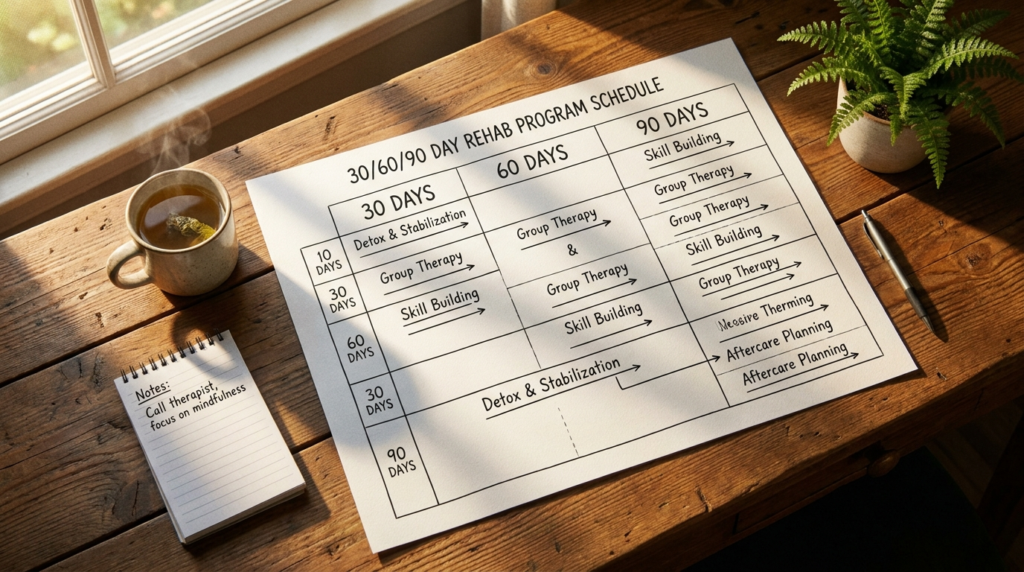
Most U.S. inpatient and residential addiction programs are structured around 30, 60, or 90 days, with the typical stay lasting 30 to 90 days depending on individual needs.

This article explains what determines your length of stay, what happens during each phase, and how to know when you’re ready to step down to outpatient care.

What Inpatient Rehab Actually Means?

Before we talk about duration, it helps to clarify what inpatient rehab includes. In everyday language, people use “inpatient rehab” to describe any live-in addiction treatment.

Clinically, the U.S. system distinguishes between hospital-based inpatient care for acute medical needs and residential treatment, which provides 24-hour structured support in a non-hospital setting.

Most people asking about inpatient rehab are actually asking about residential treatment, which typically lasts 30 to 90 days.

Residential treatment includes withdrawal management if needed, individual and group therapy, psychiatric care for co-occurring conditions, medication management, psychoeducation, relapse prevention planning, and discharge coordination.

The goal is not just to stop using substances but to address the underlying drivers of addiction and build a foundation for long-term recovery.

The 30/60/90-Day Framework

U.S. addiction treatment programs are commonly organized into 30-, 60-, and 90-day tracks. These durations are not arbitrary.

They reflect common insurance authorization cycles, treatment planning milestones, and the time needed for different levels of clinical complexity.

30-Day Programs

A 30-day program is often the baseline. It typically includes detox if needed, stabilization, therapy initiation, and discharge planning.

This duration works well for people with mild to moderate substance use disorder, strong family support, stable housing, and no major psychiatric complications.

The main limitation is that 30 days may not be enough time to address deeper trauma, chronic relapse patterns, or co-occurring mental health conditions.

60-Day Programs

Sixty days allows more time to consolidate recovery after the initial stabilization phase. This middle option is often appropriate for people with prior relapse, unresolved trauma, co-occurring anxiety or depression, or weaker recovery supports at home.

The extra month creates space for deeper therapeutic work, family engagement, and more realistic discharge planning.

90-Day Programs

Ninety-day programs are typically reserved for severe or complex cases. Research on justice-involved pregnant women found that staying 91 days or longer was associated with much higher odds of treatment completion compared with stays under 30 days.

This suggests that crossing the 90-day threshold may be clinically meaningful for retention and completion, especially in high-risk groups.

A 90-day stay allows time for comprehensive psychiatric treatment, repeated relapse prevention rehearsal, family reintegration, and gradual step-down transitions.

how long does inpatient rehab last

What Determines How Long You Stay?

While 30/60/90-day structures are common, the clinically appropriate duration depends on individual factors.

The American Society of Addiction Medicine framework, which is the dominant U.S. standard for placement and continued-stay decisions, uses six dimensions to assess need: withdrawal risk, biomedical conditions, psychiatric conditions, readiness to change, relapse potential, and recovery environment.

Detox Time

Detox is the first phase, not the whole treatment episode. Medically supervised withdrawal typically lasts 3 to 7 days, depending on the substance, withdrawal severity, and medical complications. Completing detox does not mean you’re ready to leave.

Withdrawal management addresses acute physiological instability, but residential rehab addresses broader relapse risk, behavioral patterns, psychiatric symptoms, and environmental safety.

Addiction Severity

Severity is one of the strongest predictors of how long inpatient rehab lasts. Higher severity generally means greater craving, more entrenched use patterns, greater functional impairment, and slower stabilization.

People with chronic relapse, overdose history, or inability to abstain outside controlled settings often need 60 to 90 days or longer.

Co-Occurring Mental Health Conditions

Co-occurring psychiatric disorders are among the clearest reasons inpatient rehab may last longer. Research shows that co-occurring mental illness is associated with substantially lower odds of treatment completion.

Dual-diagnosis patients often need more integrated, sustained care because psychiatric instability can increase suicide risk, impulsivity, and relapse risk. Medication adjustments may require close monitoring, and unresolved anxiety, depression, trauma symptoms, or psychosis can undermine readiness for outpatient care.

Recovery Environment

Your living situation matters. If you’re returning to a home with active substance use, unsafe relationships, or no social support, you may need a longer residential stay or a step-down arrangement involving sober housing.

The ASAM framework explicitly includes recovery environment in its placement model because even strong clinical progress can unravel quickly in an unsafe environment.

Treatment Progress

The most clinically legitimate determinant is how you respond to treatment. You should remain in inpatient care while you continue to meet criteria for that level and step down when acute instability has improved, participation is established, relapse prevention planning is workable, psychiatric and medical needs are sufficiently controlled, and a lower level can safely sustain gains.

Alcohol Rehab vs Drug Rehab Duration

People often ask whether alcohol rehab lasts longer than drug rehab or vice versa. The answer is that both use the same 30/60/90-day structures, but the clinically appropriate duration can differ by substance due to withdrawal risk, medication options, and relapse patterns.

Alcohol withdrawal can be medically dangerous, so detoxification may require close monitoring. Once stabilized, many people with mild to moderate alcohol use disorder may move through standard residential timelines, especially if they have supportive post-discharge conditions.

Drug rehab covers a wide range: opioids, benzodiazepines, stimulants, cannabis, and polysubstance use. High-dose benzodiazepine use, polysubstance use, or prior withdrawal seizures may require inpatient or medically managed residential initiation due to 24-hour nursing and medical care. For opioid use disorder, residential duration may be only one part of care, since medication treatment often continues far beyond the residential stay.

Polysubstance use is especially important because it tends to increase withdrawal complexity, medication interactions, psychiatric burden, and relapse risk. The evidence does not support a simple rule like “alcohol rehab is 30 days” or “drug rehab is 90 days.”

Both commonly use 30/60/90-day structures, but drug-related cases, particularly opioid, benzodiazepine, or polysubstance cases, more often raise issues that favor higher-acuity placement or longer total treatment engagement.

Does Longer Treatment Work Better?

The evidence on outcomes is nuanced. Research suggests that longer treatment often performs better, particularly for retention, completion, and high-complexity cases. But the strongest support is for longer treatment engagement overall, not always longer residential stay alone.

A study of justice-involved pregnant women found that staying 91 days or longer was associated with much higher odds of treatment completion versus stays under 30 days.

Participation in self-help groups was also associated with higher odds of completion, while co-occurring mental illness reduced completion odds. This combination of findings links duration, peer support, and dual diagnosis within one outcome framework.

Other research suggests that staying through the first 30 to 60 days, and especially at least 45 days, is associated with better outcomes, while some analyses found no further significant improvement beyond 90 days in certain populations.

The strongest clinically defensible target is not “as long as possible,” but “long enough to achieve meaningful stabilization and engagement, typically at least several weeks, often 30 to 60 days for appropriate residential patients, with extension beyond that when ongoing clinical indicators justify it.”

Why 30 Days is Common Even When It May Not Be Optimal?

Thirty-day treatment has deep operational and historical roots. It is easy to package and market, easier to staff and cycle beds around, and often aligns better with insurance authorization patterns than open-ended care.

Multiple sources state explicitly that the prevalence of 28- to 30-day treatment is often driven by insurance coverage rather than individualized clinical optimality.

By the time you detox, complete intake, begin group and individual therapy, start medications if needed, and reach discharge planning, a 30-day episode may leave limited time for deeper work, especially if you have trauma, psychiatric disorders, chronic relapse, social instability, or significant skill deficits. This is not an argument against 30-day rehab. It is an argument against treating it as universally sufficient.

Thirty days should be understood as a common initial treatment episode, sometimes sufficient for lower-complexity cases, often insufficient as a standalone treatment for severe or chronic cases, and best viewed as one part of a broader continuum.

How Insurance Shapes Inpatient Rehab Duration?

Clinical need does not operate in a vacuum. In the United States, actual inpatient rehab length is often shaped by prior authorization, concurrent review, medical-necessity criteria, continued-stay documentation, network status, facility-type limitations, and benefit design.

The Mental Health Parity and Addiction Equity Act generally bars plans offering mental health and substance use disorder benefits from imposing more restrictive financial requirements or treatment limitations on those benefits than on comparable medical and surgical benefits.

The law also applies to nonquantitative treatment limitations such as prior authorization, medical management, and standards that limit the scope or duration of services, including facility-type limits and network adequacy.

Many disputes over residential substance use disorder treatment concern whether detox is approved but residential days are denied, whether continued-stay reviews are more frequent or stricter than for medical and surgical admissions, whether “fail first” or “least restrictive” logic is applied more harshly to behavioral health, or whether residential facilities are limited by network design or facility-type exclusions.

Insurance is not just a payment issue; it is a determinant of length of stay because it can shorten care through utilization management even when your clinical trajectory suggests ongoing need.

The Treatment Continuum: Why Inpatient Stay Cannot Be Evaluated in Isolation?

For serious substance use disorder, people are generally recommended to remain engaged in treatment for at least one year across multiple levels of care rather than treating detox or inpatient rehab as a standalone episode.

This is one of the most important facts in the evidence base. The implication is profound: even if inpatient rehab lasts only weeks, the total effective treatment duration should often be much longer.

Research on intensive outpatient programs explicitly concludes that engagement in longer, less-intensive services may have greater benefit than brief, intensive interventions without ongoing support, and that the important feature appears to be continuity of care over a long duration.

how long is inpatient alcohol rehab

Recent research on community re-entry after residential treatment reinforces this. The transition back into the community is described as a vulnerable period, and continuity of care is identified as central to post-discharge recovery success.

A common pathway described in federal clinical guidance is 3 to 7 days of withdrawal management, 1 to 3 months of residential rehab, then intensive outpatient, then standard outpatient care.

This continuum approach reconciles two apparently conflicting findings: residential care may be necessary for safety and stabilization in severe cases, yet long-term outcomes often depend on what happens after discharge.

Step-Down Care After Residential Treatment

The evidence does not say inpatient duration is unimportant. It says inpatient duration should be evaluated as one segment of a broader care trajectory.

The wrong question is “How many days should rehab last?” The better question is “How many days of 24-hour care are needed before I can successfully continue at the next level?”

Outpatient systems commonly include partial hospitalization programs, intensive outpatient programs, extended outpatient care, aftercare, peer support, and ongoing counseling.

Research on recovery housing linked to outpatient treatment found that structured sober living was associated with longer overall lengths of stay in outpatient services, greater likelihood of satisfactory discharge, and support, structure, accountability, and recovery-skill practice.

Recovery housing paired with intensive outpatient may function as a clinically appropriate bridge, potentially preventing unnecessarily prolonged inpatient stays while still preserving structure.

When is Step-Down Appropriate?

Step-down is appropriate when acute withdrawal and medical instability are resolved, participation is consistent, you can use coping and relapse-prevention skills with support, co-occurring symptoms are sufficiently managed, partial hospitalization or intensive outpatient follow-up is active, and safe housing exists or recovery housing is arranged.

Extension of inpatient or residential care is strongest when lower levels remain unsafe or previously unsuccessful, psychiatric or medical instability persists, you still require 24-hour containment, housing is unsafe and no recovery housing is available, or discharge planning is not yet clinically feasible.

A Concrete Answer

Based on the strongest sources, the most evidence-supported approach is individualized care that secures at least adequate early retention, often around 30 to 60 days for those requiring residential treatment, while extending beyond that only when persistent withdrawal risk, psychiatric instability, failed lower levels of care, or an unsafe living environment continue to justify 24-hour structure.

The better long-term predictor of recovery is not maximizing inpatient days in isolation, but ensuring an unbroken step-down into partial hospitalization, intensive outpatient, outpatient care, medication treatment when indicated, and supportive housing or recovery monitoring.

This opinion is more justified than the two common but flawed alternatives. “Detox then discharge” is too short because detox addresses acute withdrawal, not the broader relapse, psychiatric, and environmental risks that drive early return to use.

“Ninety days for everyone” is too rigid because peer-reviewed evidence suggests early retention matters greatly, but benefits beyond 90 days may plateau for some populations, and many individuals can do well with lower levels of care if continuity and housing supports are in place.

Summary Table: Common Durations and Their Clinical Role

DurationTypical useTypical patient profileKey limitations
30 daysStabilization and foundation-buildingMild to moderate substance use disorder, stronger supports, first treatment episodeOften too short for severe substance use disorder or dual diagnosis
60 daysConsolidation and deeper therapeutic workRelapse history, unresolved trauma, co-occurring conditionsStill may be insufficient for severe chronic cases
90 daysHigher-intensity extended treatment, stronger completion benchmarkSevere substance use disorder, chronic relapse, unstable environment, psychiatric comorbidityAccess and coverage barriers; not always necessary for all patients

Final Thoughts

Inpatient rehab lasts until you no longer need 24-hour structured care and can safely continue recovery in a lower level of care with adequate supports. Detox time, addiction severity, mental health complexity, insurance rules, and treatment progress all matter, but continuity of care is the factor that best explains whether the chosen length will actually lead to durable recovery.

The U.S. addiction treatment industry still organizes inpatient and residential rehab around 30-, 60-, and 90-day packages, but this packaging is clinically secondary.

The most valid modern answer is that 30 days is the common operational baseline, 60 days is often more appropriate for people with unresolved psychiatric or relapse risks, and 90 days is a meaningful benchmark for high-severity cases, but the real standard is not fixed duration. It is assessment-based, continuously reassessed treatment across a continuum of care.

If you or someone you care about is considering inpatient rehab in Atlanta, the most important step is to seek a comprehensive assessment that evaluates all six dimensions of need: withdrawal risk, medical conditions, psychiatric conditions, readiness to change, relapse potential, and recovery environment.

That assessment will guide not only whether inpatient care is needed, but how long you should stay and what comes next. Recovery is not a calendar event. It is a process that unfolds over time, and the right length of stay is the one that gives you the best chance to build a foundation for lasting freedom.

If you’re ready to explore your options, reach out today to speak with Thoroughbred’s compassionate team that can help you find the right path forward.

Kratom and Adderall: Is it Safe to Mix Adderall and Kratom?

If you are wondering whether mixing kratom and Adderall is safe, the short answer is no!

Poison center data show that taking kratom with another substance nearly triples the odds of hospital admission compared to kratom alone, and the combination creates overlapping cardiovascular, neuropsychiatric, and metabolic risks that are hard to predict.

This article breaks down the evidence so you can understand exactly why kratom and Adderall interactions are dangerous and what to do instead.

Why Are Kratom and Adderall a Risky Mix?

Kratom (Mitragyna speciosa) is a plant from Southeast Asia that contains the alkaloid mitragynine. At lower doses it can produce stimulant effects, and at higher doses it can produce opioid-like effects.

Adderall is a prescription stimulant made of mixed amphetamine salts, FDA approved for ADHD and narcolepsy. Its label warns of high abuse potential and notes that misuse may cause sudden death and serious cardiovascular adverse reactions.

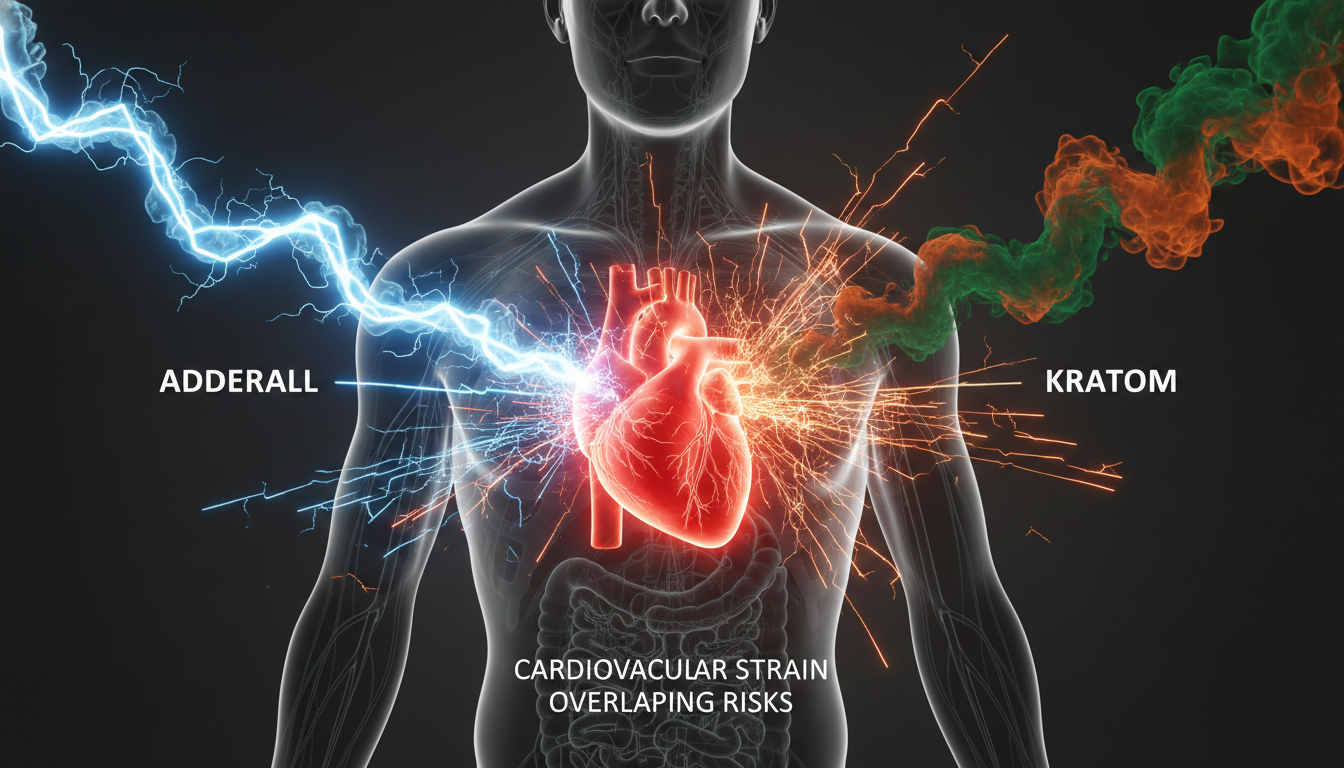
Both substances independently raise heart rate, blood pressure, and arousal. Both can trigger anxiety, agitation, and insomnia.

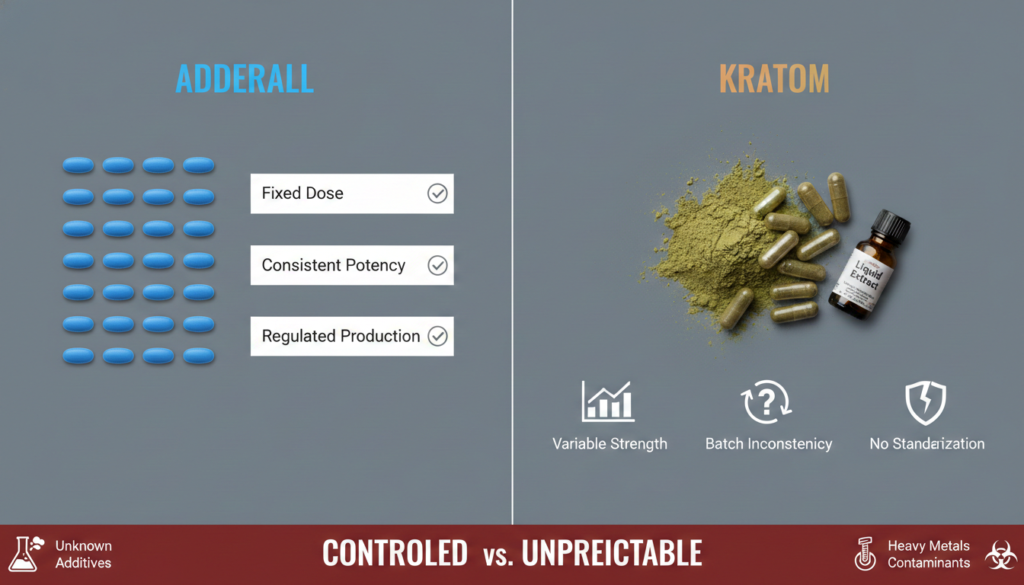
Stacking them does not cancel out side effects. Instead, it layers one set of risks on top of another while adding a wild card: kratom products are unregulated, vary widely in potency, and sometimes contain adulterants that make the outcome even less predictable.

How Kratom Works in the Body?

Kratom is often described as “stimulating at low doses, sedating at high doses,” but that framing is too simple.

Recent clinical pharmacology reviews stress that kratom has complex receptor activity spanning opioid, adrenergic, and serotonergic systems. Stimulatory and opioid effects can actually co-occur, and a 2024 review notes that kratom’s adrenergic effects may be synergistic with amphetamine derivatives and other stimulants.

Kratom also affects drug metabolism. Research shows it can inhibit cytochrome P450 enzymes, especially CYP2D6 and CYP3A pathways. A 2022 case report described potential pharmacokinetic kratom drug interactions that led to toxicity, highlighting that this concern is not just theoretical but has shown up in real patients.

That enzyme inhibition matters because many Adderall users also take antidepressants, anxiolytics, or sleep medications. If kratom slows the breakdown of those drugs, the total side effect burden goes up even if the amphetamine itself is not the only affected medication.

What Poison Center Data Tell Us About Mixing Kratom and Adderall?

No large clinical trial has tested the exact kratom and Adderall combination. But poison center surveillance gives us the next best thing: real world outcome data on kratom exposures, including what happens when people take kratom alongside other substances.

A CDC analysis of U.S. poison center calls from 2010 to 2015 found 660 kratom exposure reports. The most common symptoms were tachycardia (25%), agitation or irritability (24%), drowsiness (19%), and hypertension (12%). Those overlap almost perfectly with known Adderall side effects.

A broader study covering 2011 to 2017 documented over 1,800 kratom calls. More than half resulted in a serious medical outcome. Taking kratom with another substance increased the odds of hospital admission by a factor of 2.8 and the odds of a serious outcome by 2.25. Eleven deaths were reported, most involving multiple substances.

That last point is the strongest indirect argument against mixing Adderall and kratom. Adderall would count as a meaningful coexposure, and the data consistently show that adding other substances to kratom makes outcomes worse, not better.

Specific Risks of Mixing Adderall and Kratom

Cardiovascular Strain

Both kratom and Adderall independently raise heart rate and blood pressure. Together they create additive cardiovascular burden. Kratom has also been linked to hERG potassium channel inhibition in lab studies, a mechanism tied to dangerous heart rhythm changes. Case literature includes reports of ventricular fibrillation and cardiac complications in kratom users.

For someone already on a prescription stimulant, even a modest extra push on the cardiovascular system can tip the balance toward palpitations, chest pain, or a hypertensive spike.

Anxiety, Panic, and Psychiatric Instability

Adderall can cause severe anxiety, agitation, and in some cases stimulant psychosis. Kratom has its own psychiatric signal.

A 2021 case report described psychosis and insomnia thought to be secondary to acute kratom intoxication. A 2024 report linked kratom to paranoid delusions in a patient with schizoaffective disorder.

Mixing the two can worsen restlessness, panic, irritability, and sleep disruption. Sleep loss alone can destabilize mood, lower seizure threshold, and impair judgment, creating a cycle that encourages redosing.

Seizure Risk

Seizures appear repeatedly in kratom toxicity literature. An early case report documented seizure and coma after kratom exposure.

Adderall overdose or misuse can also lower the seizure threshold. Combining a seizure associated botanical with a prescription stimulant that carries its own seizure risk is a poor bet, especially for anyone with a seizure history, sleep deprivation, or dehydration.

The “Push Pull” Masking Problem

Because kratom can act as both a stimulant and a sedative depending on dose and product, it can mask the warning signs of toxicity from either direction. A person might use Adderall to stay awake after taking too much kratom, not realizing that delayed respiratory depression is still possible.

Or they might use kratom to “smooth out” Adderall jitters, then take more Adderall once the sedation wears off. This push pull pattern encourages escalation and makes it harder to recognize when something is going wrong.

How the Kratom Product Variability Makes the Combination Less Predictable?

Unlike Adderall, which is a standardized pharmaceutical, kratom products have no consistent quality control. Potency varies between brands, batches, and product types.

Some products are plain leaf powder while others are concentrated extracts with much higher alkaloid levels.

Worse, some kratom products have been found to contain adulterants. A 2019 toxicology report described a patient who suffered a large hemorrhagic stroke after using kratom that turned out to be adulterated with phenylethylamine, a compound structurally similar to amphetamine. The FDA has also flagged kratom products containing unsafe levels of lead and nickel.

When you mix Adderall with kratom, you may not actually be mixing Adderall with kratom alone. You could be mixing it with an unknown concentration of alkaloids, an undisclosed stimulant, or a contaminant. That turns an already risky combination into one you cannot plan for at all.

Kratom and Adderall

Who Faces the Highest Risk?

Some people face greater danger from kratom and Adderall interactions than others:

  • Anyone with high blood pressure, arrhythmia, or structural heart disease
  • People with anxiety disorders, bipolar spectrum conditions, or a history of psychosis
  • Those with a seizure history or who are sleep deprived
  • People taking antidepressants, antipsychotics, or other psychiatric medications
  • Individuals with a substance use disorder history who may escalate doses
  • Anyone using concentrated kratom extracts or synthetic 7 hydroxymitragynine products
  • Pregnant individuals, since kratom has been linked to neonatal withdrawal syndromes

What the Mortality Data Show?

A CDC analysis of overdose deaths from 27 states found that 152 out of 27,338 decedents tested positive for kratom.

Medical examiners judged kratom to be a cause of death in about 60% of those cases. Among kratom positive decedents, 65% also had fentanyl listed as a cause of death, and roughly 80% had a history of substance misuse.

These numbers tell two stories at once. First, kratom related mortality is usually a polysubstance event, not an isolated one.

Second, the people most likely to die with kratom in their system are those already mixing multiple substances. Adding Adderall to kratom places a person squarely in that higher risk category.

Why “I’ve Done It Before and Was Fine” Is Not Reassuring?

Some people report combining kratom and Adderall without obvious harm. That does not mean the combination is safe. Variable kratom products mean the next batch could be stronger.

Individual differences in metabolism, heart health, psychiatric vulnerability, and co-medications mean one person’s uneventful experience says nothing about another’s risk.

And stimulant side effects like elevated blood pressure or subtle heart rhythm changes can cause damage without producing obvious symptoms until something goes seriously wrong.

What to Do Instead?

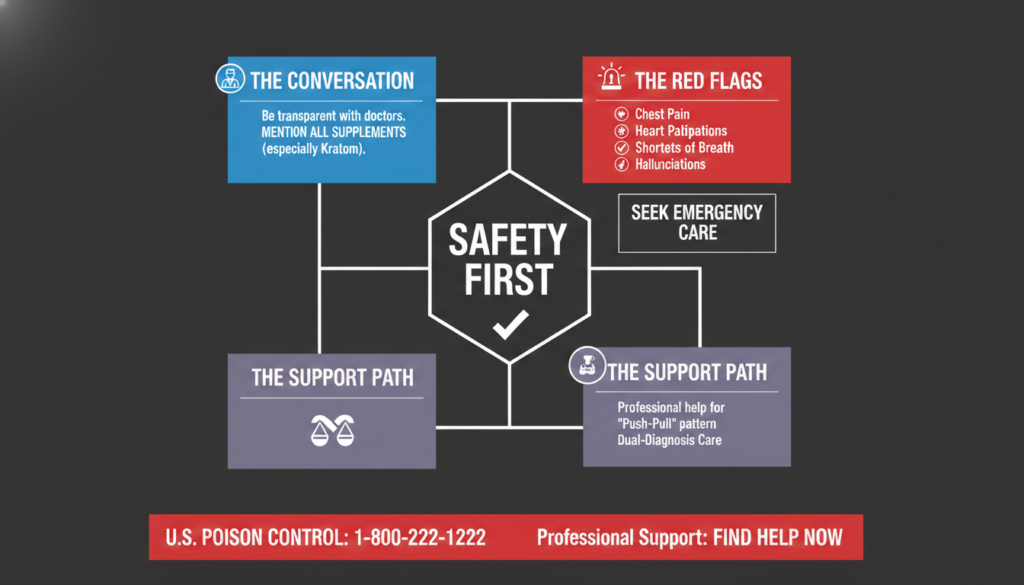
If you take prescribed Adderall and are thinking about adding kratom for energy, pain, mood, or focus, talk to your prescriber first.

Many patients do not mention supplements, but in this case you should. Your doctor can help you find safer options for whatever kratom is meant to address.

If you have already taken both and notice chest pain, severe palpitations, shortness of breath, confusion, hallucinations, seizures, or extreme sleepiness, seek emergency care. The U.S. Poison Control number is 1 800 222 1222.

If kratom or Adderall use has become hard to control, or if you find yourself balancing one substance against the other, that pattern may point toward a deeper issue worth addressing with professional support.

Is it Safe to Mix Adderall and Kratom?

Why Does This Matter?

Mixing kratom and Adderall is not a harmless experiment. The evidence from poison centers, clinical pharmacology, case reports, and mortality surveillance all points in the same direction: combining a potent prescription stimulant with an unregulated, pharmacologically complex botanical raises the risk of cardiovascular events, psychiatric crises, seizures, masked toxicity, and unpredictable drug interactions.

The absence of a direct clinical trial on this exact pair does not mean it is safe. It means the combination has not been studied enough to know how bad it can get, and what we do know is already concerning.

You deserve support that does not depend on guesswork or risky self-medication. If substance use or mental health challenges are driving the urge to mix these substances, reaching out for our professional guidance is the safest next step. Don’t worry, Thoroughbred’s dual diagnosis treatment in Atlanta, can address both sides of the problem at once. Call today!

Signs of Meth Use: Symptoms of Meth Abuse

Recognizing the signs of meth use can be the difference between early help and a life-threatening crisis.

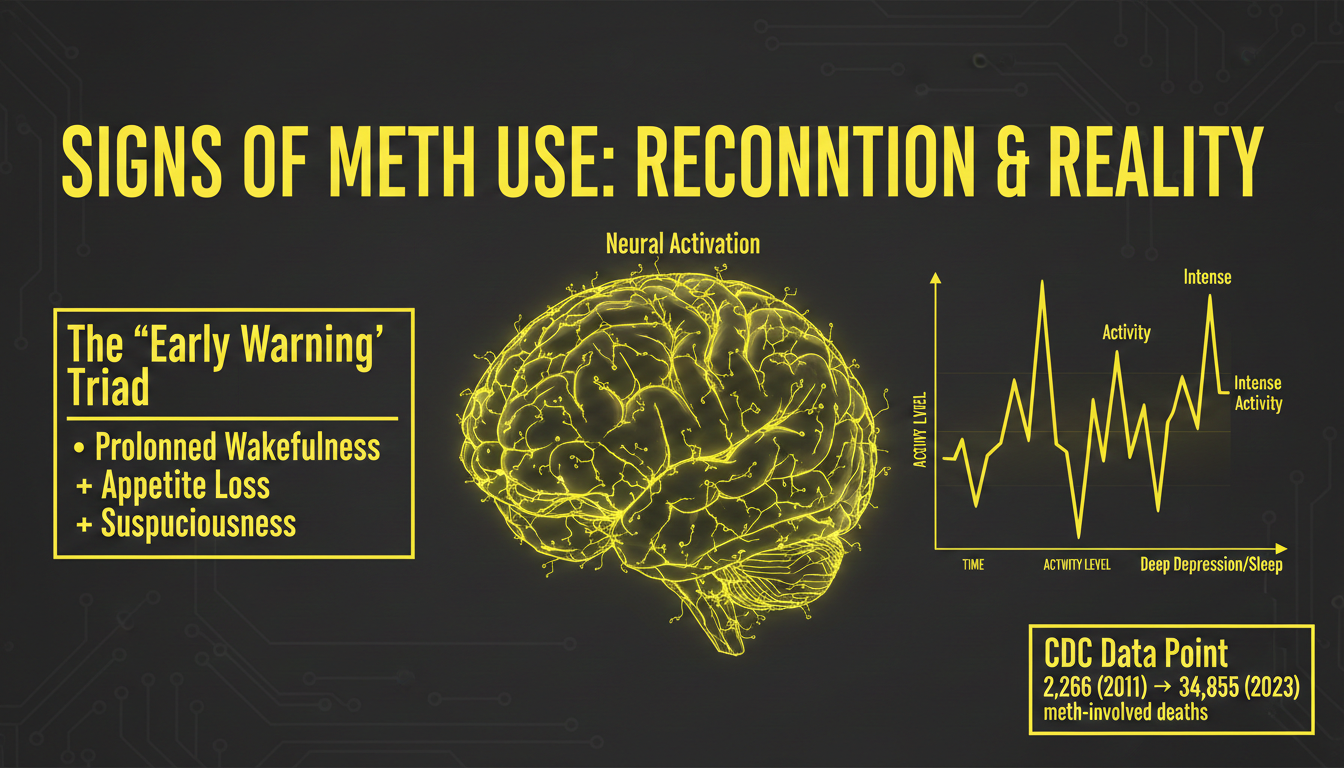
Methamphetamine-involved overdose deaths rose from 2,266 in 2011 to 34,855 in 2023, according to CDC surveillance data, making recognition more urgent than ever.

This article walks through the most common physical, behavioral, and psychiatric signs of meth abuse so you can act with confidence.

Signs of Meth Use: What to Look For First?

The most reliable early signs of meth use are not dramatic physical changes like rotting teeth or skin sores. They are behavioral: prolonged wakefulness, appetite loss, restlessness, and growing suspiciousness.

These signs often appear long before visible physical deterioration sets in, which means waiting for extreme changes can cost critical time.

No single sign proves meth use. What matters is a pattern across time and domains. The sections below break that pattern into five clear clusters so you can recognize it early.

Physical Signs Someone is on Meth

When someone is actively using meth, the body shows the strain of stimulant overload almost immediately. Methamphetamine floods the nervous system, pushing the heart, blood vessels, and brain into overdrive.

Common acute physical signs include:

  • Rapid or irregular heartbeat
  • Elevated blood pressure
  • Sweating and overheating
  • Tremor or shakiness
  • Dry mouth
  • Dilated pupils
  • Jaw clenching or teeth grinding
  • Reduced appetite
  • Prolonged wakefulness or inability to sleep

In severe cases, stimulant toxicity can progress to seizures, muscle breakdown, stroke, heart attack, or death. These are not rare edge cases. They reflect the drug’s direct effect on the cardiovascular and central nervous systems.

Why Insomnia Is One of the Strongest Clues?

Prolonged wakefulness stands out among physical signs because it links so many other symptoms together.

A person who has been awake for 24, 48, or even 72 hours will show intensified paranoia, irritability, and impulsivity. Sleep deprivation amplifies nearly every other sign on this list.

If someone you know is staying awake for unusually long stretches, appearing wired rather than tired, and then crashing hard for extended periods, that cycle alone is a meaningful red flag.

Long-Term Physical Signs of a Meth User

Chronic use adds a second layer of visible physical damage. Over time, signs of a meth user often include:

  • Significant, unexplained weight loss
  • Severe tooth decay or tooth loss, sometimes called “meth mouth”
  • Skin sores and excoriations from picking or scratching
  • Persistent dry mouth
  • Poor hygiene and general physical neglect
  • Cardiovascular complications including chest pain and exertional intolerance

“Meth mouth” results from a combination of dry mouth, teeth grinding, poor nutrition, and neglected dental care. It reflects sustained use rather than occasional exposure.

Skin sores often have a psychiatric component: many users pick at their skin in response to tactile hallucinations or the false belief that insects are crawling under the skin, a condition known as delusional parasitosis, which neurologic research identifies as a recognized manifestation of meth-related psychosis.

Behavioral Signs of Meth Abuse

Behavioral changes are often the first thing family members and friends notice. They tend to appear before severe physical deterioration and can be more diagnostically useful than appearance alone.

Common behavioral signs of meth abuse include:

  • Unusually high energy or sustained activity
  • Restlessness and inability to sit still
  • Rapid, pressured speech
  • Repetitive or compulsive behaviors like sorting, searching, or picking
  • Irritability and short temper
  • Impulsive or reckless decisions
  • Aggressive outbursts
  • Risky sexual behavior
  • Chaotic daily routines and missed obligations
  • Social withdrawal or sudden conflict with family and friends

The Binge-and-Crash Cycle

One of the most telling behavioral patterns is the cycle of intense activity followed by a crash. During a binge, a person may stay awake for days, eat almost nothing, and appear driven or frantic.

After the binge ends, they may sleep for an unusually long time, appear deeply depressed, and show little interest in food or activity.

When this cycle repeats weekly or more often, it is a strong indicator of stimulant use. Clinical literature on stimulant emergencies describes this pattern as a core feature of methamphetamine use disorder rather than an occasional side effect.

Impulsivity and Cognitive Decline

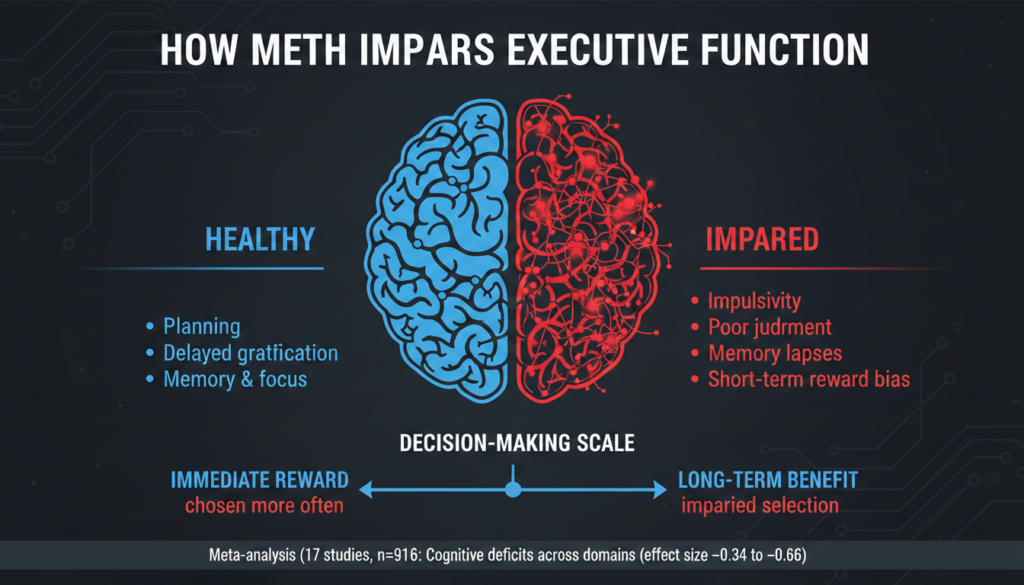
Chronic meth use damages the brain’s ability to plan, organize, and delay gratification.

Research shows that people with methamphetamine dependence are more likely to choose smaller immediate rewards over larger delayed ones, a sign of impaired executive function. In daily life, this looks like:

  • Forgetting commitments or recent events
  • Difficulty following through on plans
  • Poor financial decisions
  • Inability to maintain work, school, or caregiving roles
Symptoms of Meth Abuse

A meta-analysis of 17 studies covering 916 participants found negative effects across nearly all cognitive domains in people with chronic meth use, with effect sizes ranging from -0.34 to -0.66.

These are not subtle changes. They affect real-world functioning in ways that are often more disabling than the visible physical signs.

Signs Someone is Doing Meth: Psychiatric Red Flags

Psychiatric symptoms are among the most clinically significant signs of meth abuse, yet they are often the most misunderstood. Many people expect meth use to look like physical deterioration. In reality, psychiatric presentations often come first and can be more severe.

Research on methamphetamine toxicity reports that psychiatric complaints account for about 50% of emergency department visits related to meth use in the United States, including agitated delirium and psychosis.

Paranoia and Psychosis

Paranoia is the most common psychiatric sign in acute meth intoxication. A retrospective emergency department series of 287 meth intoxication presentations found that 71% had features of acute psychosis, and paranoid delusions were present in 65% of those cases. Most episodes resolved within about 15 hours, but not all did.

Signs of meth-induced psychosis include:

  • Believing others are watching, following, or plotting against them
  • Hearing voices or seeing things that are not there
  • Tactile sensations like insects crawling under the skin
  • Fixed false beliefs that cannot be reasoned away
  • Intense fear or hypervigilance
  • Disorganized thinking or speech

About 27% of people reporting heavy meth use have experienced at least one psychotic episode, and over 30% of drug-induced psychotic episodes are expected to transition to a primary psychotic disorder over time. In some cases, psychosis persists for months after stopping use.

The 2025 forensic psychiatry review found that 10% to 28% of people with meth-associated psychosis continued to experience symptoms for more than six months after stopping.

Anxiety, Depression, and Mood Instability

Beyond psychosis, meth use commonly produces:

  • Intense anxiety or panic attacks
  • Severe irritability and mood swings
  • Deep depression and anhedonia, the inability to feel pleasure
  • Suicidal thoughts, especially during withdrawal

Depression and anhedonia are especially prominent during the crash phase. Repeated dopamine depletion can leave a person unable to experience ordinary pleasure without the drug, which drives continued use and makes recovery harder.

How to Tell if Someone Is Using Meth: A Pattern-Based Approach

The most valid way to tell if someone is using meth is not to look for one dramatic sign. It is to recognize a recurring cluster of changes from that person’s normal baseline.

DomainEarly SignsLater or Severe Signs
SleepReduced need for sleep, staying up unusually lateDays without sleep, binge-crash cycles
Appetite and weightSkipping meals, eating lessRapid weight loss, gaunt appearance
BehaviorRestlessness, rapid speech, irritabilityAggression, reckless decisions, chaotic routines
PsychiatricAnxiety, suspiciousnessParanoia, hallucinations, psychosis
PhysicalSweating, fast pulse, dry mouthSkin sores, dental decay, cardiovascular symptoms
CognitionForgetfulness, poor focusExecutive dysfunction, memory impairment

Compare to Baseline

The most useful question is: what changed? A person who was previously calm and organized but is now restless, suspicious, and unable to sleep is showing a meaningful departure.

Behavioral change from baseline often matters more than the absolute severity of any one sign.

Look for Route-Specific Clues

Meth can be smoked, snorted, injected, or swallowed. Each route leaves different clues:

  • Smoking: glass pipes, burn marks, chemical smells, frequent lighters
  • Snorting: nasal irritation, frequent sniffing, nosebleeds
  • Injecting: needles or syringes, track marks, skin infections or abscesses

Route evidence combined with symptom patterns substantially increases confidence that meth use is occurring.

Assume Possible Fentanyl Exposure

This is one of the most important updates to meth recognition in recent years. Drug-checking research has found fentanyl present in methamphetamine samples collected by community-based services, and some estimates place fentanyl prevalence in unregulated stimulant supplies at 5.9% to 15% depending on the setting.

This means someone who appears to be using only meth may also be exposed to opioids without knowing it. If a person who seems stimulated suddenly becomes hard to wake, breathes slowly, or has blue lips, that is a possible opioid overdose emergency even if meth use is suspected. 

CDC guidance recommends keeping naloxone available and using fentanyl test strips with methamphetamine and other drugs. SAMHSA supports access to fentanyl and xylazine test strips through certain funded programs.

When Signs of Meth Use Become a Medical Emergency?

Some signs require immediate emergency response, not watchful waiting.

Call emergency services right away if someone shows:

  • Chest pain or palpitations
  • Seizure
  • Stroke-like symptoms such as sudden weakness, slurred speech, or facial drooping
  • Collapse or loss of consciousness
  • Severe overheating with confusion
  • Slowed or stopped breathing
  • Psychosis with danger to self or others

Washington State Department of Health guidance lists severe agitation, rapid or abnormal heart rhythm, high blood pressure, hyperthermia, stroke, and heart attack among stimulant overdose emergencies.

The National Harm Reduction Coalition uses the term “overamping” for dangerous stimulant over-intoxication and includes chest pain, extreme anxiety, hallucinations, tremors, and irregular breathing among its warning signs.

Even if the person is believed to be using only meth, give naloxone and call for help if breathing slows or they cannot be woken. Fentanyl contamination makes this the safest assumption.

What Meth Abuse is Often Mistaken For?

Several conditions share signs with meth use, which is why pattern recognition across time matters more than any single observation.

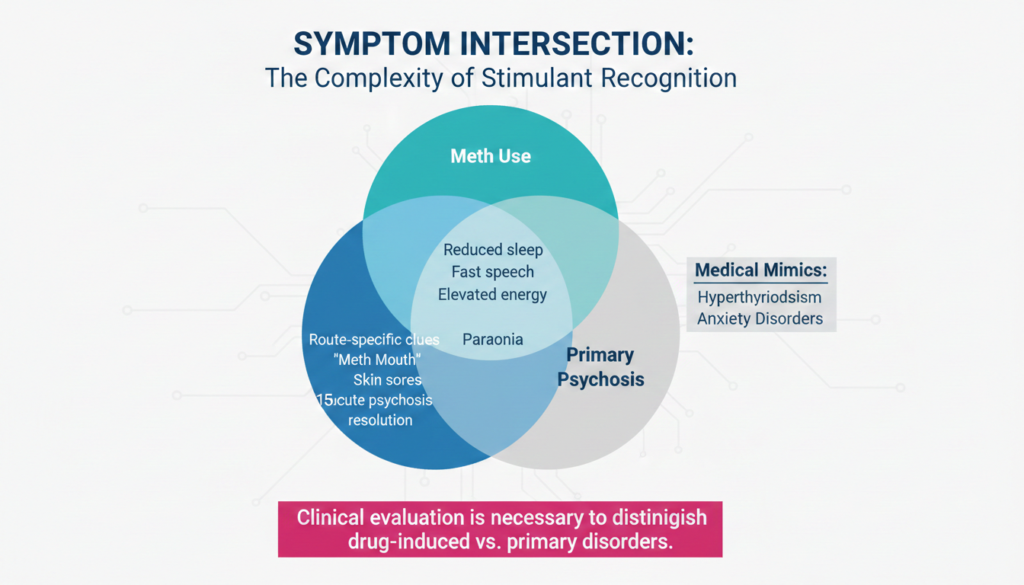
  • Cocaine use produces similar stimulant signs, but meth effects typically last much longer. Prolonged insomnia lasting days is more suggestive of meth.
  • Bipolar mania can look like stimulant intoxication, with reduced sleep, fast speech, and elevated energy. Key differences may include a prior mood history and the absence of route clues or physical deterioration.
  • Primary psychotic disorders like schizophrenia can resemble meth-induced psychosis. Timing relative to drug use, toxicology results, and collateral history help distinguish them, but clinical evaluation is often necessary.
  • ADHD medication misuse can cause appetite loss, insomnia, and talkativeness, but severe paranoia, prolonged sleeplessness, and major physical decline are more concerning for meth.
  • Medical conditions like hyperthyroidism, anxiety disorders, or sleep deprivation can produce restlessness, sweating, and tachycardia.
Signs of Meth Use

The ASAM/AAAP clinical practice guideline on stimulant use disorder emphasizes structured identification and diagnosis rather than reliance on stereotypes, which supports a careful, pattern-based approach over quick visual judgments.

Why Early Recognition Matters?

There are currently no FDA-approved medications specifically for methamphetamine use disorder. Treatment is primarily behavioral, with contingency management and cognitive-behavioral therapy showing the strongest evidence.

Because there is no meth equivalent of methadone or buprenorphine, waiting for use to become obvious is especially costly.

Earlier recognition supports:

  • Entry into behavioral treatment before severe deterioration
  • Psychiatric stabilization before psychosis becomes entrenched
  • Prevention of cardiovascular and neurologic injury
  • Overdose prevention through naloxone access and fentanyl awareness
  • Engagement with recovery support before social and cognitive decline deepens

SAMHSA’s National Helpline at 1-800-662-HELP (4357) is available 24 hours a day, seven days a week, and can connect people with local treatment options at no cost.

The Bottom Line on Signs of Meth Abuse

The most reliable signs of meth abuse are not the dramatic physical stereotypes that dominate public perception.

They are a recurring pattern of stimulant activation, sleep disruption, appetite suppression, behavioral volatility, and escalating paranoia or psychosis. Severe dental damage and skin sores are real, but they tend to appear later and are less useful for early recognition.

The most actionable early warning cluster is: prolonged wakefulness plus appetite suppression plus agitation or suspiciousness.

When that triad repeats, especially alongside route clues or progressive physical and social decline, concern is well founded and professional evaluation is warranted.

If you are worried about someone you care about, you do not have to figure this out alone. Reach out to the team at Thoroughbred Wellness and Recovery to explore meth addiction treatment options and take the first step toward real support.

Can You Overdose on Cocaine? Risks, Symptoms & Safety

Cocaine overdose is not simply a matter of taking too much. A person can experience life-threatening toxicity from cocaine through multiple pathways: rapid cardiovascular collapse, severe hyperthermia, seizures, stroke, or arrhythmia, often within seconds to minutes of use.

The most dangerous reality is that cocaine’s lethal effects are fundamentally unpredictable at the individual level because toxicity emerges from the interaction of dose, route, metabolism, alcohol co-use, hidden adulterants like fentanyl, and underlying health vulnerabilities.

This article explains how cocaine overdose happens, what signs to watch for, and what steps can save a life.

What Makes Cocaine Overdose Possible?

Cocaine acts as both a powerful stimulant and a cardiac toxin. It blocks the reuptake of catecholamines like norepinephrine and dopamine, flooding the nervous system with signals that drive heart rate, blood pressure, body temperature, and agitation to dangerous extremes.

At the same time, cocaine impairs electrical conduction in the heart through sodium channel blockade, setting the stage for life-threatening arrhythmias and sudden cardiac arrest.

The result is a toxidrome where the cardiovascular system, brain, and thermoregulatory mechanisms can all fail at once.

Death may occur from coronary vasospasm, ventricular fibrillation, intracranial hemorrhage, hyperthermic organ failure, or respiratory collapse, often while the person is still awake and agitated rather than sedated or unconscious.

Why Dose Alone Does Not Predict Overdose?

One of the most important scientific truths about cocaine toxicity is that there is no universally safe dose.

Some individuals have died from amounts far below average lethal benchmarks, while others tolerate much larger exposures. This unpredictability arises from several interacting factors:

  • Route of administration changes how quickly cocaine reaches the brain and how much is converted to active metabolites
  • Purity and contamination vary widely in street cocaine, especially with fentanyl adulteration
  • Alcohol co-use creates cocaethylene, a longer-lasting and more cardiotoxic metabolite
  • Underlying cardiac or neurologic disease may be silent until cocaine exposes the vulnerability
  • Tolerance to subjective effects does not reliably protect against lethal cardiovascular or hyperthermic complications
  • Repeated dosing during binges stacks physiologic stress before prior doses clear

The convergence of these variables means that overdose risk cannot be reduced to a simple milligram threshold.

How Alcohol Changes Cocaine Toxicity?

When cocaine and alcohol are used together, the liver produces cocaethylene, a psychoactive metabolite with similar behavioral effects to cocaine but a longer plasma half-life of about two hours compared to cocaine’s one hour.

Human studies show that approximately 17 to 24 percent of cocaine is converted to cocaethylene when ethanol is present, with the proportion varying by route of administration.

Cocaethylene intensifies subjective intoxication and cardiovascular stress. Users report greater liking and greater total intoxication after the cocaine-alcohol combination than after either drug alone, which can promote repeated dosing.

Meanwhile, cocaethylene prolongs active toxicity and is associated with greater concern for cardiovascular injury than cocaine alone.

Older review literature reports an 18 to 25-fold increase in risk of immediate death when cocaine and alcohol are combined, a figure that appears consistently across cocaethylene research.

The practical implication is clear: concurrent alcohol use is one of the most underappreciated biological multipliers of cocaine overdose risk.

This is not simply because users become more impaired behaviorally, but because ethanol creates an additional active toxicant that persists longer and intensifies cardiovascular danger.

Recognizing the Signs of Cocaine Overdose

Cocaine overdose often begins with signs of extreme sympathetic nervous system activation rather than sedation or unconsciousness. Early manifestations include:

  • Severe agitation, paranoia, or hallucinations
  • Rapid heart rate and dangerously high blood pressure
  • Dilated pupils
  • Profuse sweating
  • Chest pain or palpitations
  • Elevated body temperature
  • Headache and confusion

As toxicity progresses, more severe complications emerge:

  • Seizures
  • Arrhythmias or irregular heartbeat
  • Stroke symptoms such as weakness, facial droop, or severe headache
  • Hyperthermia with core temperatures that can become extreme
  • Altered mental status or loss of consciousness
  • Respiratory distress or irregular breathing
  • Cardiovascular collapse

The most dangerous presentations include excited delirium, characterized by extreme agitation, hyperthermia, unusual strength, and risk of sudden death, and cocaine-associated chest pain, which may reflect coronary vasospasm or true myocardial infarction even in young adults without traditional heart disease risk factors.

Stages of Acute Cocaine Toxicity

Medical references describe a three-stage progression, though patients may move rapidly between stages or skip stages entirely:

Stage 1: Early sympathetic activation

Headache, nausea, dilated pupils, twitching, increased blood pressure, rapid breathing, hyperthermia, paranoia, aggression, and agitation.

Stage 2: Established severe toxicity

Encephalopathy, seizures, increased reflexes, hypertension, arrhythmias, gasping or irregular breathing, and persistent hyperthermia.

Stage 3: Terminal decompensation

Coma, fixed and dilated pupils, loss of vital functions, hypotension, ventricular fibrillation, cardiac arrest, apnea, and respiratory failure.

The transition between these stages may be rapid, particularly after smoked or intravenous use. Effects can appear within three to five seconds when inhaled, 10 to 60 seconds when injected intravenously, and four to five minutes when snorted.

Why Cocaine Overdose is Unpredictable?

The deeper scientific reason cocaine overdose remains unpredictable is not ignorance of cocaine’s mechanisms, but rather the convergence of well-understood mechanisms inside highly variable real-world conditions.

Cocaine’s most lethal effects are cardiovascular, but the pathway to death is shaped by factors that clinicians and users often cannot measure in real time.

The Role of Polysubstance Exposure

Real-world cocaine overdose science must be built around interaction, not isolated drug models. Forensic data show that most cocaine-related deaths involve multiple drugs. In one New York City postmortem dataset of cocaethylene-positive cases, opioids were present in 96.9 percent of cases, with fentanyl especially common.

This pattern links cocaethylene research with the modern overdose crisis: many cocaine overdoses are better understood as cocaine-centered mixed toxic syndromes.

The CDC explicitly notes that drugs including cocaine and methamphetamine may be mixed with fentanyl, which changes both recognition and response strategies because respiratory depression may indicate opioid involvement rather than pure stimulant toxicity.

Individual Vulnerability and Hidden Disease

A person may have undiagnosed structural heart disease, channelopathy, hypertension, cerebrovascular fragility, or coronary disease. Cocaine’s acute vasoconstrictive and arrhythmogenic effects can expose those vulnerabilities suddenly.

This contributes to the apparent randomness of overdose: some users survive many exposures, while another suffers fatal dysrhythmia or stroke after a smaller dose.

Tolerance to some effects develops with chronic use, but tolerance is incomplete and uneven. Users may interpret tolerance as safety, yet tolerance to euphoria or certain hemodynamic responses does not ensure protection from coronary vasospasm, arrhythmia, stroke, hyperthermia, cocaethylene-mediated risk, or fentanyl contamination.

What to Do If You Suspect Cocaine Overdose?

Immediate action can save a life. Call emergency services right away if any of the following are present:

  • Chest pain
  • Seizure
  • Severe agitation, confusion, or delirium
  • Very high body temperature with profuse sweating
  • Collapse, syncope, or unresponsiveness
  • Trouble breathing, cyanosis, or irregular breathing
  • Signs of stroke such as weakness, facial droop, severe headache, or speech changes

While waiting for emergency responders:

  • Keep the person as calm and cool as possible
  • Avoid escalating confrontation
  • If unresponsive but breathing, place in the recovery position
  • If not breathing normally, follow emergency dispatcher instructions and provide rescue breathing or CPR as directed
  • If opioid contamination is possible and naloxone is available, give naloxone when the person is unresponsive or breathing poorly

Naloxone will not reverse cocaine itself, but it can reverse opioid effects if fentanyl or another opioid is present. The CDC notes that naloxone can reverse an opioid overdose and should be widely available, even among people who use stimulants.

Do not assume the person will “sleep it off.” Do not delay calling because the person is still awake. Violent agitation, chest pain, seizure, or overheating after cocaine use are emergency signs even if the person is still conscious.

Medical Treatment for Cocaine Overdose

There is no specific antidote for cocaine toxicity. Management is supportive and targets complications as they emerge. Emergency treatment typically includes:

  • Airway support and oxygen as needed
  • Intravenous access and cardiac monitoring
  • Benzodiazepines for agitation and seizures, which are first-line therapy and reportedly effective in 75 to 90 percent of cocaine-induced seizures
  • Aggressive cooling measures for hyperthermia
  • Fluids to maintain urine output and mitigate rhabdomyolysis-associated renal injury
  • Nitrates, aspirin, and other agents for chest pain and acute coronary syndrome
  • Sodium bicarbonate for QRS widening and ventricular arrhythmias related to sodium channel blockade

Physical restraint should be avoided if possible because it may worsen rhabdomyolysis and hyperthermia. Beta-blockers are generally avoided in acute cocaine toxicity due to concern for unopposed alpha stimulation, which can worsen vasoconstriction and hypertension.

Evaluation in the emergency department may include ECG, troponin, creatine kinase, renal and hepatic function tests, urinalysis, urine toxicology screen, chest imaging, and head CT when indicated. However, clinical recognition and treatment should not wait for laboratory confirmation.

Long-Term Risks and Recovery

Cocaine use carries serious long-term health risks beyond acute overdose. Chronic use can lead to:

  • Cardiovascular disease including cardiomyopathy and increased risk of heart attack and stroke
  • Neurologic damage including cognitive impairment and movement disorders
  • Nasal and sinus damage from snorting
  • Lung injury from smoking
  • Infectious disease risk from injection use
  • Mental health complications including anxiety, depression, and psychosis

Recovery from cocaine use disorder is possible with comprehensive treatment. Evidence-based approaches include behavioral therapies such as cognitive behavioral therapy and contingency management, along with treatment for co-occurring mental health conditions.

While there are currently no FDA-approved medications specifically for cocaine use disorder, research continues in this area.

The Bottom Line

Cocaine overdose is unpredictable because toxicity is generated by interacting systems, not dose alone. Those systems are destabilized further by alcohol-derived cocaethylene, route-specific exposure patterns, hidden co-ingestants like fentanyl, and large differences in host vulnerability.

The most lethal effects are usually cardiovascular, but neurologic and thermoregulatory complications are equally capable of precipitating collapse.

The most clinically important skill in cocaine overdose is recognizing that agitated, sweating, hypertensive, hot, and irrational behavior is already a potentially life-threatening overdose pattern, not a precursor to one.

Waiting for unconsciousness or respiratory arrest means responding late to a syndrome that has already advanced to severe neurologic, cardiac, or metabolic injury.

If you or someone you know is struggling with cocaine use, professional help is available. Thoroughbred Wellness & Recovery offers comprehensive dual diagnosis treatment that addresses both substance use and co-occurring mental health conditions through evidence-based and holistic approaches. Call 770-564-4856 to speak with a compassionate team member 24/7.

Cocaine Addiction Symptoms & Signs of Cocaine Use

Wondering whether your cocaine use or a loved one’s has crossed a line can feel confusing and isolating.

About 1 million Americans met criteria for cocaine use disorder in a single recent year, and the clearest warning sign is not how much someone uses but whether cocaine has started to control their behavior, mood, and daily choices.

This article breaks down every major symptom category so you can spot the problem early and take action.

Recognizing Cocaine Addiction Symptoms

Cocaine addiction, clinically called cocaine use disorder, is defined by compulsive use despite medical, psychological, and social harm.

A 2022 clinical review found that about 2.2 million people in the United States use cocaine regularly, and roughly 20% of U.S. drug overdose deaths in 2017 involved the drug.

Many people assume cocaine addiction always looks dramatic. They picture someone who has lost everything. The truth is more subtle.

Cocaine addiction symptoms often show up as shifts in mood, sleep, finances, relationships, and decision making long before a crisis hits. Others assume cocaine is less dangerous than substances with obvious physical withdrawal.

That assumption is also wrong. Cocaine intoxication can cause arrhythmias, heart attack, stroke, seizures, and sudden death.

The most reliable way to identify a problem is to look across several areas of a person’s life rather than waiting for a single unmistakable sign.

How Cocaine Use Disorder is Defined?

The clinical term “cocaine use disorder” shifts attention away from how much or how often someone uses. Instead, it focuses on whether cocaine has become behaviorally dominant. Diagnostic criteria cluster into four groups:

  • Physiologic features such as craving, tolerance, and withdrawal
  • Loss of control over cocaine use
  • Cocaine taking priority over responsibilities and activities
  • Continued use despite negative consequences

Severity depends on how many criteria a person meets. Two to three symptoms point to a mild disorder, four to five suggest moderate, and six or more indicate severe substance use disorder.

This means a person does not need to hit rock bottom to have a real, diagnosable problem.

Psychological and Emotional Signs of Cocaine Addiction

Cocaine initially produces euphoria, energy, and confidence. Over time, though, emotional instability becomes one of the strongest signs of cocaine addiction.

Common psychological symptoms include irritability, restlessness, anxiety, panic, paranoia, mood swings, and depression between uses.

These are not minor side effects. Among U.S. survey respondents, 45% of cocaine users reported a lifetime mood disorder and 31% reported a lifetime anxiety disorder.

Current cocaine use was linked to nearly triple the risk of depression and more than double the risk of anxiety disorders compared with people who had never used.

A key shift happens when someone starts using cocaine not just to feel good but to escape feeling bad. Once the drug becomes a way to manage low mood, emptiness, or exhaustion, addiction risk deepens significantly.

Behavioral Warning Signs

Behavioral change is often the most visible category for friends and family. These signs of cocaine use turning into a disorder include:

  • Using more cocaine or for longer than planned
  • Repeated failed attempts to cut down or stop
  • Spending large amounts of time getting, using, or recovering from cocaine
  • Binge episodes that last hours or days
  • Neglecting work, school, or family duties
  • Increasing secrecy, lying, or defensiveness
  • Borrowing or stealing money
  • Abandoning hobbies and social activities unrelated to cocaine
  • Legal or financial trouble tied to use
  • Continuing to use despite clear harm

A 2025 study on cocaine use metrics found that frequency alone does not capture the full picture. Amount spent, weekday patterns, variability, and trajectory of use also matter for outcomes.

Someone who binges only on weekends can still have a serious use disorder if the pattern is escalating, financially damaging, or functionally destabilizing.

The clearest behavioral red flag is compulsion. If a person repeatedly uses despite promises not to, structures their schedule around access, or sacrifices ordinary responsibilities to keep using, cocaine has become a problem regardless of outward appearances.

Cognitive Signs

Cocaine addiction often impairs thinking in ways that are easy to overlook. Signs include difficulty concentrating, slowed thinking after binges, poor judgment, memory problems, and mental fog during withdrawal or early abstinence.

Research on sleep and cognition found that chronic cocaine users experience sleep disturbances during abstinence that parallel cognitive performance deficits. These deficits can undermine treatment retention and promote relapse.

A person may not look intoxicated all the time yet still be impaired by the cocaine cycle. Post binge mental slowing, impulsive decisions, and narrowed attention toward getting the drug can quietly erode work performance and relationship stability.

Physical Signs of Cocaine Use

Although cocaine addiction is especially behavioral and psychiatric in presentation, physical signs are common and sometimes route specific.

Physical SignWhat It Suggests
Dilated pupilsSympathetic nervous system activation from recent use
Rapid heart rate and high blood pressureCatecholamine excess during intoxication
Nosebleeds or chronic runny noseDamage from snorting powder cocaine
Burned lips or fingertipsSmoking crack cocaine
Decreased appetite during use, rebound hunger afterStimulant effect followed by crash
Insomnia or erratic sleepDisrupted sleep architecture from repeated use
Chest pain or palpitationsPossible coronary vasospasm or arrhythmia
Elevated body temperatureSevere intoxication or toxicity risk
Weight loss over timeChronic appetite suppression

StatPearls notes that excess norepinephrine and dopamine can produce mydriasis, tachycardia, hypertension, seizures, hyperthermia, rhabdomyolysis, and cardiovascular collapse in severe cases.

Physical signs are often episodic. A person may deny a problem because they “only use on weekends,” but if those weekends repeatedly involve palpitations, overheating, insomnia, or nasal injury, the medical risk is already real.

Signs of Crack Cocaine Addiction

Crack cocaine is the smokable freebase form of cocaine. It reaches the brain within seconds, produces a brief but intense high, and wears off quickly.

That rapid cycle of reward and crash makes crack especially tied to compulsive redosing and binge patterns.

The signs of crack cocaine addiction overlap with powder cocaine addiction but tend to be more intense and faster to develop. The most distinctive pattern is the binge crash cycle: smoke, brief high, craving, redose, repeat until resources or physical endurance run out, then crash into fatigue, depression, and intense craving.

Research on crack users found they “rarely stop with one hit” and often consume as much as resources allow before crashing.

What Makes Crack Addiction Different?

Route of use is one of the strongest practical distinctions. Smokers and injectors are more likely to become dependent than people using slower routes. Crack’s smoked delivery intensifies both reward and the speed of dependence progression.

The short duration of the high means the person cycles between stimulation and crash far more often in a single session. This amplifies agitation, suspiciousness, impulsivity, emotional swings, and depression during withdrawal.

It also shifts motivation from positive reinforcement (“to get high”) toward negative reinforcement (“to escape the crash”), which is a hallmark of severe addiction.

The Withdrawal and Crash Pattern

One reason cocaine addiction gets underestimated is that withdrawal looks different from what people expect. There is usually no vomiting, shaking, or seizure risk the way there can be with alcohol.

MedlinePlus notes that cocaine withdrawal often lacks visible physical signs but includes strong craving, fatigue, lack of pleasure, anxiety, irritability, sleepiness, agitation, and paranoid thinking.

StatPearls adds that stimulant withdrawal typically involves marked depression, excessive sleep, hunger, dysphoria, and severe psychomotor slowing while vital signs stay mostly stable. Recovery can be slow, and depression may last weeks.

Why This Still Matters?

The absence of dramatic physical withdrawal does not mean cocaine addiction is mild. Psychiatric danger remains real. During the first one to two weeks of stimulant withdrawal, some patients experience suicidality and need close monitoring.

Protracted withdrawal can involve persistent depression, inability to feel pleasure, and breakthrough craving for months.

If someone repeatedly crashes after use, sleeping excessively, becoming depressed, hungry, irritable, and craving more, that pattern strongly suggests the brain has adapted to cocaine. At that point, use has moved well past casual experimentation.

Psychiatric Conditions That Travel With Cocaine Addiction

Cocaine addiction rarely exists alone. It often overlaps with depression, anxiety, PTSD, bipolar disorder, and suicidal thinking.

The 2022 clinical review reports a striking finding: the lifetime prevalence of bipolar disorder among people with cocaine use disorder ranges from 11% to 28%, compared with about 1% to 3% in the general population. Polysubstance use is also extremely common.

In one study, 77.8% of cocaine users reported using multiple substances at the same time, with cocaine and alcohol being the most frequent combination.

A 2023 observational study found that people with high polysubstance use were at elevated risk of unstable housing, unemployment, depression, anxiety, PTSD, self harm, and overdose events.

If cocaine use is accompanied by deepening depression, panic, paranoia, trauma related distress, or suicidal thoughts, the situation should be treated as a serious clinical problem.

The question is no longer whether it “counts” as addiction but how urgently evaluation and treatment are needed.

When Cocaine Use Becomes an Emergency?

Some symptoms go beyond warning signs and demand immediate medical attention. These include chest pain, irregular heartbeat, seizure, stroke symptoms such as sudden weakness or speech difficulty, severe confusion, hallucinations, extreme agitation, high fever, difficulty breathing, and loss of consciousness.

Cocaine related overdose deaths in the United States rose from 1.3 per 100,000 in 2001 to 7.3 per 100,000 in 2021. These numbers make it clear that acute toxicity is not rare.

For crisis support, SAMHSA directs people to the 988 Suicide and Crisis Lifeline and the National Helpline at 1 800 662 HELP.

Why Early Recognition Changes Outcomes?

Waiting for overdose, psychosis, or total collapse before calling it addiction is not supported by the evidence.

Mild and moderate cocaine use disorder are still clinically important because early action leads to better results, while chronic use and psychiatric comorbidity make recovery harder over time.

Cocaine use should be considered a genuine problem as soon as it begins to reorganize a person’s life around craving, binge and crash cycles, concealment, missed obligations, or continued use despite mood, cardiovascular, cognitive, legal, or relational damage.

That threshold can be reached earlier than most people think. A person does not need to use every day, lose a job, or end up in the emergency room to have a real disorder.

The most defensible clinical dividing line is functional and compulsive, not cosmetic. If cocaine repeatedly causes someone to chase the drug, recover from the drug, hide the drug, spend beyond their means, or reorganize mood and daily life around the drug, then cocaine use has already become a meaningful problem, even if the person still appears employed, social, or outwardly composed.

If you or someone you care about is showing these signs, reaching out for professional support is the most important next step.

Contact Thoroughbred Wellness & Recovery to speak with a team that treats both addiction and the mental health conditions that often come with it.

Adderall Addiction: Signs, Symptoms, Effects & Treatment

Adderall addiction can develop even in people who start with a valid prescription, and recognizing it early makes a real difference in outcomes.

About 4.3 million people in the United States had a stimulant use disorder in a recent year, and prescription stimulant misuse has become a growing public health concern, especially among young adults.

This article walks through the clearest signs, physical and psychological symptoms, long-term effects, withdrawal, and the treatments with the strongest evidence behind them.

Adderall Addiction Signs You Should Know

Adderall is a Schedule II prescription stimulant containing mixed amphetamine salts. It is FDA-approved for ADHD and narcolepsy, and it works by increasing dopamine and norepinephrine activity in the brain. That same mechanism is what makes it effective and what makes it risky when misused.

The clearest marker that use has become a problem is not “taking Adderall” but losing control over it. Stimulant use disorder is diagnosed when a person meets at least two of eleven clinical criteria within a twelve-month period, including inability to reduce use, cravings, continuing use despite relationship problems, and needing increasing amounts to get the same effect.

A valid prescription does not remove that risk. Someone can develop Adderall addiction even while using it as prescribed, particularly when doses escalate, use spreads beyond its intended purpose, or the person begins to feel unable to function without it.

Behavioral Warning Signs

The behavioral signs of Adderall addiction tend to appear before the physical ones become obvious:

  • Taking larger amounts or using more often than intended
  • Repeated failed attempts to cut back or stop
  • Spending a lot of time getting, using, or recovering from Adderall
  • Running out of a prescription early
  • Using someone else’s prescription
  • Hiding use or lying about how much is being taken
  • Continuing to use despite knowing it is causing physical or psychological harm
  • Giving up activities, hobbies, or relationships that once mattered

Doctor shopping deserves special attention because it appears in both clinical and treatment-oriented sources as a recognized misuse indicator. 

StatPearls notes that pharmacists should monitor prescribing patterns and alert clinicians to potential doctor shopping as a sign of medication misuse.

Snorting or injecting Adderall is another serious behavioral marker. It signals a higher-intensity pattern of use driven by the pursuit of rapid onset and euphoria, and it substantially raises the risk of overdose and addiction.

Who is Most at Risk?

Young adults and college students face the highest risk of nonmedical Adderall use. In 2018, over 4.6 million people misused prescription amphetamine products in the past year, and young adults aged 18 to 25 made up 56 percent of those taking them for nonmedical reasons.

Full-time college students are twice as likely to use Adderall non-medically as same-age peers who are not in school.

Other elevated-risk groups include people under academic or professional pressure, those with a history of substance misuse, and people with co-occurring mood disorders such as depression or anxiety.

Adderall Addiction Symptoms: Physical and Psychological

Adderall addiction symptoms span the body and the mind. Physical symptoms alone do not confirm addiction, but when they appear alongside loss of control and continued use despite harm, the picture becomes much clearer.

Physical Symptoms

  • Insomnia or severely disrupted sleep
  • Significant appetite suppression and weight loss
  • Rapid heartbeat or irregular heart rhythm
  • High blood pressure
  • Chest pain
  • Headaches, nausea, or stomach upset
  • Tremor or muscle tension
  • Dry mouth
  • Dilated pupils

Cardiovascular symptoms deserve particular emphasis. Yale Medicine notes that heavy stimulant use can cause irregular heartbeat, heart failure, seizures, and death.

StatPearls warns that sudden death and severe cardiovascular events are major concerns with amphetamine use in patients with structural cardiac abnormalities. Chest pain, marked rapid heartbeat, or severe high blood pressure should never be dismissed as ordinary stimulant side effects.

Psychological and Adderall Addiction Symptoms

  • Anxiety and irritability
  • Mood swings, often cycling between euphoria during use and deep dysphoria when it wears off
  • Depression or emotional flatness
  • Difficulty concentrating or slowed thinking as tolerance builds
  • Paranoia
  • In severe cases, hallucinations or psychosis

The mood cycling pattern is clinically important. Someone who felt sharp and energized while using Adderall may feel profoundly low, foggy, and unmotivated between doses. That contrast reinforces continued use and makes stopping feel impossible.

Paranoia, hallucinations, and psychosis are not late but routine signs. They are severe warning signs that need urgent psychiatric assessment.

Adderall Addiction Side Effects on Daily Life

Beyond the body and mind, Adderall addiction side effects ripple into every area of functioning:

  • Declining performance at work or school
  • Missed deadlines, absences, or neglected responsibilities
  • Social withdrawal and shrinking relationships
  • Financial problems from spending money on the drug
  • Neglect of personal hygiene and basic self-care
  • Relationship conflict and erosion of trust

When functioning declines in these ways, the practical costs of use are already established. Waiting for a more dramatic crisis before seeking help is not supported by the evidence.

Adderall Addiction Withdrawal Symptoms

When someone who has been using Adderall heavily stops or sharply reduces use, the brain, which has adapted to the drug’s presence, no longer has the same external drive.

The result is a withdrawal syndrome that is less about dramatic physical collapse and more about a profound neuropsychological crash.

The Cochrane review on amphetamine withdrawal describes the initial crash as involving severe dysphoria, irritability, anxiety, hypersomnia, marked fatigue, intense craving, and in some cases paranoia. Adderall addiction withdrawal symptoms typically follow a rough progression:

  • Within 12 to 24 hours: sleepiness and irritability begin as catecholamine levels drop
  • First week: profound fatigue, sleeping much more than usual, increased appetite, depressed mood, anxiety, poor sleep quality, and strong cravings
  • One to three weeks: ongoing fatigue, concentration problems, insomnia, anxiety, and continued craving
  • Weeks to months: post-acute symptoms including depression, anxiety, insomnia, paranoia, and low motivation that can persist long after the acute phase ends
Adderall addiction signs

The 2024 ASAM/AAAP clinical practice guideline on stimulant use disorder confirms that post-acute withdrawal symptoms can last for weeks to months and raise the risk of relapse and psychiatric decompensation if left unaddressed.

Suicidal thoughts and attempts have been reported during amphetamine withdrawal. Anyone experiencing severe depression, thoughts of self-harm, psychosis, or chest pain during withdrawal needs immediate medical or psychiatric evaluation.

Adderall Addiction Treatment: What the Evidence Shows?

The most important thing to understand about adderall addiction treatment is that detox alone is not enough. Stopping the drug is the beginning, not the solution.

The strongest evidence points to structured behavioral treatment as the foundation of recovery, not medication.

Contingency Management: The Current Standard of Care

The ASAM/AAAP guideline calls contingency management the current standard of care for stimulant use disorder. A systematic review of reviews on stimulant use disorder treatments found sufficient evidence to support contingency management, while evidence for most pharmacologic approaches was insufficient.

Contingency management uses positive reinforcement, such as vouchers, prizes, or gift cards, for desired behaviors like stimulant-negative urine tests or consistent treatment attendance.

In a randomized controlled trial in community mental health settings, participants in contingency management were 2.4 times more likely to submit stimulant-free urine samples during treatment and had 40 percent more substance-free samples after treatment, along with fewer psychiatric hospitalizations.

This approach works especially well for stimulant addiction because it directly competes with the immediate reinforcement that the drug provides.

Cognitive Behavioral Therapy

CBT helps people identify triggers, challenge distorted thinking, build coping skills, and develop relapse prevention strategies.

For Adderall specifically, it can address beliefs like “I cannot study or work without it,” manage high-pressure situations that drove use, and rebuild daily routines after dependence.

CBT is most effective when combined with contingency management. CM helps generate early abstinence and engagement; CBT builds the skills that sustain recovery once external rewards taper.

Other Behavioral Approaches

The Community Reinforcement Approach aims to make sober living more rewarding than drug use by addressing social, vocational, and environmental factors.

The Matrix Model combines structured counseling, CBT, family education, and relapse prevention, and evidence suggests it improves treatment retention and during-treatment abstinence.

Motivational interviewing and family involvement are useful adjuncts, particularly for younger adults where family dynamics and academic pressure intersect with stimulant misuse.

Adderall Addiction Treatment and Medication

There is currently no FDA-approved medication specifically for stimulant use disorder. The ASAM/AAAP guideline is clear on this point, and the systematic review of reviews found insufficient evidence to support most pharmacologic options as primary treatment.

Medications can still play a supportive role. Clinicians may use them to manage specific withdrawal symptoms such as insomnia, depression, anxiety, agitation, or psychosis.

In carefully selected cases with co-occurring ADHD, a specialist may consider prescribed psychostimulants under close monitoring, including pill counts, drug testing, and more frequent clinical contact. But medication is not the main answer for most people seeking Adderall addiction recovery.

Levels of Care

Treatment intensity should match clinical need. Options include:

  • Inpatient or residential treatment for 24-hour monitoring and structured support
  • Partial hospitalization programs for intensive daily treatment without overnight stays
  • Intensive outpatient programs for structured therapy while living at home
  • Standard outpatient programs for ongoing therapy and monitoring
  • Continuing care and aftercare planning to support long-term recovery

People with suicidal thoughts, psychosis, severe functional collapse, or repeated relapse may need higher levels of care.

Stable individuals with strong support systems may recover effectively in outpatient settings if evidence-based therapies are available.

Adderall addiction symptoms

Adderall Addiction Recovery: What to Expect?

Adderall addiction recovery is not a straight line. The post-acute phase, which can last weeks to months, often brings depression, insomnia, anxiety, cognitive slowing, low motivation, and intermittent cravings. Many people feel that sobriety itself feels empty or mentally impaired during this period.

That is why SAMHSA’s SBIRT framework emphasizes early identification and intervention before severe consequences develop. Waiting for catastrophic outcomes before seeking help is neither evidence-based nor necessary.

Recovery plans that only address the first week of withdrawal are inadequate. The strongest treatment models assume that the person may not feel normal quickly and plan for that reality with continuing care, psychiatric monitoring, and structured behavioral support.

The most defensible conclusion from the evidence is this: Adderall use has become a problem when the drug controls the person more than the person controls the drug.

And the most effective path forward is not willpower or detox alone, but a structured, multi-phase care plan centered on contingency management, CBT, and close attention to co-occurring mental health needs.

If you or someone you care about is showing signs of Adderall addiction, reaching out to a Adderall addiction treatment team is the most important next step.

Thoroughbred Wellness and Recovery offers a full continuum of care, from medical detox in Atlanta, through outpatient programs, with dual diagnosis support and evidence-based therapies. You can learn more or start the conversation with our team today!

Kratom Addiction Signs, Withdrawal & Treatment Guide

If you suspect kratom has shifted from a choice to a need, you are not alone and you are not imagining it.

Research shows that about one third of regular U.S. kratom users in one online convenience sample met criteria for kratom use disorder.

This guide will help you spot the signs of kratom addiction, understand what withdrawal feels like, and learn which treatment paths have the strongest evidence behind them.

Recognizing Kratom Addiction Signs

Kratom does not have its own standalone diagnosis in the DSM-5, which makes it easy to dismiss growing dependence as “just a supplement habit.” But the pharmacology tells a different story.

The plant’s main alkaloids, mitragynine and 7-hydroxymitragynine, act on mu-opioid receptors. That same receptor activity that can ease pain or calm withdrawal is also what creates tolerance, physical dependence, and craving over time.

A 2023 scientific expert forum concluded that kratom dependence is real, underrecognized, and most visible in people who dose multiple times daily, use concentrated extracts, or rely on kratom as an opioid substitute.

The risk is not all or nothing. It sits on a spectrum shaped by dose, frequency, duration, product potency, and personal vulnerability.

Behavioral and Physical Warning Signs

The clearest signs of kratom addiction mirror patterns seen across substance use disorders, but they carry a few kratom-specific twists.

  • Needing higher doses or stronger products (such as extract shots) to feel the same effect
  • Dosing mainly to avoid feeling sick, achy, or anxious rather than to gain any positive benefit
  • Repeated failed attempts to cut back or quit
  • Structuring the day around dosing times and feeling panicked when supply runs low
  • Hiding use from partners, family, or doctors, often rationalizing it as “just a supplement”
  • Continuing use despite worsening sleep, mood, liver function, weight loss, or relationships
  • Switching from traditional leaf powder to concentrated 7-hydroxymitragynine products because plain kratom “stopped working”
  • Using kratom to self-treat opioid withdrawal, then becoming dependent on kratom itself

That last point shows up repeatedly in case literature. One early report documented a patient who began kratom for opioid withdrawal and chronic pain, only to develop a new dependence pattern on kratom.

Later cases describe the same cycle with escalating severity, including psychiatric destabilization and emergency hospitalization.

When “Use” Becomes “Addicted to Kratom”?

Not every person who tries kratom becomes addicted. A practical way to think about it is a four-stage continuum.

StageTypical FeaturesAddiction Likelihood
Occasional useInfrequent, no withdrawal, no impairmentLow
Regular useRepeated dosing for pain, mood, or energy; still feels controlledVariable
Physical dependenceWithdrawal on stopping, tolerance, frequent dosingModerate to high
Addiction / kratom use disorderCompulsive use, failed quit attempts, cravings, continued use despite harmHigh

You are likely addicted to kratom if you cannot comfortably stop, your use has escalated, you get withdrawal symptoms, you have lost control over the pattern, and you keep using despite clear harm. That cluster, not any single symptom, is the most reliable indicator.

How Kratom Withdrawal Feels?

Withdrawal is often the moment a person realizes kratom has become a problem. The symptom profile resembles opioid withdrawal, though a scientific expert forum found it is often milder on average and more variable from person to person.

Physical Symptoms

Commonly reported physical symptoms include muscle aches, joint pain, sweating, chills, nausea, diarrhea, abdominal cramps, runny nose, watery eyes, tremors, loss of appetite, and feverish sensations. These tend to peak within the first few days after stopping.

Psychological Symptoms

Anxiety, irritability, restlessness, depressed mood, insomnia, difficulty concentrating, and intense cravings are frequently described across field studies and clinical reviews.

For people who started kratom to manage anxiety or depression, withdrawal can feel like a return of the original condition layered on top of new discomfort.

Severity Depends on the Details

Withdrawal intensity is not uniform. Frequency of use may predict dependence more reliably than dose size alone. Someone dosing multiple times every day for months, especially with concentrated extracts, faces a harder withdrawal than someone who used plain leaf tea a few times a week.

A 2025 case involving concentrated 7-hydroxymitragynine products resulted in severe withdrawal with psychosis and respiratory compromise that needed intensive care. That outcome is rare, but it shows that newer high-potency products can shift the risk profile well beyond what older assumptions about kratom would suggest.

Kratom Withdrawal Treatment Options

There are no FDA-approved medications specifically for kratom withdrawal, and no randomized controlled trials have been completed.

That does not mean clinicians are guessing. The case literature and expert commentary are now consistent enough to support a stepped-care approach matched to severity.

Tapering and Symptomatic Care

For mild to moderate withdrawal, gradual tapering is one of the most consistently endorsed strategies. The 2023 expert forum specifically recommended evaluating gradual kratom dose reduction alongside non-opioid agents like clonidine and lofexidine for autonomic symptoms.

Practical symptom management often includes anti-nausea medication, sleep aids, analgesics for body aches, and hydration monitoring.

Tapering works best when the person uses a consistent product, can measure and reduce intake, and has a stable environment.

It works poorly when the product potency varies batch to batch, cravings are overwhelming, or an untreated pain or psychiatric condition keeps pulling the person back.

Buprenorphine for Severe Cases

Buprenorphine-naloxone is the most promising medication option for people with severe kratom withdrawal, repeated failed quit attempts, or overlapping opioid use disorder.

A 28-patient case series found that most patients stabilized on 8 to 16 mg of buprenorphine-naloxone, with 82% testing negative for mitragynine at both 8 and 12 weeks. Twenty of the 28 patients stayed in treatment for 5 to 22 months.

Earlier case reports showed similar results. Two patients with chronic pain who had turned to kratom after losing opioid prescriptions were successfully transitioned to buprenorphine-naloxone, which controlled both withdrawal and pain.

Buprenorphine is especially appropriate when kratom use is really an extension of opioid use disorder. In those situations, treating only the kratom layer while ignoring the underlying opioid dependence sets the person up for relapse to illicit opioids.

Other Medication Options

Methadone appears in a small number of inpatient cases, typically paired with clonidine for symptom-driven dosing. Naltrexone has been used after successful detox in selected patients.

Clonidine and lofexidine remain the best-supported non-opioid adjuncts for autonomic symptoms like sweating, agitation, and elevated heart rate. None of these options has as much practical support in the current literature as buprenorphine for persistent, severe kratom use disorder.

Behavioral and Psychosocial Support

Quitting kratom without addressing the reason you started is a recipe for relapse. Cognitive behavioral therapy, motivational interviewing, peer support groups, and relapse-prevention planning all play a role.

A recent review noted that psychotherapy and contingency management are unlikely to cause harm and may be reasonable for any severity level of kratom use disorder.

This matters because kratom often fills a gap. If that gap is chronic pain, untreated anxiety, depression, or trauma, the gap will still be there after detox unless someone treats it directly.

Matching Treatment to Your Situation

The strongest recent evidence supports sorting people into clinical tracks rather than applying one protocol to everyone.

Mild isolated withdrawal, first quit attempt. Outpatient tapering, symptomatic medications, and behavioral follow-up are usually enough.

Moderate withdrawal without opioid use disorder history. Structured outpatient or intensive outpatient care with clonidine or lofexidine, therapy, and frequent check-ins.

Severe withdrawal, repeated relapses, or high-dose long-term use. Buprenorphine-naloxone should be actively considered, not reserved as a last resort.

Kratom used to self-treat opioid withdrawal or known opioid use disorder. Treat the opioid use disorder directly. Buprenorphine is often the most evidence-consistent choice.

Significant medical or psychiatric instability, polysubstance use, or unsafe home environment. A higher level of care such as residential or inpatient withdrawal management is safer.

Why Detox Alone is Not Enough?

ASAM’s broader treatment principles make a point that applies directly to kratom: withdrawal management by itself is not effective treatment. It should be the start of ongoing care, not the finish line.

SAMHSA defines recovery as a process of change through which people improve health, live self-directed lives, and work toward their full potential.

For someone quitting kratom, durable success depends on treating the underlying drivers of use, whether that is chronic pain, anxiety, depression, PTSD, or opioid dependence. It also depends on stable housing, social support, relapse-prevention skills, and continued follow-up.

Detox clears the substance from your body. Everything after detox determines whether it stays cleared.

Moving Forward With Confidence

Kratom addiction is real, it is underrecognized, and it responds to structured treatment. If you see yourself in the signs described here, that awareness is already a step forward.

The evidence says you do not have to white-knuckle through withdrawal alone, and you do not have to figure out the right level of care by yourself.

If you or someone you care about is struggling with kratom or any substance, reaching out for professional guidance can make the difference between another failed attempt and lasting change.

Contact Thoroughbred Wellness & Recovery to talk through your options with a team that treats addiction and mental health together.